Ahrefs’ February 2026 study tracked a 58% drop in average click-through rate wherever an AI Overview appears in Google search results. SXO is why some B2B SaaS pages survive that collapse and others don’t.
What Is SXO (Search Experience Optimization)?
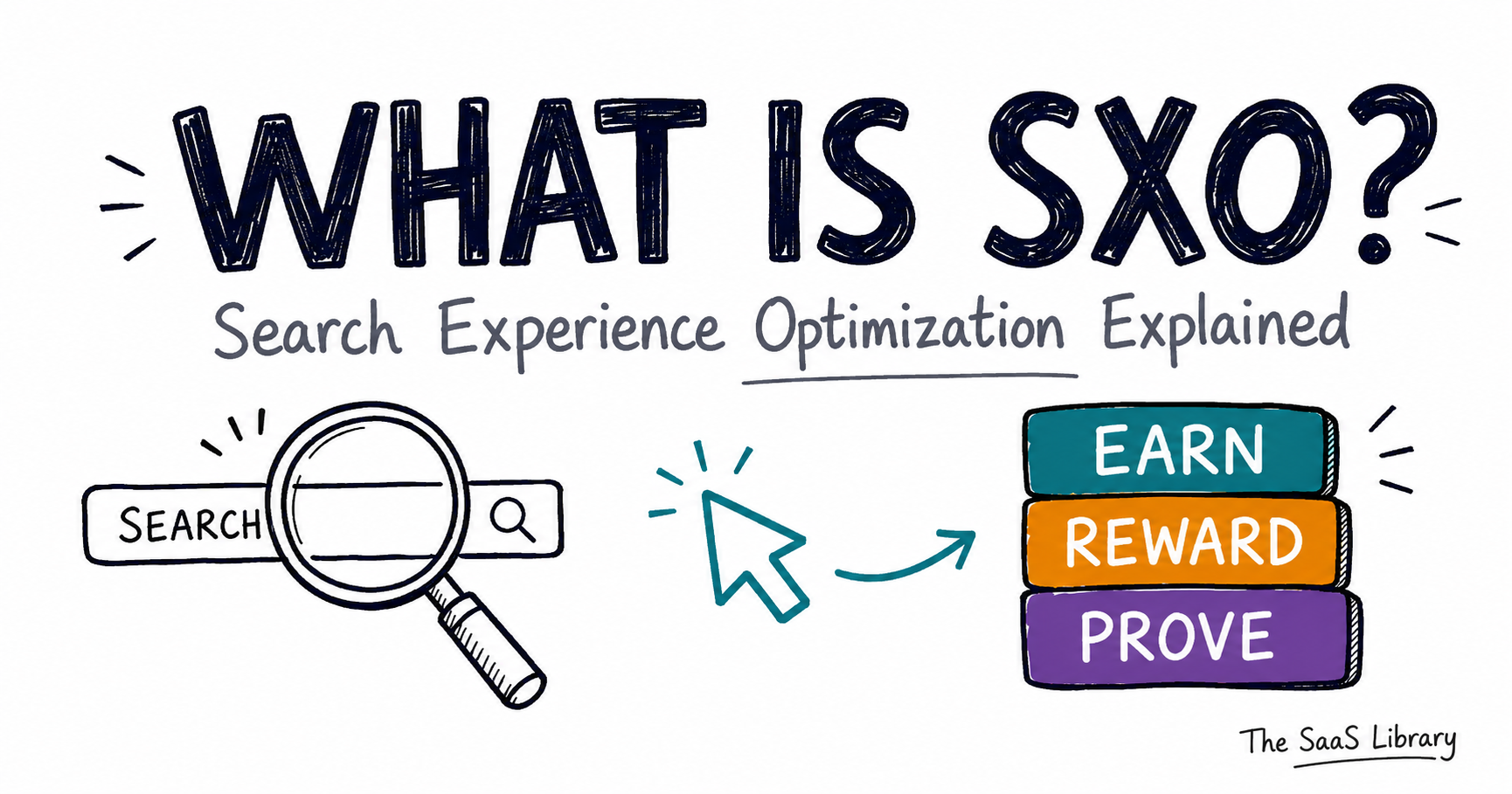
SXO is Search Experience Optimization: the practice of designing a page for what happens after the click, not just whether Google shows it. That’s the majority definition — SEO gets you found, SXO decides whether the visit turns into anything.
But that’s not the only definition circulating. Some practitioners use SXO to mean something bigger: optimizing your brand’s presence across every place people search, not just Google. Under that reading, SXO isn’t a companion to SEO — it’s the umbrella that SEO, AEO, and GEO all sit inside.
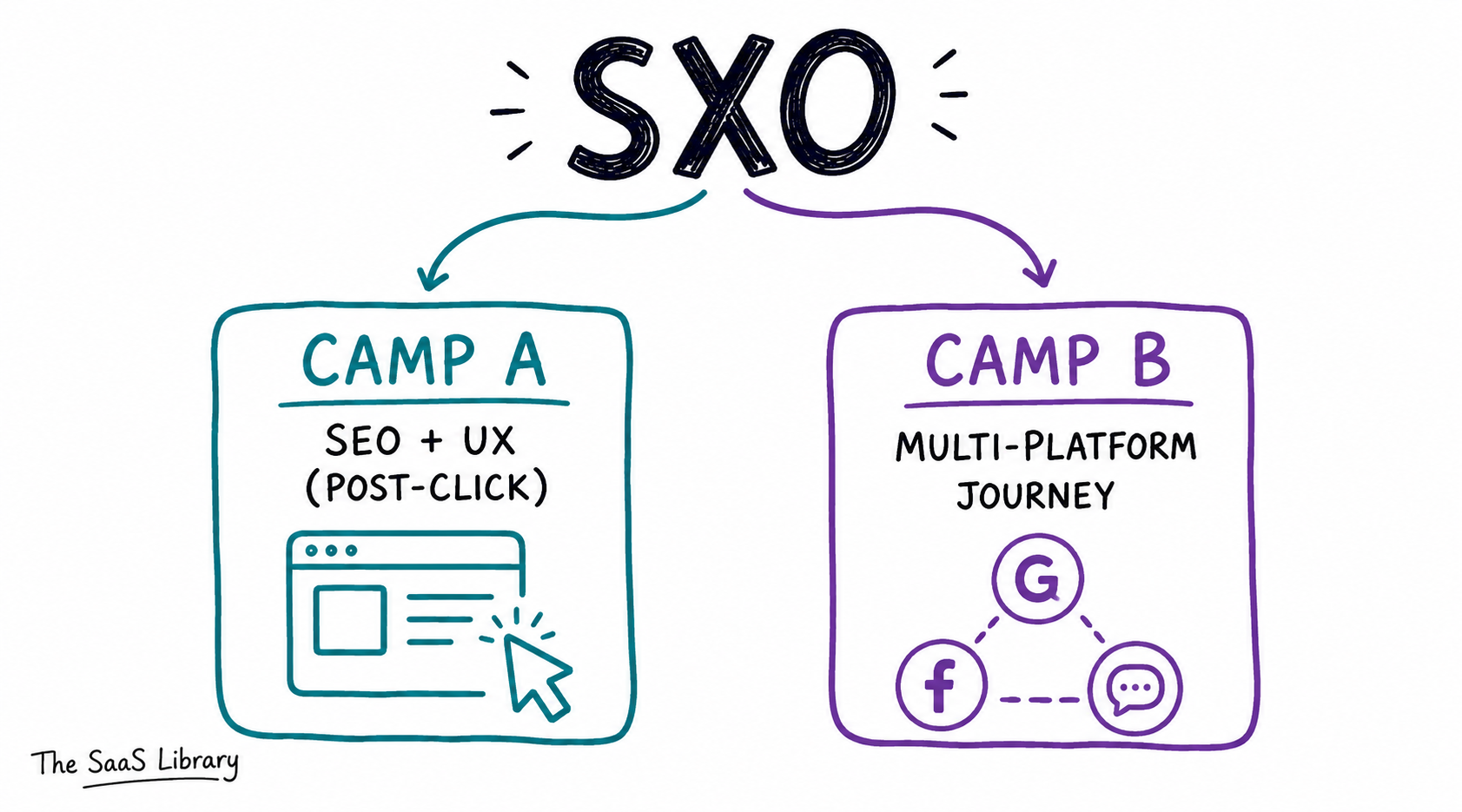
Neither camp is wrong exactly. They’re answering different questions. One asks “what happens after someone lands on your page?” The other asks “how do you show up everywhere people now search?” This article uses the first definition, because it’s the one that lines up with what’s actually changed in 2026 — the page you rank on matters less than what a visitor does once they’re there.
Here’s the part almost nobody publishing on this topic checks: how many of the pages currently ranking for “what is SXO” actually agree with each other. We pulled 13 of them and found out.
Why Doesn’t Anyone Agree on What SXO Means?
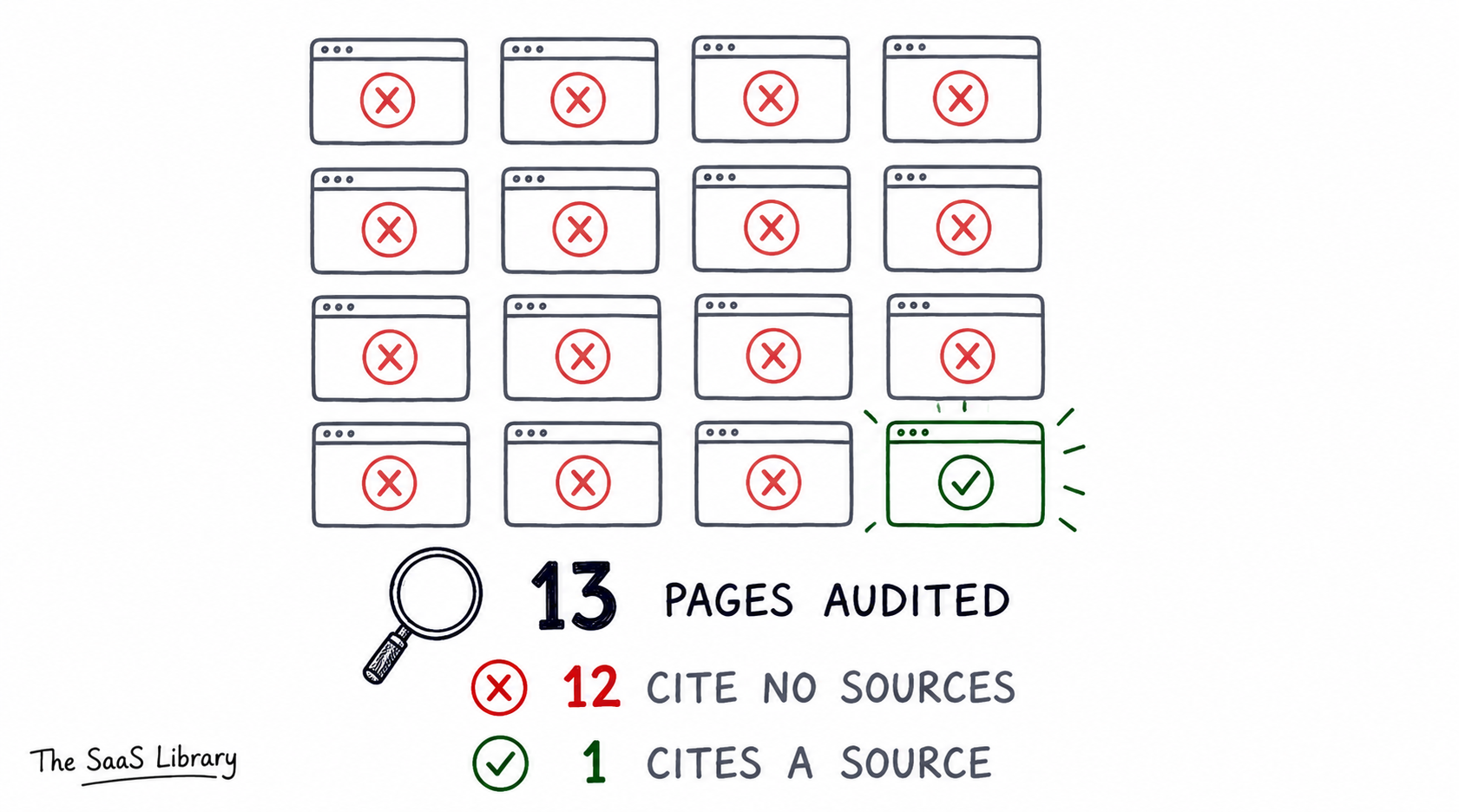
No one agrees on what SXO means because the term has been used to describe at least three different things by different practitioners since it entered wider use. To test how bad the confusion actually is, TSL audited the 13 top-ranking pages for “what is SXO,” “search experience optimization,” and “SXO vs SEO,” and logged each page’s definition and sourcing. Each page was read in full and manually categorized by hand — not scraped or auto-summarized.
The split breaks into three camps. Ten of the 13 pages define SXO as SEO combined with UX, sometimes folding in conversion rate optimization — this includes Neil Patel’s guide and Surfer SEO’s breakdown. Two pages, including Ahrefs, define it as optimizing a brand’s presence across every search surface, not just Google — a materially different claim.
That distinction matters because it changes what “doing SXO” means in practice — one camp tells you to fix your page, the other tells you to expand your channels.
What Did the Audit of 13 Ranking Pages Find?
The audit found that 12 of the 13 ranking pages cite zero primary or verifiable sources for any claim they make about SXO. Neil Patel’s page was the sole exception, citing one consumer shopper survey. Not a single page in the sample references Google Search Console data, a named research firm, or sworn testimony about how ranking actually works.
| Source | Definition Camp | Primary Citations |
|---|---|---|
| Neil Patel | SEO + UX | 1 |
| whatissxo.com | Multi-platform journey | 0 |
| Optiblack | SEO + UX | 0 |
| Surfer SEO | SEO + UX | 0 |
| Ahrefs | Multi-platform journey | 0 (expert quotes only) |
| seoClarity | Proprietary framework | 0 |
| Capsicum Mediaworks | SEO + UX | 0 |
| Webtrixz | SEO + UX + CRO | 0 |
| Macronimous | SEO + UX (modernized) | 0 |
| Digitech India | SEO/AIO/GEO/AEO umbrella | 0 |
| Sociomark | SEO + UX | 0 |
| Gemeos | SEO + UX | 0 |
| Rise Local | SEO + UX | 0 |
The pattern isn’t limited to this sample. TSL reviewed more than 20 pages total across adjacent SXO queries, and found the same gap held — including one vendor site selling an “SXO scoring” tool that states AI Overviews handle 47% of informational queries and zero-click searches make up 65% of results, with no source given for either number. When an entire topic’s top results run on assertion instead of evidence, that’s not a saturated SERP — it’s an open one.
Want the full 13-page audit table with sourcing notes?
Subscribe for the complete breakdownWhen Did the Term “SXO” Actually Start Being Used?
The term started being used publicly at least as early as January 2018, when seoClarity published a page claiming to have defined the SXO framework and methodology. That’s eight years before most 2024–2026 articles describe SXO as a new or emerging concept.
Writer D.F. Lovett makes a related point: he argues most SXO definitions are simply wrong, since good SEO already accounts for user experience — a claim he credits partly to a conversation with fellow practitioner Joe Kerlin.
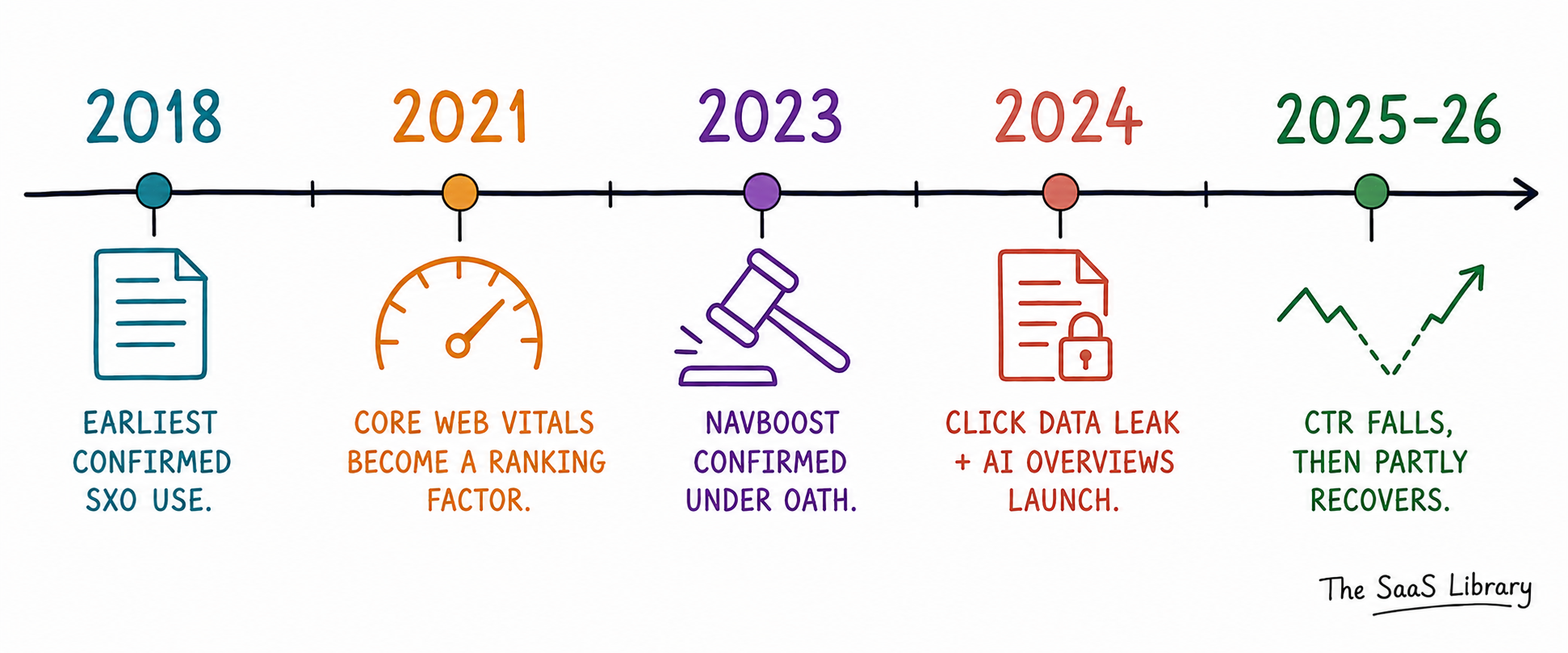
If the term itself predates the AI-search era by years, what’s actually new isn’t SXO — it’s the stakes of getting it wrong.
How Is SXO Different From SEO?
SXO differs from SEO in what it optimizes for: SEO gets a page ranked and clicked, while SXO governs whether that visit turns into anything once someone lands. The distinction sounds abstract until you look at what Google itself has confirmed about how it measures a “good” result — and it’s not what most SXO guides claim.
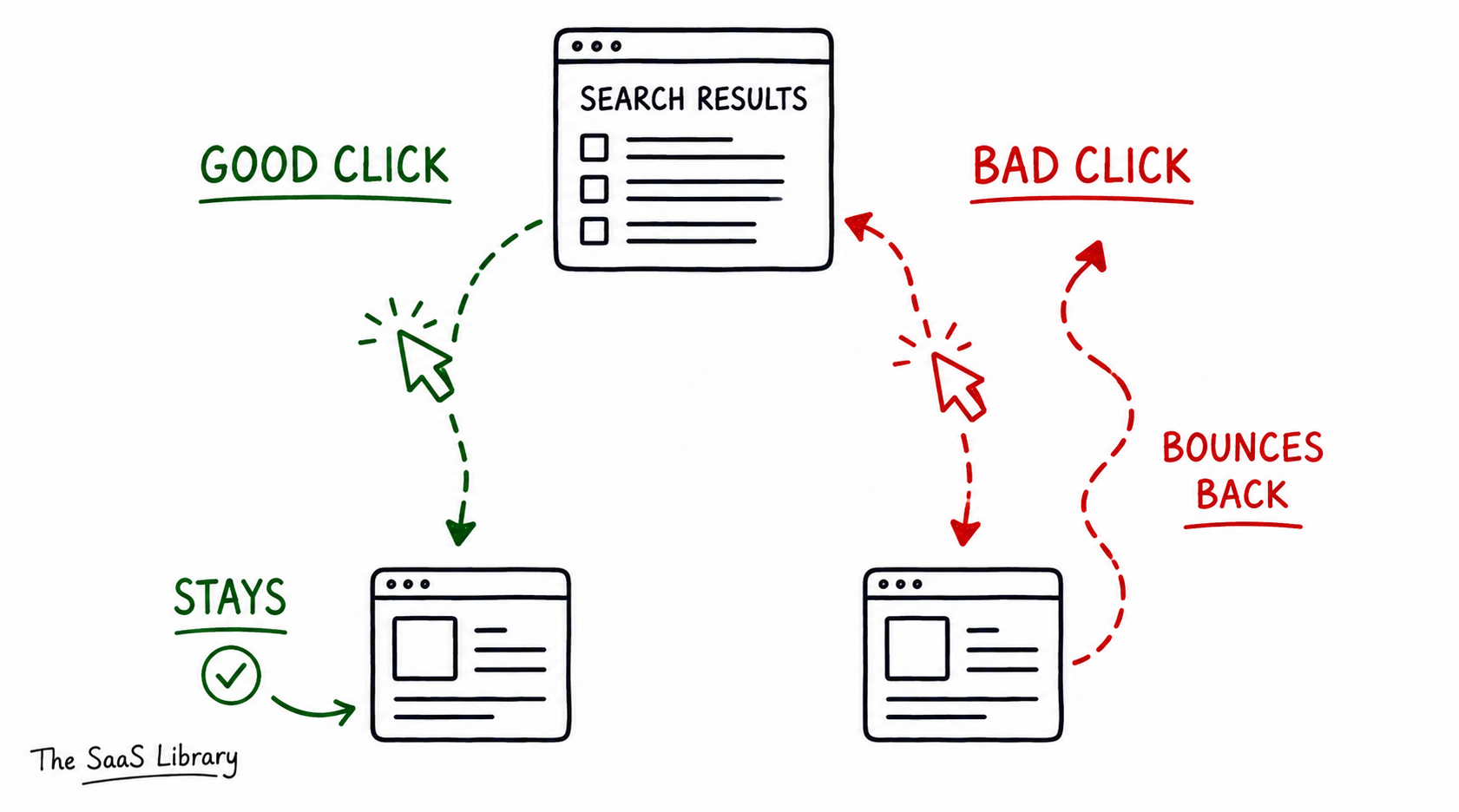
Sworn testimony from the 2023 DOJ v. Google antitrust trial confirmed the existence of NavBoost, an internal system that re-ranks search results using aggregated click data. Google VP of Search Pandu Nayak testified that NavBoost draws on roughly 13 months of click behavior, distinguishing “good clicks” — where a user stays on a result — from “bad clicks,” where they return to the search results quickly.
Does Google Use Dwell Time or Bounce Rate as a Ranking Factor?
Google does not use dwell time or bounce rate as ranking factors in the way most SXO articles claim — it has repeatedly said it doesn’t read Google Analytics data, and GA4 metrics are never sent to Google’s ranking systems. What Google does use, per the DOJ trial record, is click-pattern data collected through its own systems: whether a user returns to the search results quickly (a “bad click”) or stays away (a “good click”).
A May 2024 leak of Google’s Content Warehouse API documentation named specific attributes matching this description — goodClicks, badClicks, and lastLongestClicks among them — and Google has not disputed the leak’s authenticity.
Your GA4 bounce rate number is not what Google sees, but the behavior it’s a proxy for — did the visitor find what they needed — is exactly what NavBoost is built to measure.
Why Does SXO Matter Now, in the AI Search Era?
SXO matters now because the “click” it optimizes for has become the scarcest resource in search. Pew Research Center’s July 2025 study of 900 U.S. adults across nearly 69,000 real Google searches found that when an AI summary appeared, only 8% of users clicked a traditional search result, compared to 15% when no summary was shown — and 26% of AI-summary searches ended the session entirely, versus 16% without one.
That’s not a ranking problem. It’s a behavior problem — fewer people are even reaching the part of the journey SEO was built to win.
How Much Have AI Overviews Reduced Click-Through Rates?
AI Overviews have reduced click-through rates sharply — but contrary to the “clicks will keep declining forever” assumption most 2025 coverage settled on, the picture reversed in early 2026. Seer Interactive’s September 2025 study of 3,119 queries found organic CTR fell 61% and paid CTR fell 68% wherever an AI Overview appeared. But Seer’s April 2026 update — a larger dataset spanning 53 brands and 5.47 million queries — found organic CTR on those same AIO queries actually bottomed out at 1.3% in December 2025 and climbed to 2.4% by February 2026, an 85% rebound in two months.
Pages cited inside an AI Overview don’t just survive better — they do measurably better than pages that aren’t: 35% higher organic CTR and 91% higher paid CTR than uncited competitors, per the same Seer data.
Which Industries Are Most Exposed to AI Overviews?
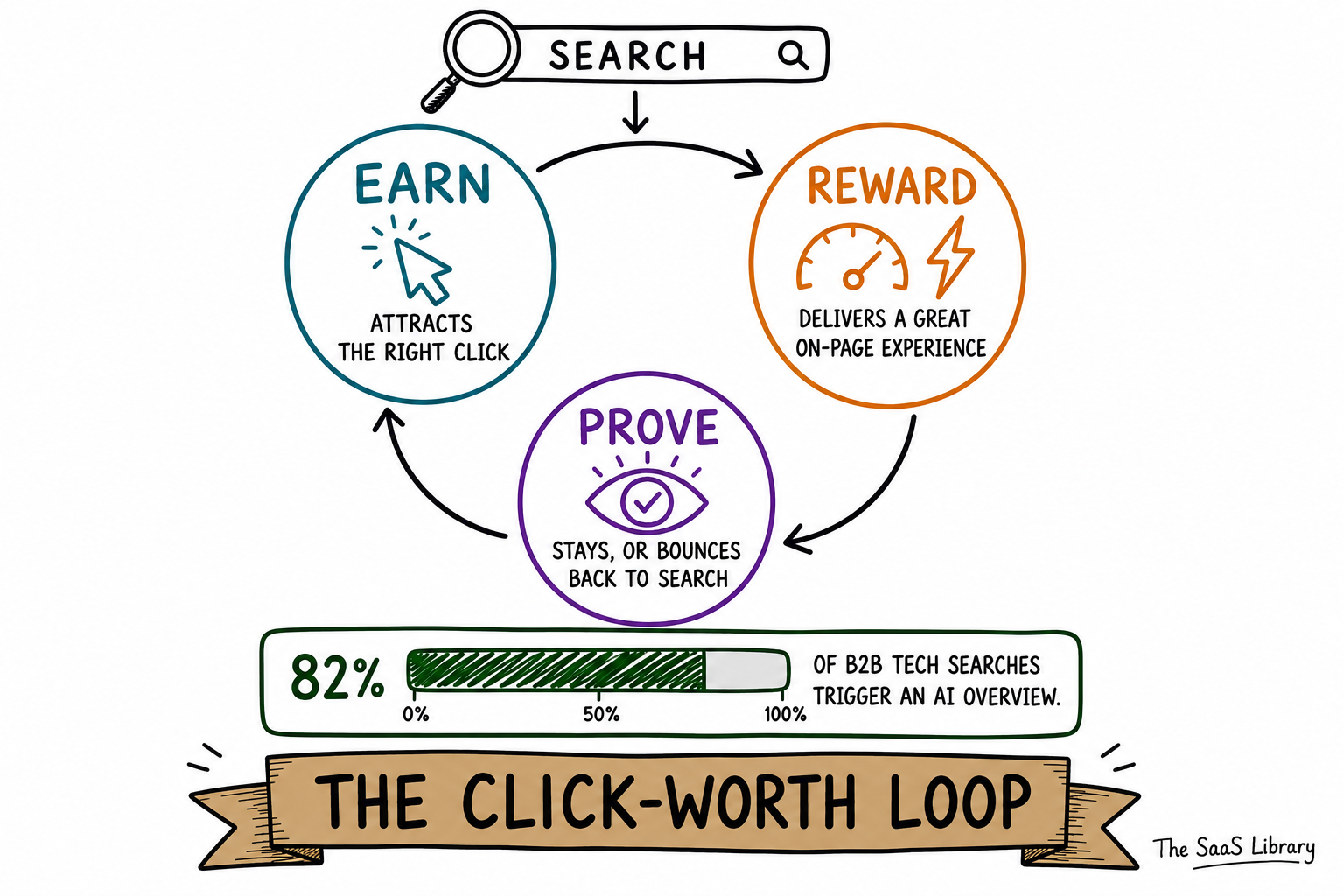
The industries most exposed to AI Overviews aren’t evenly distributed — some are close to saturation while others barely see them. Overall, AI Overviews now trigger on roughly 48% of tracked Google queries, up 58% year-over-year, according to BrightEdge. B2B technology queries — the exact category most TSL readers write and rank for — saw their trigger rate climb from 36% to 82% over the same period, per BrightEdge data reported by Search Engine Journal.
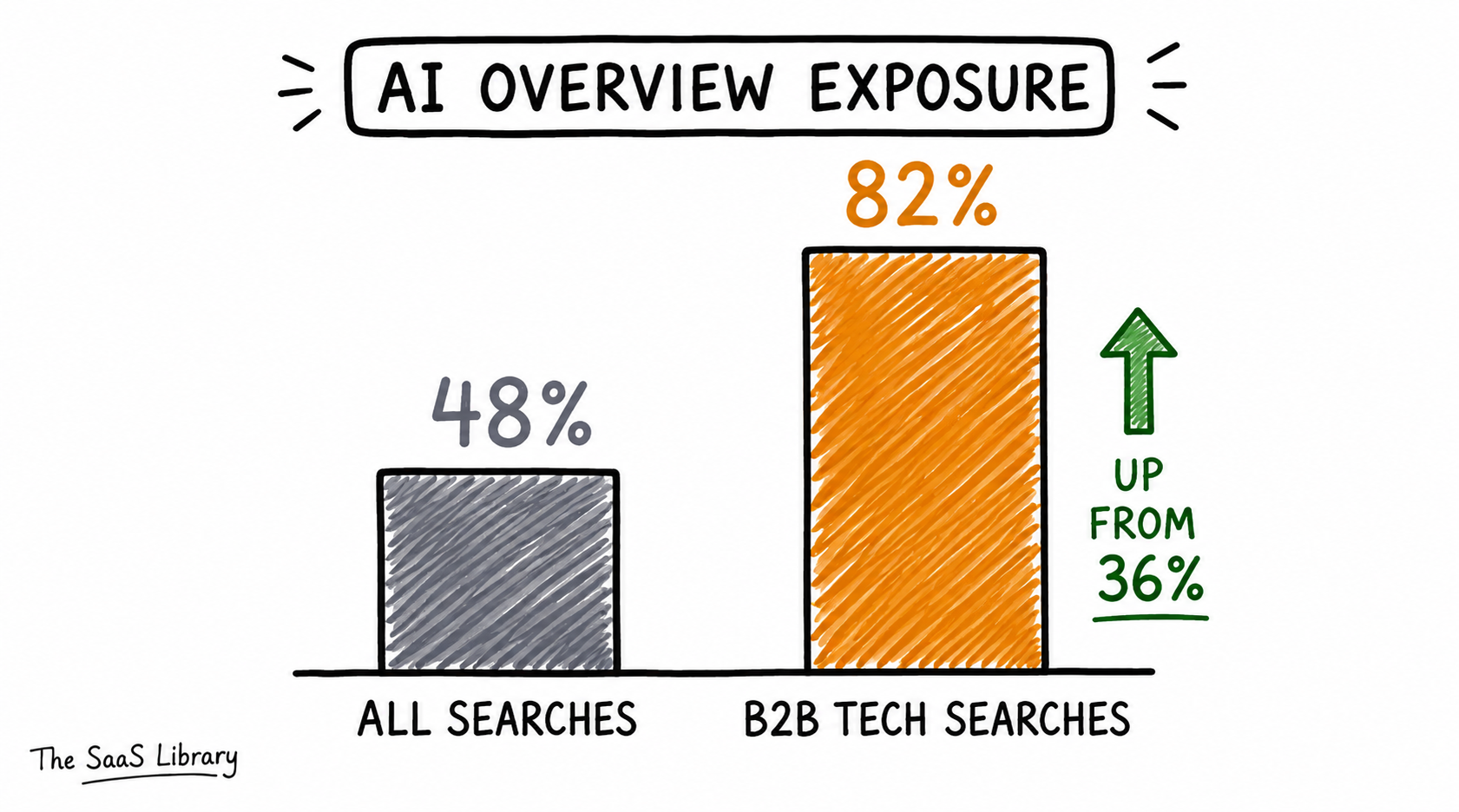
If you’re publishing B2B SaaS content, you’re not in the 48% average — you’re closer to the 82% that’s already living in the AI-first version of search. SXO isn’t optional for this audience; it’s the entire second half of the strategy.
How Is SXO Different From AEO and GEO?
SXO differs from AEO and GEO in what each one is fighting for: SXO owns the visit itself, while AEO and GEO fight for the citation that gets someone to click at all. Think of them as covering different moments in the same journey — AEO wins the answer box, GEO earns the mention inside an AI chat response, and SXO decides what happens in the seconds after either one sends a visitor to your page.
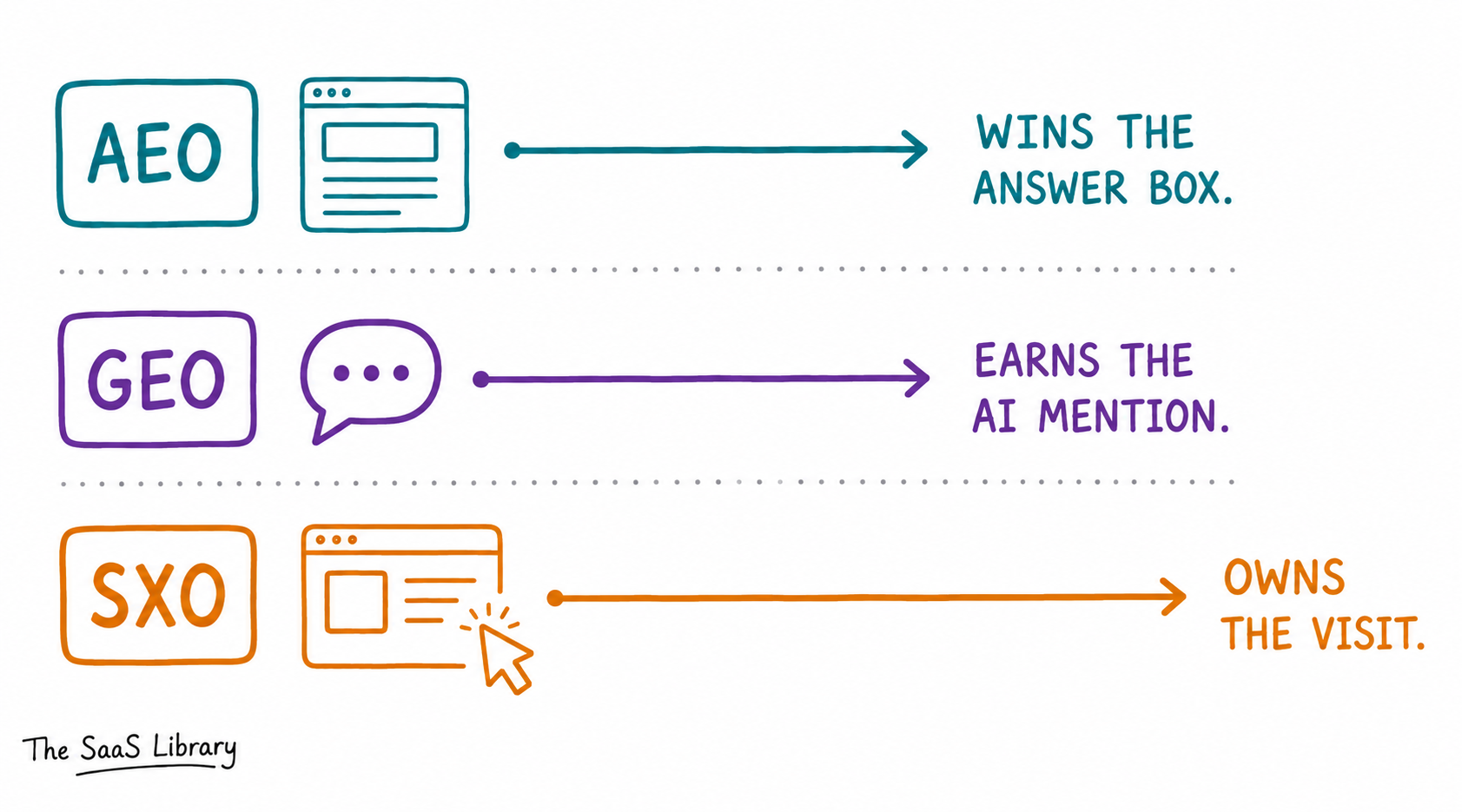
That boundary matters more now that TSL has already mapped this territory once before. TSL previously named the convergence of these disciplines Hybrid Engine Optimisation (HEO) — worth reading alongside this piece if you’re building a strategy that spans all three rather than picking one.
Ahrefs SEO specialist Despina Gavoyannis frames SXO differently — as the branch of SEO focused on “non-linear search journeys over multiple platforms, not just Google.” That’s a genuinely different claim than the “post-click” definition this article uses, and it’s worth knowing both exist before you build a strategy around either one.
Pick the wrong definition and you’ll optimize the wrong thing — chasing multi-platform presence when your actual problem is a page people bounce off of, or vice versa.
Does Optimizing for AEO Conflict With Optimizing for SXO?
Optimizing for AEO does not conflict with optimizing for SXO — the two solve different problems in sequence. AEO gets your content pulled into an answer box or AI response; SXO determines whether the person who clicks through from that answer actually stays. A page can win the AEO battle and still fail the SXO one if it’s slow, cluttered, or doesn’t deliver what the answer promised.
If you’re building an AEO strategy from scratch, TSL’s guide on how to optimise for AEO covers the citation side of this equation in more depth than fits here.
Treating AEO and SXO as competing priorities is how teams end up with a page that ranks everywhere and converts nowhere.
What Is the Click-Worth Loop?
The Click-Worth Loop is TSL’s framework for what determines whether a visit earned through search actually pays off: three stages — Earn, Reward, Prove — that repeat in sequence for every page that wants to keep ranking after someone clicks.
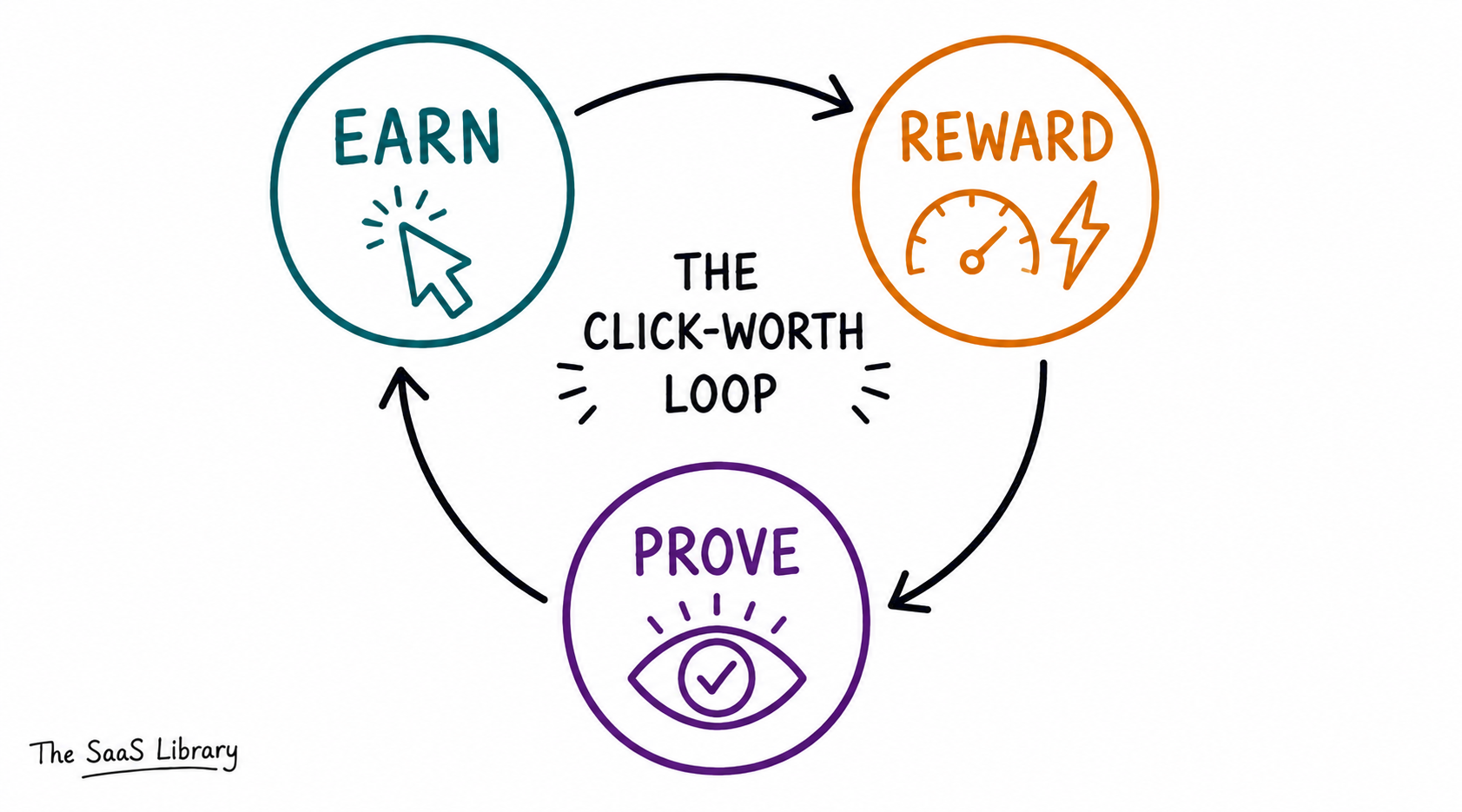
What Does “Earning the Visit” Mean?
Earning the visit means getting chosen when an AI Overview or a search result could send the click somewhere else instead. Pages cited inside an AI Overview earn 35% more organic clicks than uncited competitors on the same query, per Seer Interactive’s 2026 data — a direct, measurable reward for winning this first stage.
If your content never earns a mention or a click, the other two stages never get tested.
What Does “Rewarding the Visit” Mean?
Rewarding the visit means the page delivers fast enough and clearly enough that the click doesn’t get wasted. Google’s own case study data backs this directly: Rakuten 24 ran a controlled A/B test isolating Core Web Vitals as the only variable and found that pages with a good Largest Contentful Paint score saw a 53.37% increase in revenue per visitor and a 33.13% increase in conversion rate. Vodafone Italy improved LCP by 31% and saw an 8% lift in sales from the change alone.
This is the stage most SXO advice reduces to “make your site fast” — but the reward isn’t the speed itself, it’s what speed buys you: a visitor who actually reaches the part of the page that answers their question.
What Does “Proving the Visit” Mean?
Proving the visit means generating the click behavior NavBoost is built to read — staying on the page instead of pogo-sticking back to the results. This is the stage covered above: goodClicks, badClicks, and lastLongestClicks, confirmed through Pandu Nayak’s DOJ testimony and the May 2024 leak.
This is the stage that closes the loop — a page that proves itself well earns a warmer starting position the next time someone searches, which feeds back into stage one.
Pages with a good LCP score saw a 53.37% increase in revenue per visitor in a controlled A/B test — Google, web.dev case studies, Rakuten 24.
How Do You Implement SXO?
You implement SXO by working through the Click-Worth Loop stage by stage, on one page at a time, rather than treating it as a single checklist. Here’s how that looks on a real page type TSL readers build constantly: a B2B SaaS pricing comparison page.
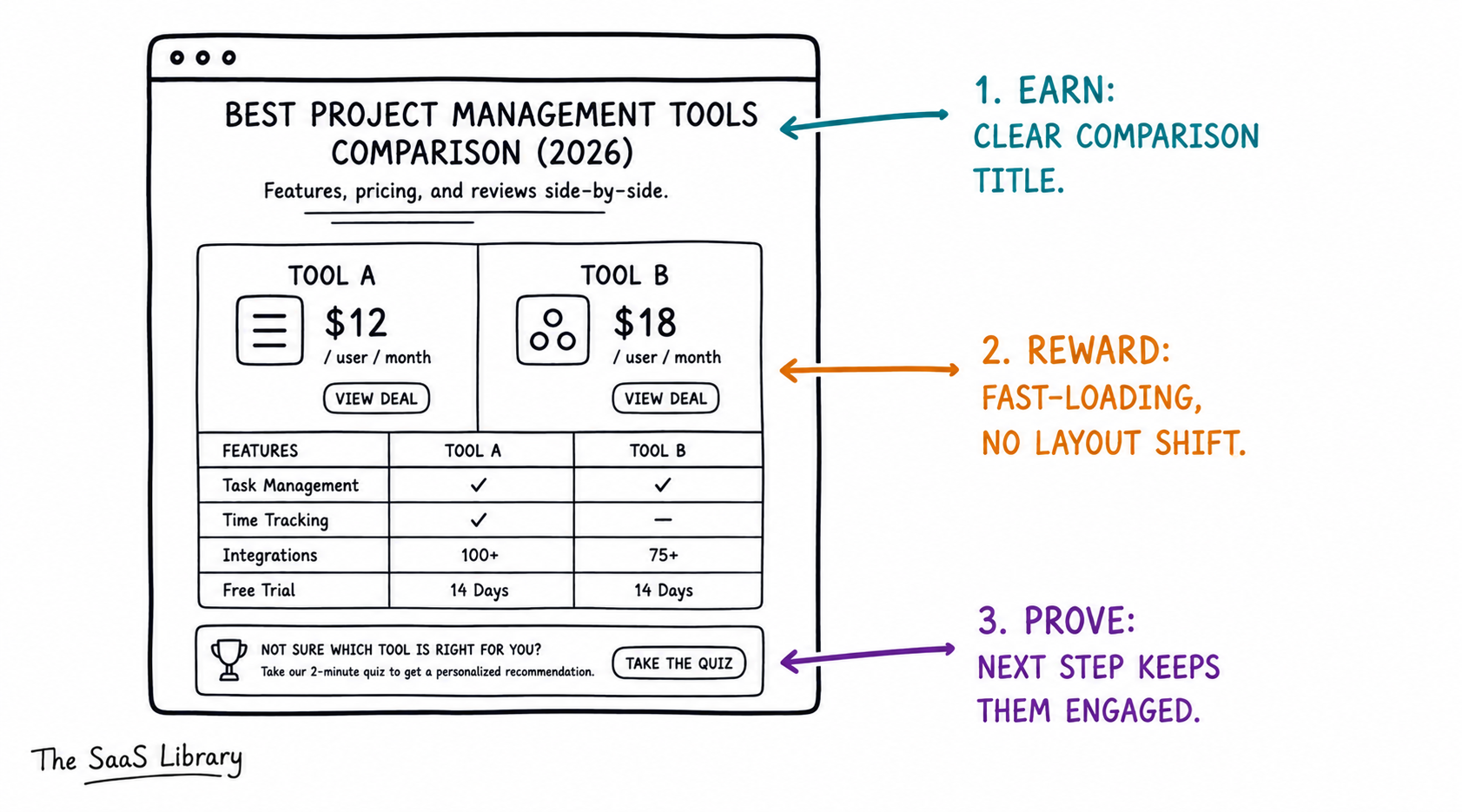
Earn stage: Structure the page so it can be cited, not just ranked. Use clear comparison tables, name every competitor explicitly, and answer the exact question the searcher typed — “X vs Y pricing” — in the first 100 words. This is the same structural discipline that helps a page get pulled into an AI Overview instead of only sitting below one.
Reward stage: A pricing page carries images, tables, and often an interactive calculator — exactly the content most likely to blow LCP and CLS budgets if built carelessly. Compress hero images, lazy-load anything below the fold, and reserve fixed dimensions for every table and embed so nothing shifts as it loads. This is the direct, page-level version of what Rakuten 24 and Vodafone tested at scale.
Prove stage: Give the visitor a reason to stay past the first screen instead of pogo-sticking back to compare another result. A pricing page that answers the comparison clearly, then gives a next step (a calculator, a demo link, a related comparison), converts a “long enough to decide” visit into a lastLongestClick instead of a bad click.
If you’re structuring content specifically for the AI-search era, TSL’s guide on how to optimise your blog for AI search in 2026 covers the Earn-stage discipline in more depth.
Which Tools Help You Measure SXO?
The tools that help you measure SXO span both what you can observe and what Google actually reads. Google Search Console shows the Core Web Vitals report at the site level — this is the closest thing to Google’s own field data that’s publicly available. PageSpeed Insights tests a single URL against LCP, INP, and CLS thresholds directly. GA4 tracks engagement time and scroll depth, which won’t reach Google’s ranking systems but still proxy for the same visitor behavior NavBoost measures independently.
None of these tools show you a goodClicks number — that data stays inside Google. What they show you is the input side: fix what GA4 and PageSpeed flag, and you’re improving the conditions that produce good clicks, even without seeing the score itself.
How Do You Measure SXO?
You measure SXO by tracking two separate layers: the signals you can directly observe, and the signals Google actually uses to rank you — and conflating the two is the single most common mistake in every SXO guide published so far, including 12 of the 13 audited above.
What You Can Measure vs. What Google Reads
| Layer | Metric | Tool | What It Actually Tells You |
|---|---|---|---|
| Observable (yours) | Engagement time, scroll depth | GA4 | How long and how far visitors interact — never sent to Google’s ranking systems |
| Observable (yours) | LCP, INP, CLS | PageSpeed Insights, Search Console CWV report | Confirmed ranking signals — the one place your own data and Google’s overlap directly |
| Observable (yours) | Bounce rate | GA4 | A proxy for dissatisfaction, but not a metric Google’s algorithms read |
| Inferred (Google’s) | goodClicks / badClicks | Not directly visible — inferred from ranking movement | Whether a visitor stayed satisfied or pogo-sticked back to the SERP |
| Inferred (Google’s) | lastLongestClicks | Not directly visible | Whether your page was the one that ended the search |
The only row where your own dashboard and Google’s internal signal are the same thing is Core Web Vitals — confirmed directly in the DOJ record and Google’s public documentation. Everything else on the observable side is a proxy: a reasonable stand-in for what Google is actually measuring, not the measurement itself.
If your GA4 bounce rate improves but your rankings don’t move, that’s not proof SXO doesn’t work — it’s a sign the proxy and the real signal have drifted apart for that specific page, and it’s worth checking whether visitors are engaging with the right content, not just staying longer.
No single, verified tool currently measures SXO as one unified score — despite what some vendor sites claim. What exists instead is a stack of separate, legitimate tools, each covering one piece: Google Search Console for Core Web Vitals and indexing data, PageSpeed Insights for per-URL LCP/INP/CLS testing, GA4 for engagement time and scroll depth, and Microsoft Clarity for free heatmaps and session recordings that show where visitors actually get stuck.
If a proper SXO tool did exist, it would need to do three things none of today’s tools do together: track AI Overview citation and click data (the Earn stage), pull Core Web Vitals and engagement data automatically (Reward), and flag pages likely producing bad clicks based on ranking movement, since goodClicks and badClicks themselves stay inside Google (Prove — necessarily inferred, never directly visible). The concept sketch below shows what that combined view could look like.
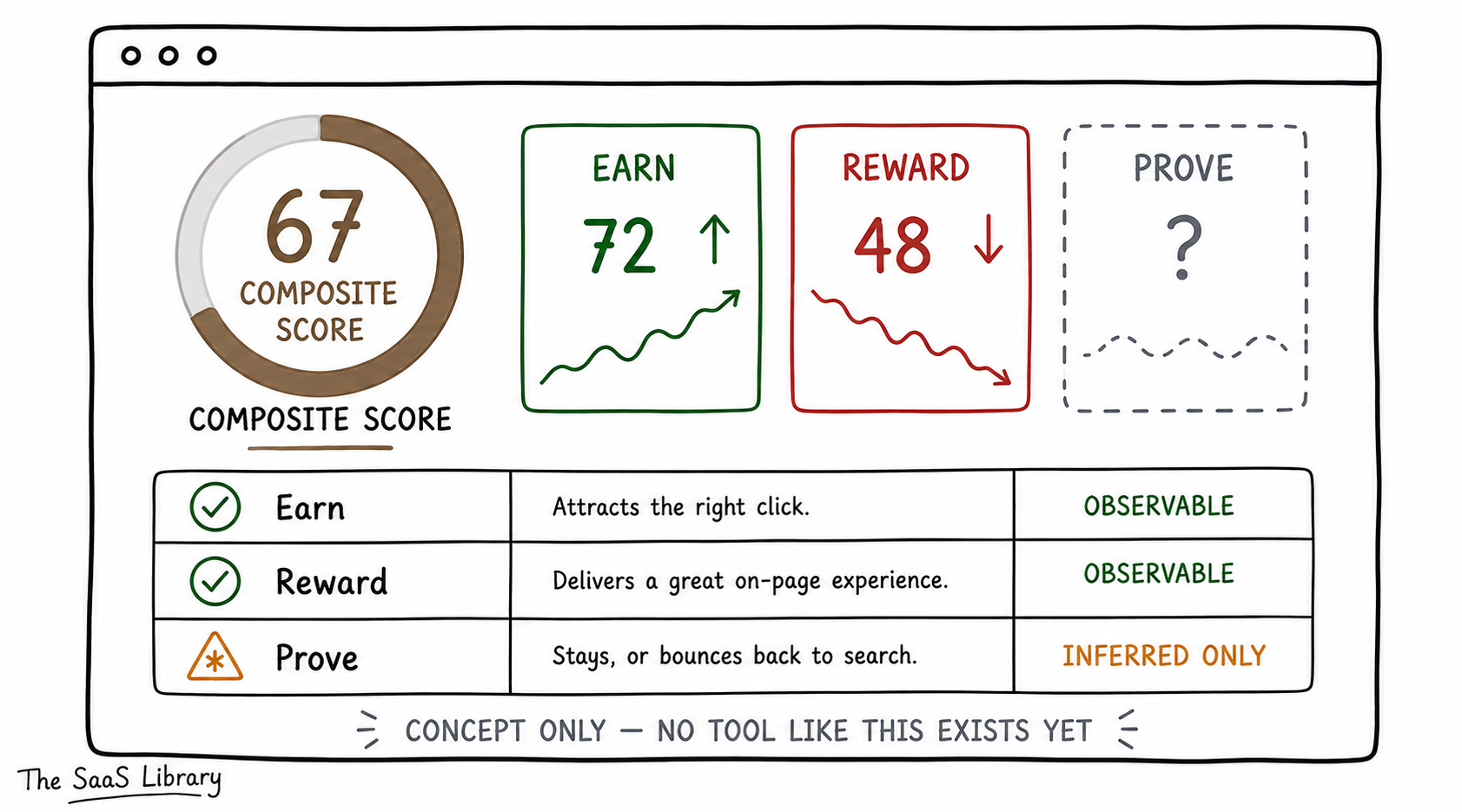
This is a concept sketch, not a real product — no verified vendor currently offers this as one unified tool.
How Do You Know If Your SXO Efforts Are Working?
You know your SXO efforts are working when engagement metrics and ranking movement improve together, not just one or the other. Track GA4 engagement time and Search Console’s Core Web Vitals report side by side for the same page over a 4–6 week window — that’s roughly how long field data needs to accumulate before Google’s own systems reflect a change, per Google’s Chrome UX Report methodology.
Chasing a single metric in isolation is how teams end up optimizing bounce rate on a page that still isn’t ranking — SXO only works when the proxy and the real signal move in the same direction.
Frequently Asked Questions
What is SXO?
SXO is Search Experience Optimization — the practice of optimizing a page for what happens after someone clicks into it, combining SEO’s visibility work with user experience and conversion design.
Is SXO replacing SEO?
SXO is not replacing SEO — it depends on it. SEO still gets a page found and clicked; SXO governs whether that click turns into anything once someone lands. Neither works without the other.
Is dwell time a ranking factor?
Dwell time is not a directly confirmed ranking factor in the way most SEO advice describes it. Google has said it doesn’t use Google Analytics data for rankings, but sworn DOJ testimony confirmed a related system, NavBoost, which tracks whether users return quickly to search results after a click.
Who coined the term SXO?
No single person is confirmed to have coined SXO. The earliest public use found in this research dates to a January 2018 seoClarity page claiming to define the framework — years before most 2024–2026 articles describe it as a new concept.
Can you optimize for AI Overviews and SXO at the same time?
You can optimize for AI Overviews and SXO at the same time, because they solve different problems in sequence. AI Overview optimization earns the citation or click; SXO determines whether the visitor who arrives from it actually stays.
How is SXO different from AEO?
SXO differs from AEO in what each optimizes for: AEO works to get content selected or cited inside an AI-generated answer, while SXO works on what happens after someone clicks through from that answer.
How is SXO different from GEO?
SXO differs from GEO in the same way it differs from AEO: GEO focuses on earning a mention inside a generative AI response, while SXO focuses on the visit that follows, regardless of which channel sent it.
What is the Click-Worth Loop?
The Click-Worth Loop is TSL’s three-stage framework for what determines whether a search visit pays off: Earn, which covers getting the click; Reward, which covers the on-page experience; and Prove, which covers the click behavior that tells Google to keep sending visitors.
What tools can measure SXO?
No single tool measures SXO as one unified score. Google Search Console, PageSpeed Insights, and GA4 each cover one piece — Core Web Vitals, page-level speed, and engagement data respectively — but the click-behavior data Google uses internally, like goodClicks and badClicks, isn’t visible in any public tool.
Do AI Overviews reduce website traffic?
AI Overviews do reduce website traffic for many queries. Seer Interactive’s 2026 data found organic click-through rates on AI Overview queries fell as low as 1.3% in December 2025 before recovering to 2.4% by February 2026, still well below pre-AI-Overview levels.
Conclusion
The Click-Worth Loop closes where SEO’s job used to end: Earn the click, reward the visitor who gives it to you, then prove to Google that the visit was worth sending. AI Overviews have made the click scarcer, not optional — B2B SaaS content sits closest to that pressure, at an 82% trigger rate.
Start with one page. Run it through all three stages before writing the next one.
- Pew Research Center — Google Users Are Less Likely to Click on Links When an AI Summary Appears, 2025
- Ahrefs — AI Overviews Reduce Clicks Update, Feb 2026
- Ahrefs — What Is Search Experience Optimization, 2024
- Seer Interactive — AIO Impact on Google CTR: 2026 Update
- Seer Interactive — AIO Impact on Google CTR: September 2025 Update
- BrightEdge — AI Overviews at the One-Year Mark, 2026
- Search Engine Journal — Google AI Overviews Surges Across 9 Industries, reporting BrightEdge data, 2026
- U.S. Department of Justice — Google: Pandu Nayak, DOJ trial record, 2023
- Rand Fishkin, SparkToro — Google Search API Document Leak, May 2024
- Google, web.dev — Rakuten 24 Core Web Vitals Case Study
- Google, web.dev — The Business Impact of Core Web Vitals
- seoClarity — Search Experience Optimization, 2018
- Neil Patel — What Is SXO, 2024
- D.F. Lovett — SXO Is Search Experience Optimization. But What Is It?
- The SaaS Library — What Is Hybrid Engine Optimisation?
- The SaaS Library — How to Optimise for AEO
- Microsoft Clarity