Token prices dropped 67% year-over-year. Total AI bills still went up.
- AI FinOps applies FinOps principles to AI-specific costs: tokens, inference, and GPU compute.
- 98% of FinOps teams now manage AI spend, up from 31% two years ago.
- Token prices are falling, but total AI bills are still rising — usage is growing faster than price drops.
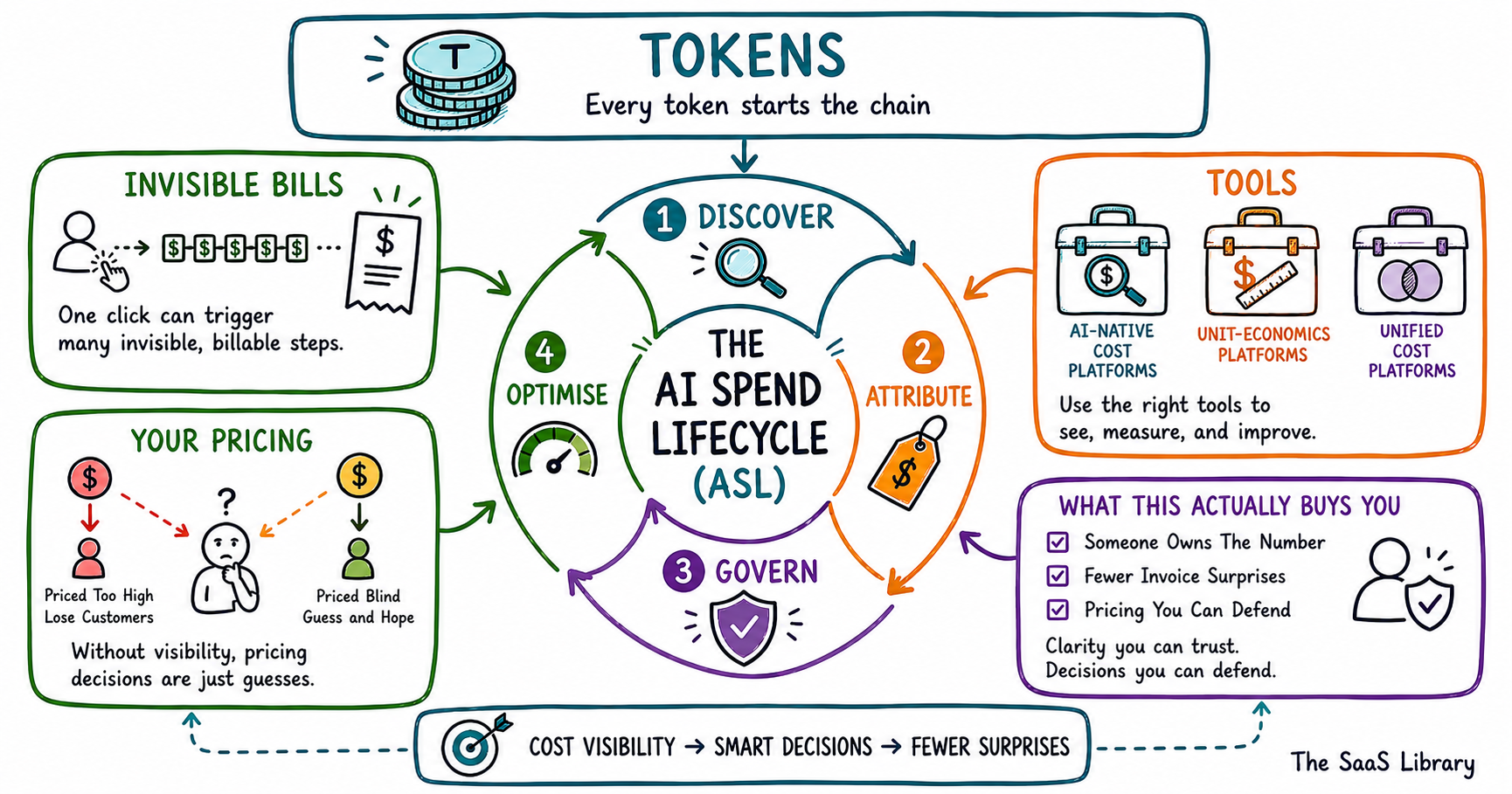
- The AI Spend Lifecycle (ASL) framework covers four stages: Discover, Attribute, Govern, Optimise.
- Without cost visibility, SaaS teams can’t price their own AI features accurately.
- The Tokenomics Foundation launched in June 2026 to standardise how enterprises measure AI cost.
A single AI feature can go live on a Tuesday and quietly burn through a quarter’s budget by Friday. Enterprise AI costs exceeded original projections for 73% of organizations in 2026, according to the FinOps Foundation. AI FinOps is the discipline built to stop that from happening. This piece breaks down what it actually means, how it differs from managing cloud costs, and what a B2B SaaS team needs to do about it right now.
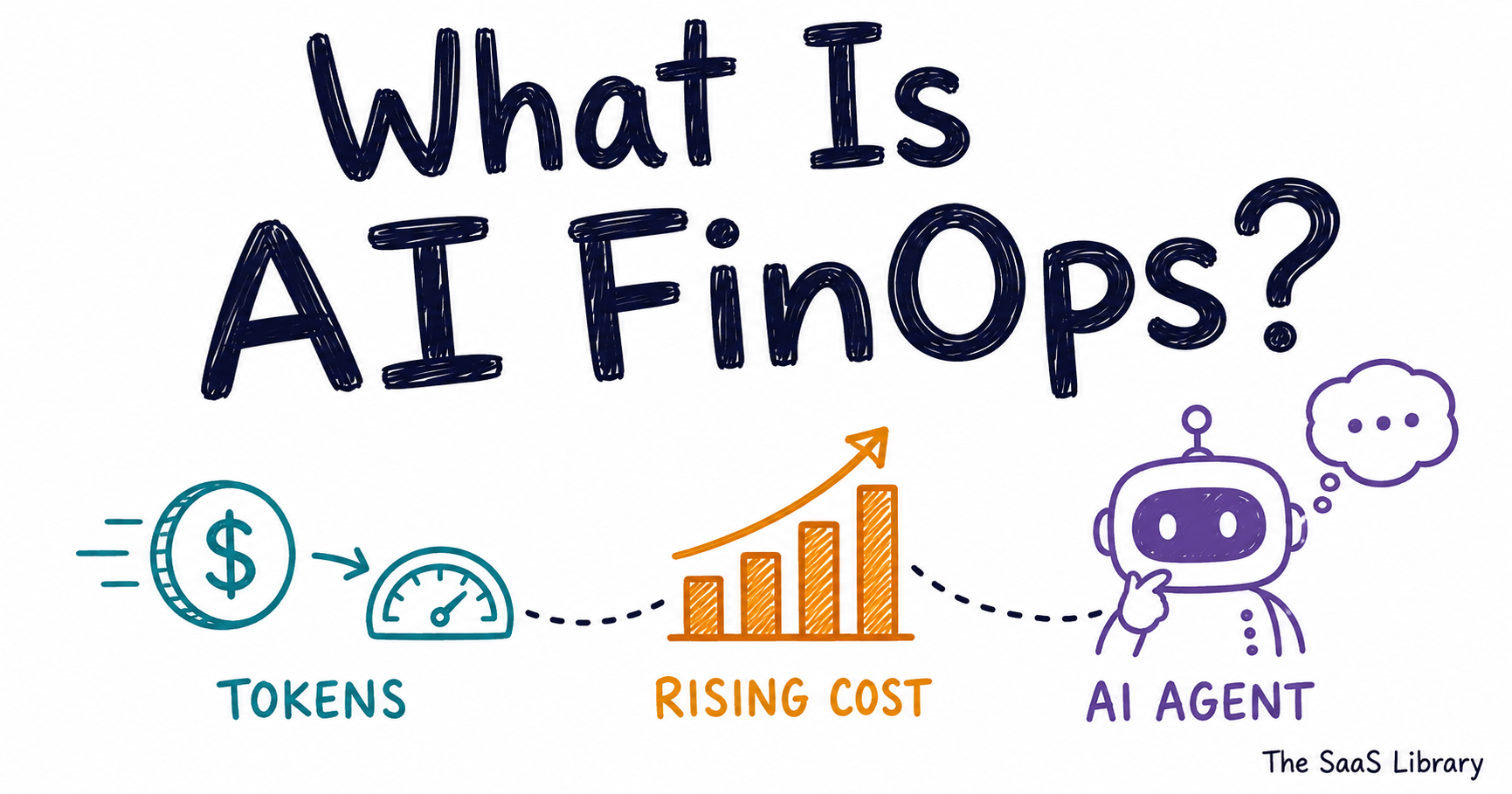
AI FinOps is the practice of tracking, attributing, and governing AI usage costs — tokens, GPU compute, and inference — so spend ties to measurable value. It applies cloud FinOps principles to a different cost structure: priced per token, not compute-hour. 98% of FinOps teams manage AI spend now, up from 31% two years ago, per the FinOps Foundation’s 2026 report.
What Is a Token, and Why Does It Matter for Cost?
A token is the basic unit AI models charge for — roughly four characters of text, or about three-quarters of a word in English, according to nOps (2026). Every prompt you send and every word a model generates back gets counted and billed by the token, not by the hour or by the seat. You’ve probably felt this whiplash already: a feature ships, usage looks healthy, and the invoice doesn’t match what you expected.
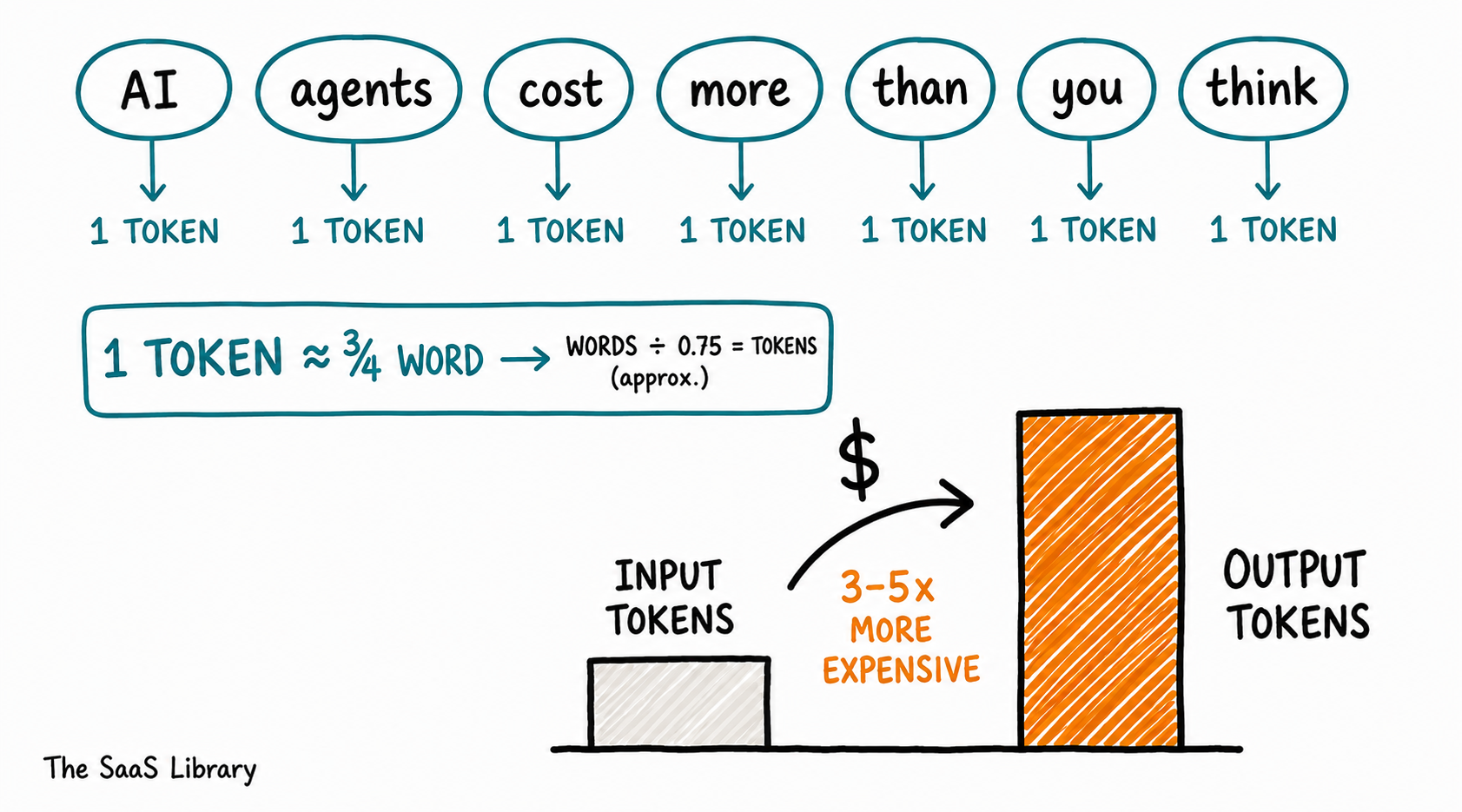
100 words ≈ 133 tokens (1 token ≈ ¾ word, so words ÷ 0.75 = tokens, approx.)
This is the root of why AI billing feels so unfamiliar. A traditional SaaS subscription charges a flat monthly fee no matter how the product is used. Token billing charges for every single interaction, which means cost scales directly with usage rather than staying fixed — and usage can spike without warning the moment a feature gets popular.
Output tokens typically cost three to five times more than input tokens, per nOps (2026), which means a model’s response costs more than the question that triggered it. A 4,000-token prompt run 100,000 times a month already runs to roughly $12,000 before a single word of output is generated. That asymmetry is set the moment a provider decides how to price its models — see how AI companies actually decide pricing — and it’s the first thing an AI FinOps practice has to account for.
Not sure your team is already exposed? Map out what a single AI feature actually costs to run first.
What Does Agentic AI Actually Cost? →How Is AI FinOps Different from Cloud FinOps?
AI FinOps differs from cloud FinOps because it tracks a fundamentally different cost primitive — tokens and inference calls instead of compute-hours and storage gigabytes, according to Amnic (2026). If you’ve managed cloud spend before, none of your old instincts fully transfer here.
Traditional cloud FinOps has a mature playbook: provision infrastructure, monitor utilisation, right-size instances, and forecast against predictable growth curves. AI spend breaks nearly every one of those assumptions.
| Cloud FinOps | AI FinOps | |
|---|---|---|
| Cost unit | Compute-hour, storage GB | Token, inference call |
| Billing pattern | Predictable, provisioned | Volatile, consumption-driven |
| Who triggers spend | IT/DevOps teams | Any developer with an API key |
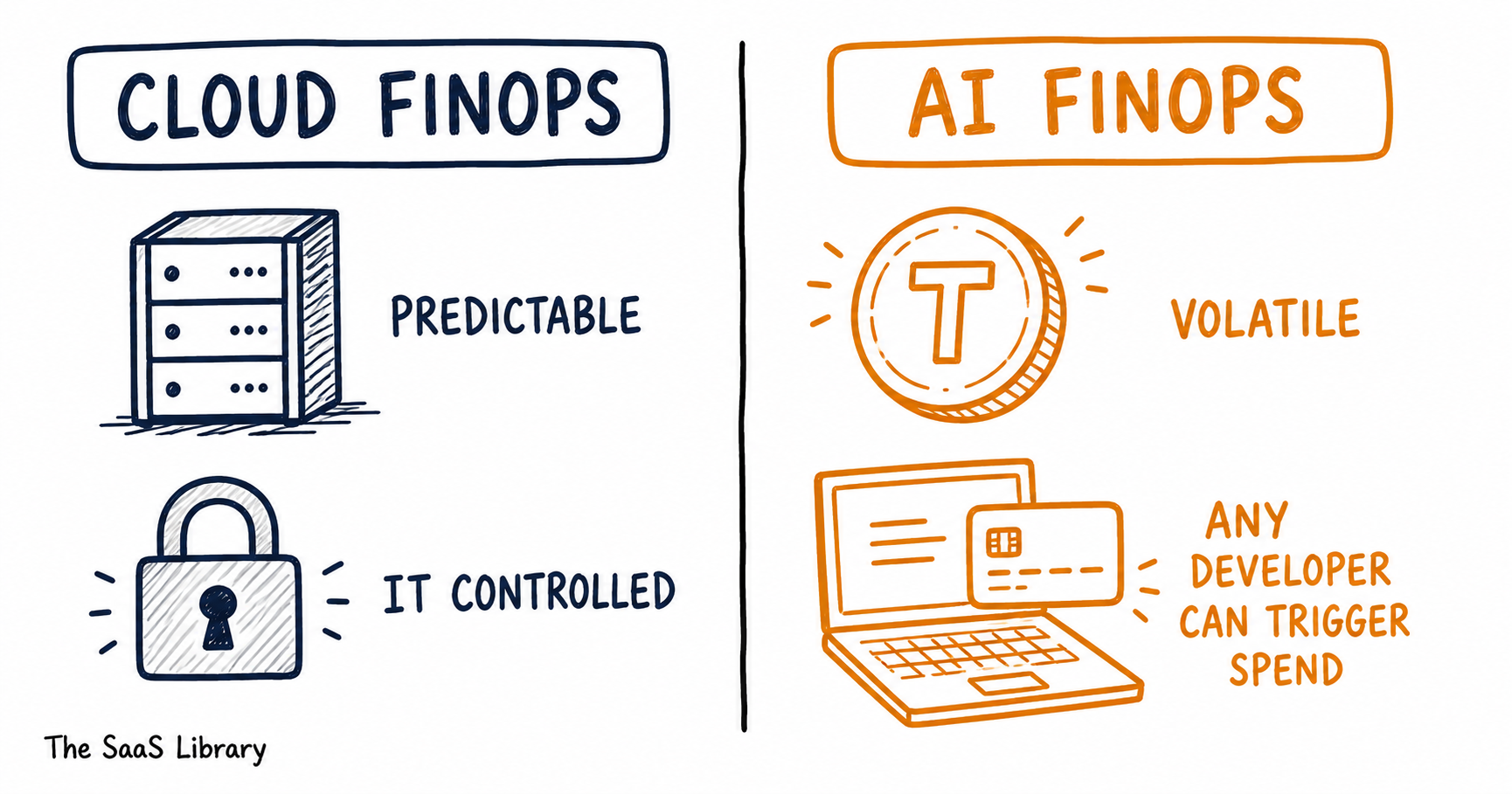
This last row matters more than it looks. AI services are typically accessed via API with consumption-based billing, and accounts are often created by individual developers with a credit card before any procurement team is even aware, according to the FinOps Foundation (2026). A single engineer testing a new feature can generate real spend with zero visibility to your finance team.
The FinOps Foundation’s own practitioner survey identified managing the cost of tokens as the top challenge facing FinOps teams today, citing four root causes: developer-led purchasing, opaque billing, no native allocation mechanisms, and pricing that varies dramatically across model tiers, according to the FinOps Foundation (2026). None of those four problems exist in the same form in traditional cloud spend, which is why the discipline needed its own name.
What Just Happened at FinOps X 2026?
FinOps X 2026 marked the moment AI cost stopped being a side conversation and became the main one — and if you weren’t watching FinOps circles closely in June, you likely missed it. The Linux Foundation launched the Tokenomics Foundation during the conference to build open specifications and benchmarks for AI billing, working alongside the FinOps Foundation, according to CIO Dive (2026). J.R. Storment, Executive Director of the FinOps Foundation, framed the shift plainly during the keynote: “This is an urgent need for these giant consumers,” he said, describing the push to standardise how enterprises measure and control AI spend, according to CIO Dive (2026).
Her point wasn’t that FinOps itself had failed, but that the cloud-era playbook doesn’t transfer to AI, as reported by nOps (2026). Per the same recap, some organisations had already burned through three times their entire annual AI budget by June 2026, despite forecasting conservatively months earlier.
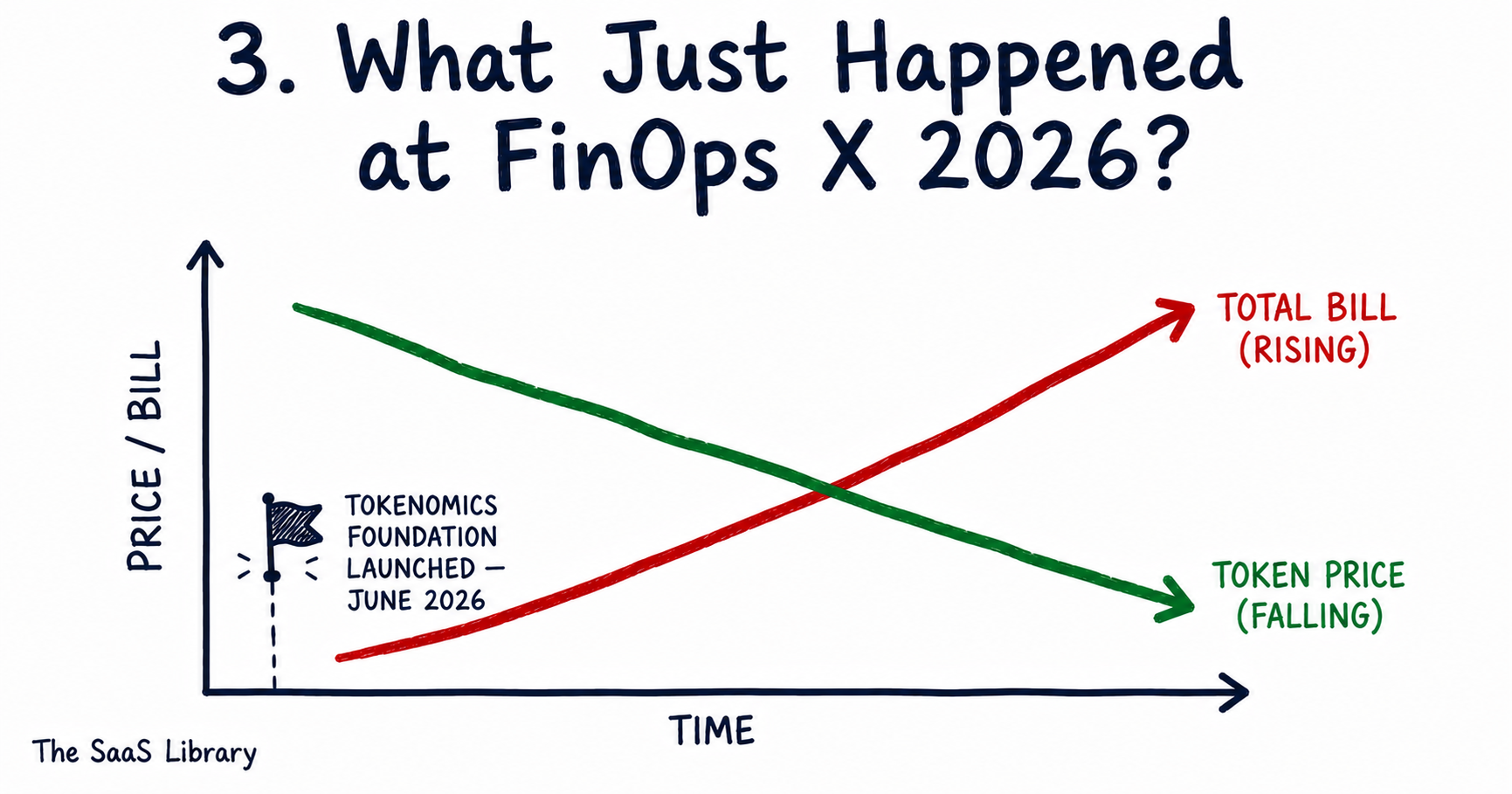
That points to a genuinely counterintuitive fact worth sitting with: token prices are falling, but bills are not, because usage volume is growing faster than price is falling, according to the FinOps Foundation’s State of FinOps 2026 report and analysis from Optimum Partners (2026).
Part of that volume growth is structural rather than temporary. Neoclouds — hyperscaler-alternative GPU providers — have started extending minimum commitments from one year to three-to-five years, because they can no longer guarantee capacity any other way, according to the nOps recap of the FinOps X 2026 keynote. Waiting for cheaper tokens to solve a budget problem is not a strategy for the next two years.
So far, this covers what AI FinOps is and why 2026 changed the urgency around it. What’s next is more practical: why a single feature can blow a budget without warning, and the four-stage framework for keeping it under control.
Why Does a Small AI Feature Create a Big, Invisible Bill?
A small AI feature creates a big, invisible bill because one user action rarely means one model call. An agent handling a single customer request might retrieve context, call a tool, verify its own output, and self-correct — each step is a separate, separately-billed inference call, according to WitnessAI (2026). If you’ve shipped an AI feature without mapping out every step it actually triggers, this is the blind spot waiting to surface.
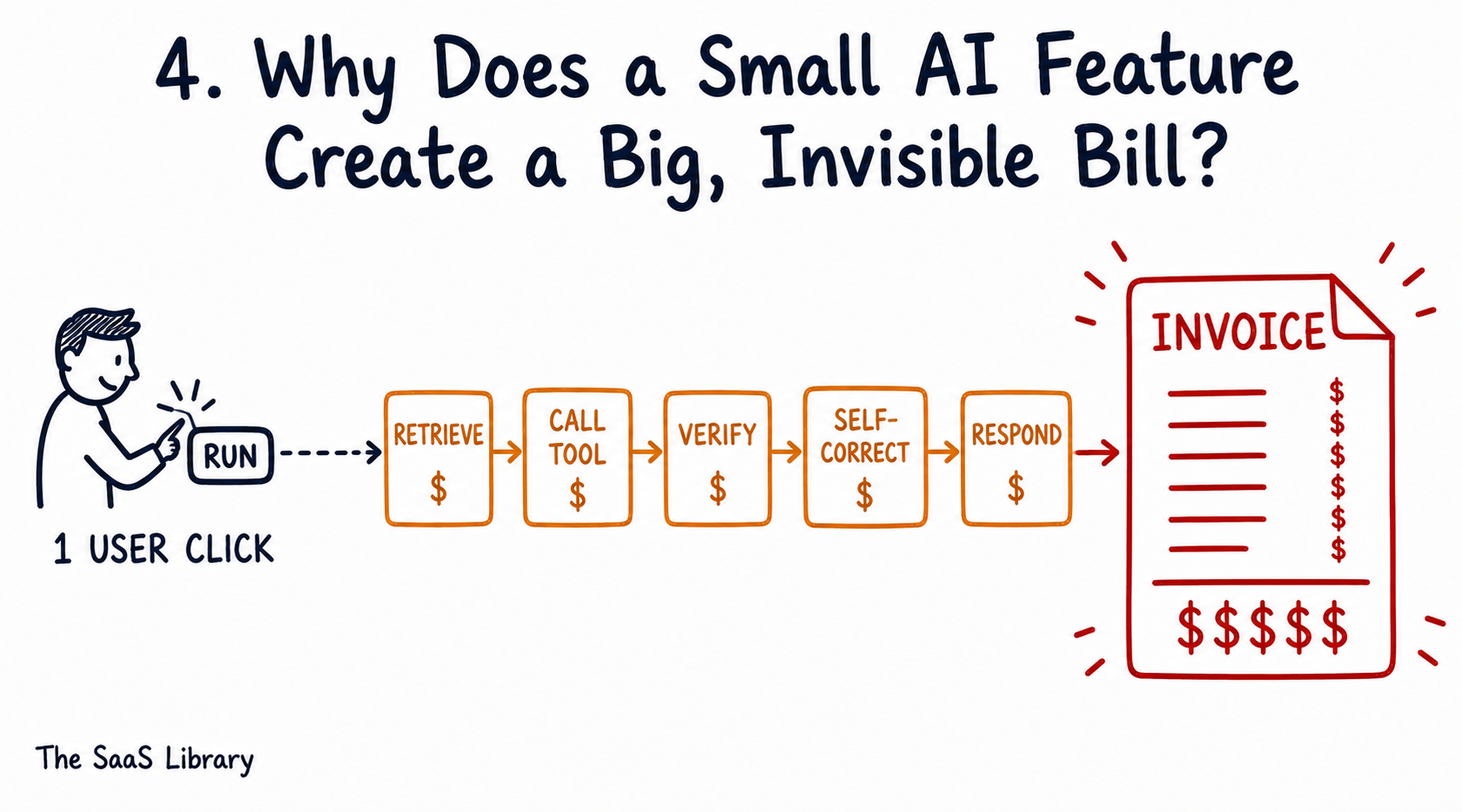
Agents make this worse than chatbots do, because they reason iteratively rather than responding once. IDC frames the underlying risk directly: “AI Agents, designed to act autonomously, make decisions that carry unchecked cost implications in real time,” as cited by WitnessAI (2026). Some agent objectives don’t have a clear stopping condition, which means token consumption — and cost — can vary wildly for what looks like the same task run twice.
The most extreme illustration of where this can lead comes from SemiAnalysis, a semiconductor research firm that publicly disclosed its own internal AI token spend had reached roughly 30% of total employee compensation, according to SemiAnalysis’s own newsletter (2026). This is worth being precise about: it is one firm’s self-reported number, not an industry average. But their own framing of it is the useful part — they noted that “every research firm, hedge fund, and law firm we know is heading toward a similar number, just on a delay,” according to SemiAnalysis on X (2026). The number itself is extreme; the direction it points in is not.
Why Does Your Own AI Pricing Break Without This?
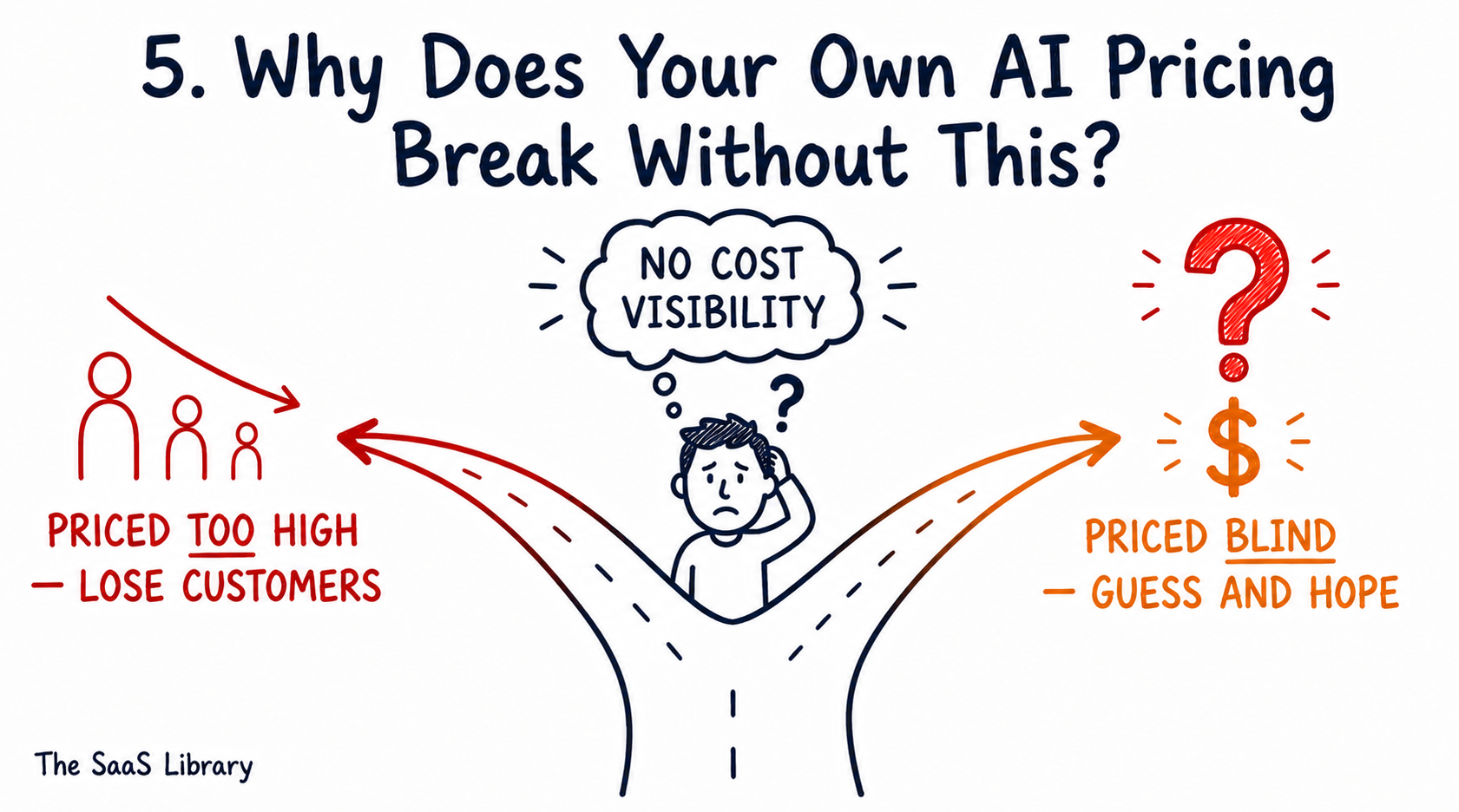
Your own AI pricing breaks without cost visibility because you cannot price what you cannot measure. If you don’t know your cost per user action for an AI feature, you have two options:
- Price it high enough to cover the worst-case usage and risk losing customers to a cheaper competitor.
- Price it low and guess, and find out only after the invoice arrives whether that guess was profitable.
This is already reshaping how vendors price AI features rather than whole products. Salesforce introduced an outcome-based pricing model that charges only when a problem is actually resolved, according to BigGo Finance (2026), directly tying price to a cost the company can measure rather than a flat seat fee. This mirrors a broader shift already underway in B2B SaaS pricing more generally, where per-seat models are giving way to usage- and outcome-based structures as AI features make flat pricing harder to sustain.
The FinOps discipline exists precisely to close this gap before it becomes a pricing problem. A team that can attribute cost down to a specific feature or customer — the same unit economics an AI FinOps practice is built to produce — is the same team that can price an AI feature with confidence instead of a guess.
The AI Spend Lifecycle (ASL) — A Four-Stage Framework for B2B SaaS Teams
The AI Spend Lifecycle (ASL) is a four-stage framework for bringing AI cost under control: Discover, Attribute, Govern, and Optimise. It mirrors the crawl-walk-run maturity model the FinOps Foundation itself uses for AI adoption, according to linesNcircles (2026), but reframed as four concrete stages a small SaaS team can act on without a dedicated FinOps department.
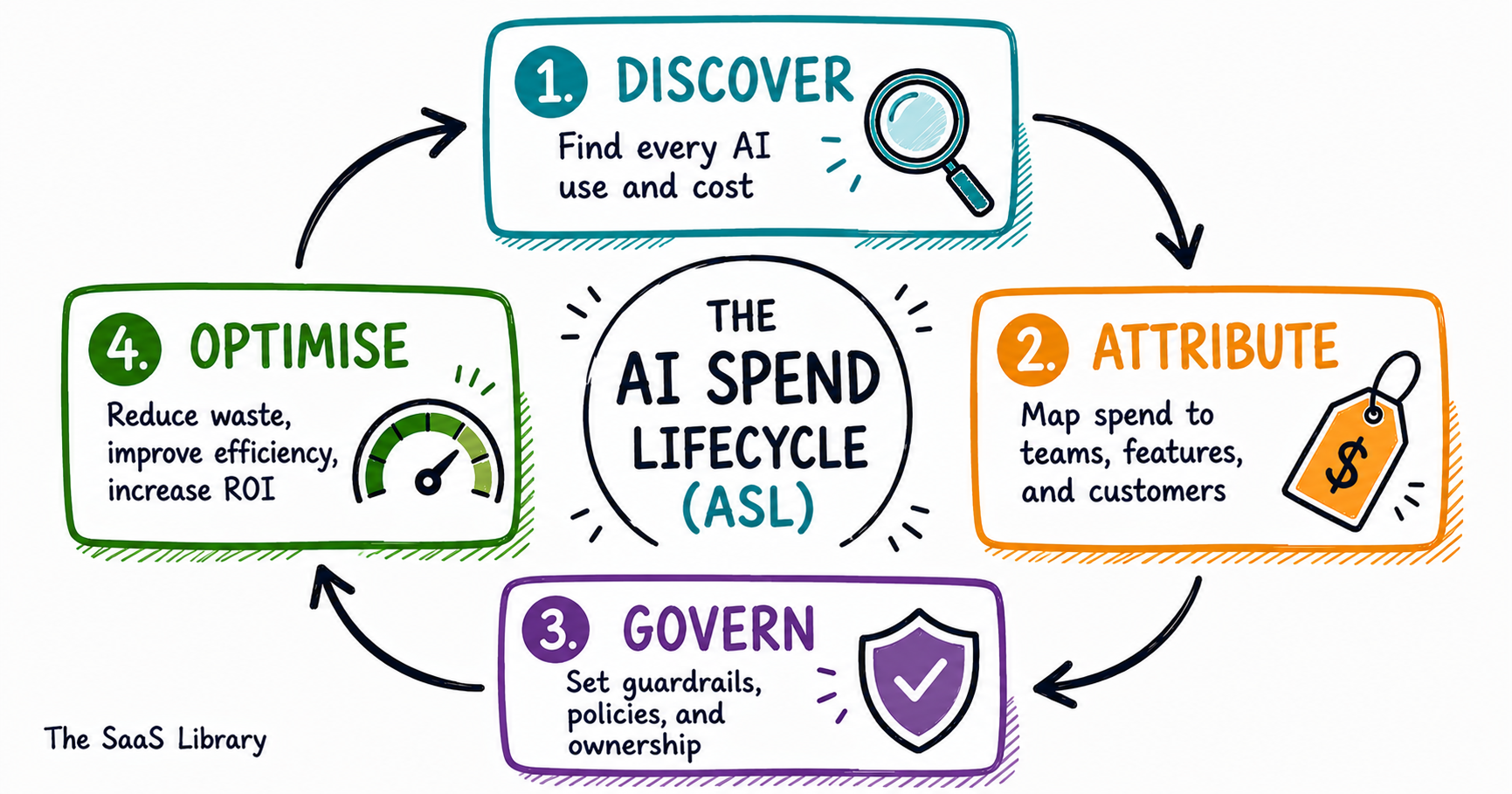
The ASL is a cycle, not a checklist — Optimise feeds back into Discover as usage patterns change, which is why teams that treat this as a one-time audit fall behind again within a quarter.
Prompt length is one of the biggest cost levers a team controls directly — a 2,000-token prompt costs twice as much as a 1,000-token prompt, according to nOps, 2026.
What Metrics Does AI FinOps Actually Track?
AI FinOps tracks metrics built around the token rather than the compute-hour, because token consumption is the atomic unit every AI cost question traces back to, according to Mavvrik’s recap of the FinOps X 2026 keynote. Three metrics matter most for a B2B SaaS team getting started:
Cost per token is the most basic unit — what you pay per million tokens processed. It’s the easiest to measure because it’s the one line item every AI provider bills directly, but on its own it tells you almost nothing about whether that spend is producing value.
Cost per inference measures what a single request or response actually costs end to end, factoring in prompt length, model tier, and output length together rather than looking at token price in isolation. This is closer to a true unit-economics number a SaaS team can tie to a specific feature.
Cost per outcome is the newest and most ambitious of the three: fully-loaded AI cost divided by outcomes that were actually verified — a resolved support ticket, a completed workflow — rather than by raw requests, according to Mavvrik’s FinOps X 2026 recap. It’s worth being precise here: this metric only means something once a team has explicitly defined what counts as an “outcome.” Without that definition first, cost per outcome is a phrase, not a measurement.
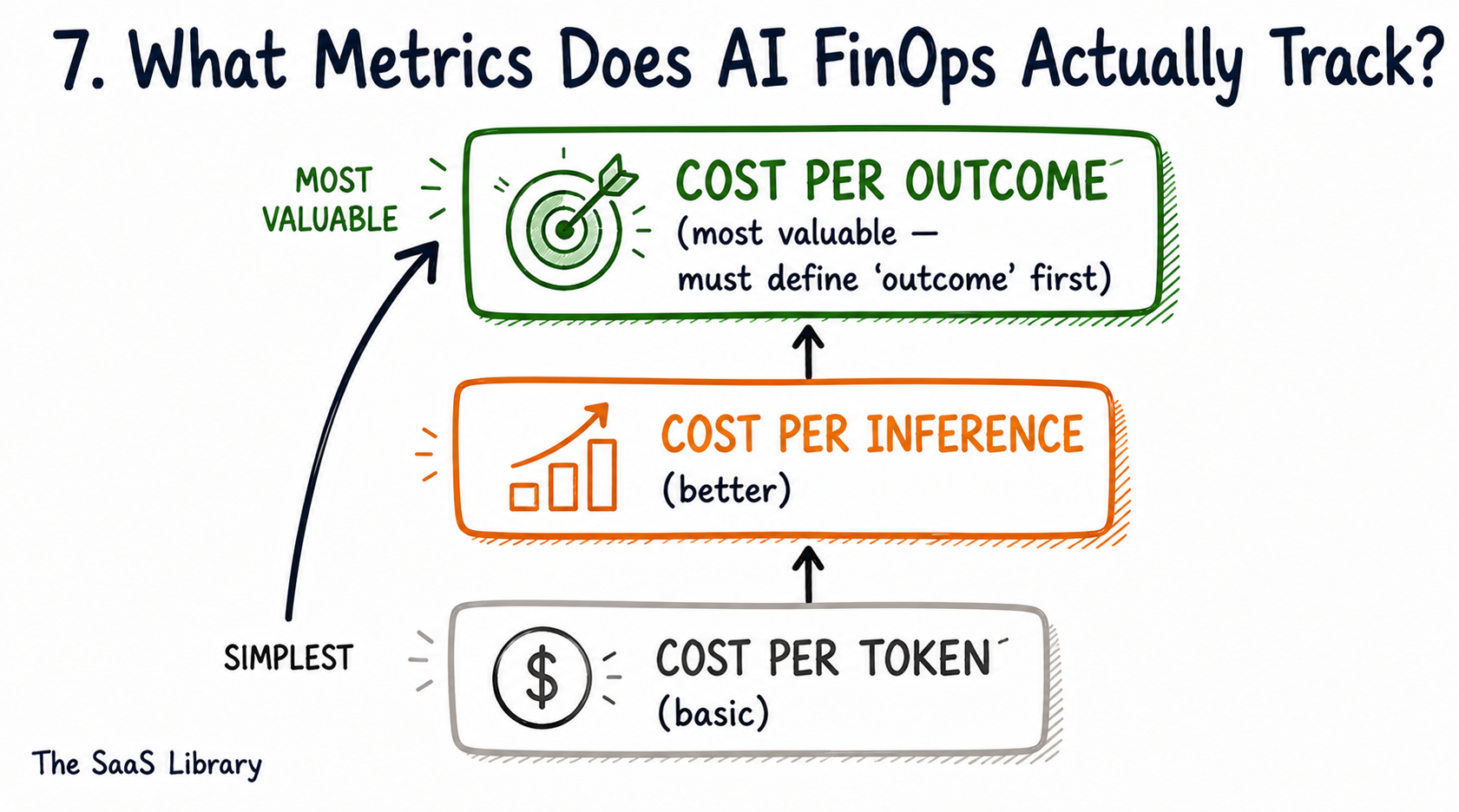
The FinOps Foundation’s own framing captures why this progression matters: the goal is value per token, not cost per token, and that number is only earned by optimising across every layer, according to Mavvrik (2026).
- No single person or team owns the AI spend line item
- A bill spikes after what seemed like a small, quiet product change
- Nobody can answer “which feature drove this cost increase?” without manually digging through logs
- AI budget forecasts have already been exceeded, more than once, in the same year
- Developers have API keys that finance or procurement doesn’t know exist
What Tools Do AI FinOps Teams Use in 2026?
AI FinOps teams use a mix of dedicated AI cost platforms and traditional cloud FinOps tools that have added token-level tracking. You don’t need all three categories on day one — most teams start with one and add the others as spend grows.
AI-native cost platforms track token spend directly from model providers. Amnic offers agentless, read-only tracking across Amazon Bedrock, with OpenAI and Anthropic coverage rolling out, and prices as a percentage of monitored spend rather than charging per seat. Vantage provides native token-level ingest from OpenAI, Anthropic, Databricks, and Anyscale, plus an MCP server that lets your engineers query AI spend directly from inside their coding tools.
Unit-economics platforms connect AI spend to business outcomes rather than just totals. CloudZero maps every dollar of LLM and GPU spend to cost per feature, cost per customer, or cost per AI inference call through what it calls its Dimensions framework, and reports customers saving an average of 22% in year one.
Unified cost platforms combine AI spend with existing cloud and SaaS costs in one view. Finout consolidates AI and cloud spend through what it calls MegaBill, and offers a natural-language cost-query assistant so a non-technical stakeholder can ask a plain-English question about the AI bill instead of reading a dashboard.
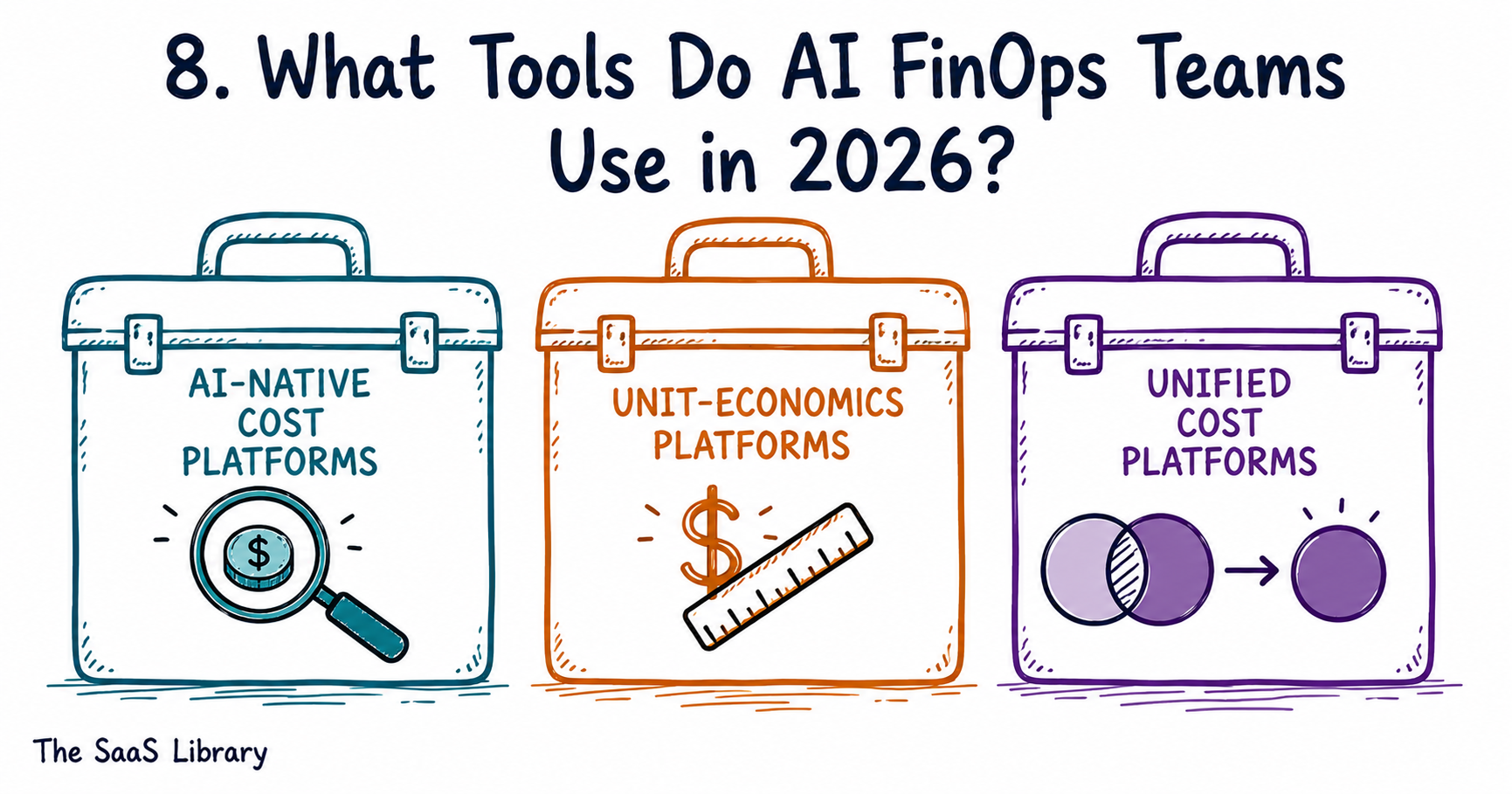
Only 51% of organisations can confidently evaluate their AI ROI even with these tools in place, according to CloudZero’s State of AI Costs research (2026). The tooling helps, but it doesn’t substitute for the Discover → Attribute → Govern → Optimise discipline covered earlier — a platform can show you the number, but it can’t decide who owns it.
Frequently Asked Questions
What is AI FinOps?
AI FinOps is the practice of tracking, attributing, and governing the cost of AI usage — token-based spend on large language models, GPU compute, and inference — so AI investment ties back to measurable business value.
How is AI FinOps different from cloud FinOps?
AI FinOps tracks tokens and inference calls instead of compute-hours and storage GB, and deals with volatile, developer-triggered spend instead of predictable, provisioned infrastructure costs, according to Amnic.
What is a token in AI pricing?
A token is the basic billing unit for AI models — roughly four characters of text, or about three-quarters of a word in English, according to nOps (2026).
What is the Tokenomics Foundation?
The Tokenomics Foundation is an organisation launched by the Linux Foundation at FinOps X 2026 to build open specifications and benchmarks for AI billing, working alongside the FinOps Foundation.
Why do AI costs keep rising even as token prices fall?
AI costs keep rising because usage volume is growing faster than per-token prices are falling — blended token costs dropped 67% year-over-year, yet 73% of enterprises still exceeded their AI cost projections, according to the FinOps Foundation.
What is cost per outcome in AI FinOps?
Cost per outcome is fully-loaded AI cost divided by outcomes that were actually verified, such as a resolved ticket or completed workflow, rather than by raw requests, according to Mavvrik.
Who manages AI FinOps in an organisation?
AI FinOps is typically managed by a company’s existing FinOps team, which has expanded its scope to include AI spend alongside cloud and SaaS — 98% of FinOps teams now manage AI spend, up from 31% two years earlier, according to the FinOps Foundation.
What tools do AI FinOps teams use?
AI FinOps teams use a mix of AI-native cost platforms like Amnic and Vantage, unit-economics platforms like CloudZero, and unified platforms like Finout.
Why is AI spend harder to track than cloud spend?
AI spend is harder to track because of developer-led purchasing, opaque billing, and pricing that varies dramatically across model tiers — the same structural gap covered earlier in this article.
What is shadow AI?
Shadow AI refers to AI tools and API keys in use across an organisation without finance or procurement’s knowledge, often created by individual developers with a credit card.
How can a SaaS company reduce its AI token costs?
A SaaS company can reduce AI token costs by shortening prompts, caching repeated context, and routing routine tasks to smaller models — trimming a bloated system prompt alone can cut baseline input cost by 30–50%, according to Silicon Data (2026).
Will AI costs keep falling in 2026 and 2027?
AI infrastructure costs are unlikely to fall further in the near term — token prices are falling, but total bills are still rising because usage is growing faster than price drops, according to the FinOps Foundation and Optimum Partners (2026).
Conclusion
AI FinOps exists because the old cloud playbook doesn’t survive contact with token-based billing. The AI Spend Lifecycle — Discover, Attribute, Govern, Optimise — gives a B2B SaaS team a starting structure, but the real shift is cultural: someone has to own the number before the invoice arrives, not after.
Token prices falling isn’t a cost strategy; visibility is. If your team can’t yet answer “which feature drove this cost,” that’s the place to start.
For a closer look at how ungoverned AI usage compounds this risk, see 96% of Companies Are Running AI Agents. Only 21% Can Control Them.
- FinOps Foundation — State of FinOps 2026 Report
- FinOps Foundation — Token Economics: Managing AI Value in SaaS Model Token Costs
- FinOps Foundation — AI Value Topic Page
- CIO Dive — Foundation to Tackle AI Token Cost Management
- nOps — FinOps X 2026 Day 1 Keynote Recap
- nOps — LLM Cost Optimization: 10 Tips
- Optimum Partners — AI Token Costs and How They Might Wreck Your Budget
- Mavvrik — FinOps X 2026 Recap: AI Tokenomics Explained
- WitnessAI — FinOps for AI: How to Build the Right Guardrails
- SemiAnalysis — AI Value Capture Newsletter
- SemiAnalysis — X/Twitter Post
- BigGo Finance — AI Token Costs Explode
- Amnic — 8 Best FinOps Tools for AI Cost Management
- CloudZero — FinOps Tools: The Definitive Guide
- Finout — AI Cost Visibility in 2026
- Silicon Data — Understanding LLM Cost Per Token
- linesNcircles — The 2026 AI FinOps Guide