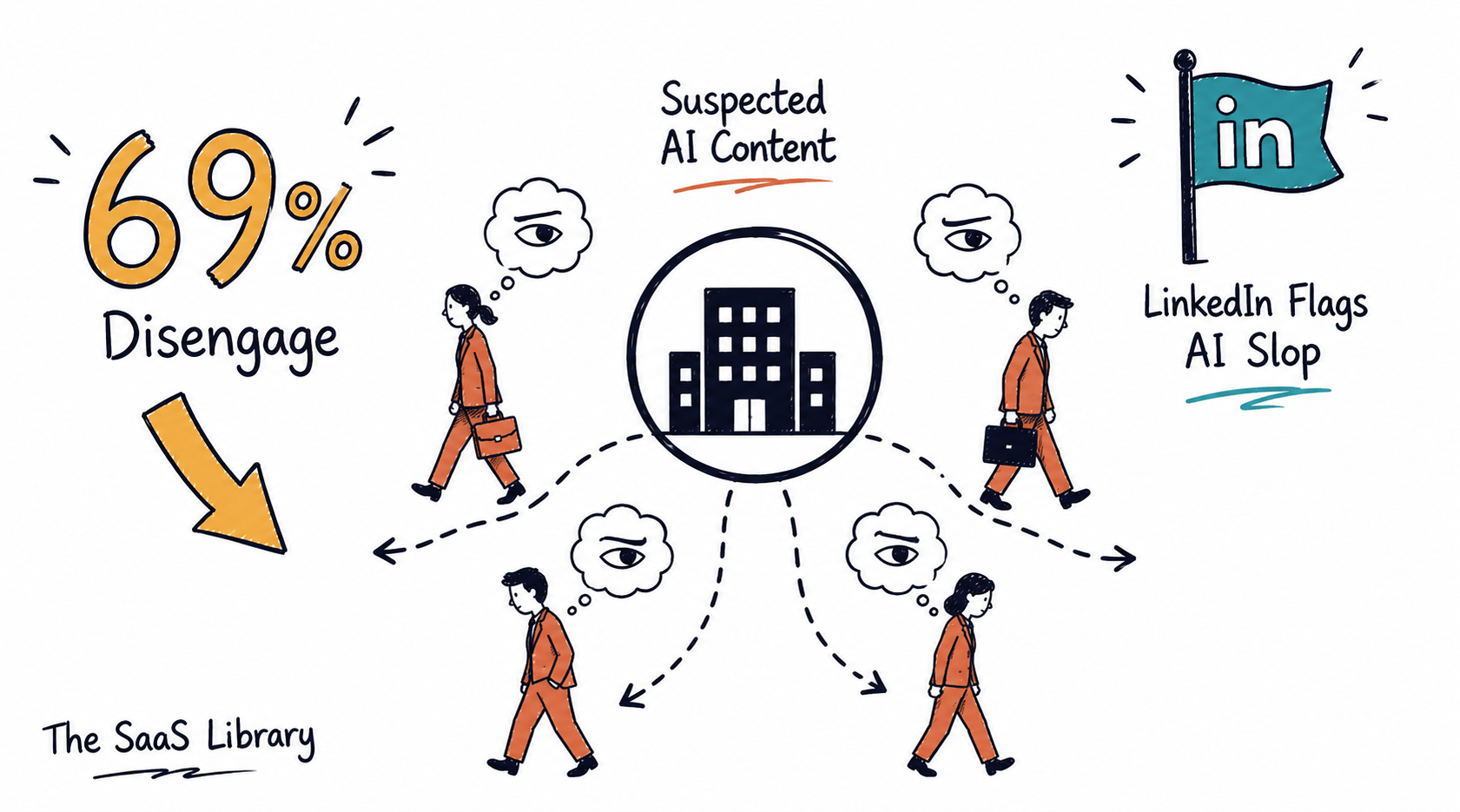
Sixty-nine percent of executives say AI-generated content makes them less willing to engage with the brand behind it. That number should reshape how every SaaS marketing team thinks about content volume.
AI-generated content is killing thought leadership because it erodes the buyer trust the format depends on — 69% of executives disengage from suspected AI content before judging its quality. The fix isn’t avoiding AI; it’s using it only for research and stress-testing while a human keeps the thesis, judgment, and final voice.
This article originally published April 15, 2026, built around interactive quiz widgets and a coined “AI;DR” framing with no current-format structure. This rebuild replaces every stat with verified 2025–2026 primary sources (GTLI at APQC, 6sense, Momentum ITSMA, Schilke & Reimann), adds a new section on AI disclosure — an angle the original didn’t cover at all — and replaces the old interactive widgets with the Intelligence Amplifier framework and current-template structure.
Most advice on AI and thought leadership stops at “use AI carefully.” That’s not specific enough to act on. This piece verifies which 2026 data actually holds up, settles whether disclosing AI use helps or hurts trust, and lays out the Intelligence Amplifier — a five-step system for using AI without letting it write your position for you.
What is the AI;DR effect, and why does it cost B2B brands more than engagement?
The AI;DR effect is executives and buyers disengaging from a brand — not just an article — once they suspect AI authorship. It costs SaaS companies shortlist inclusion before a sales conversation ever happens, since 95% of B2B deals are won from a vendor’s Day One shortlist.
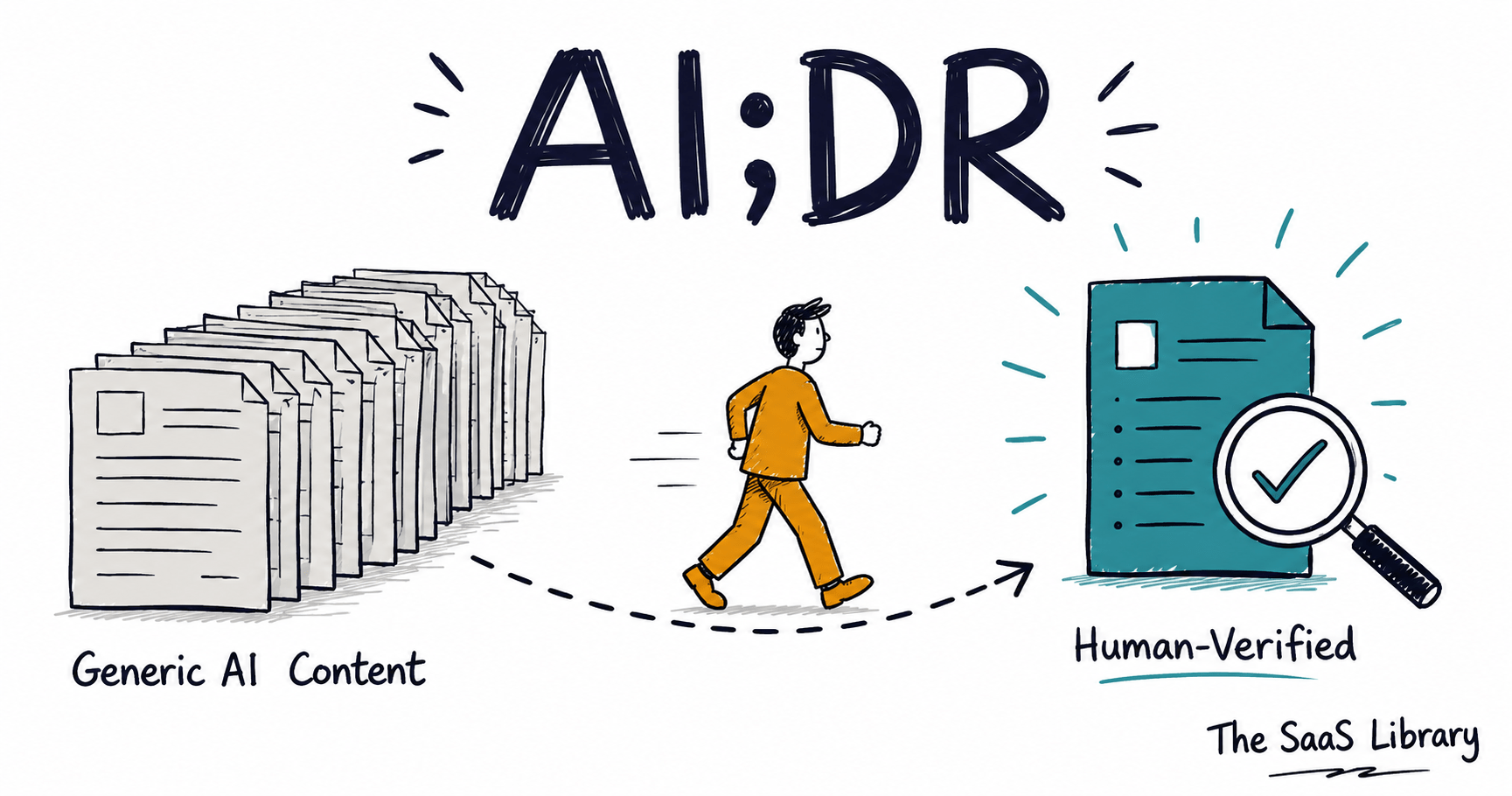
AI;DR — “AI, didn’t read” — is not a joke about bad writing. It is measurable disengagement, and it is accelerating.
The Global Thought Leadership Institute at APQC surveyed 1,000 C-suite executives and 359 thought-leadership producers in 2026: despite 93% reporting real organizational benefits from thought leadership, 69% said AI-generated content reduces their willingness to engage with it at all.
This isn’t confined to B2B decision-makers, and it is not staying passive:
- GTLI at APQC (2026): 69% of executives say AI content reduces their willingness to engage
- Sprout Social (2026): 50% of Gen Z, 44% of millennials have blocked, muted, or unfollowed a brand over “AI slop”
- LinkedIn (July 2026): launched a feature letting users flag suspected AI slop directly on posts
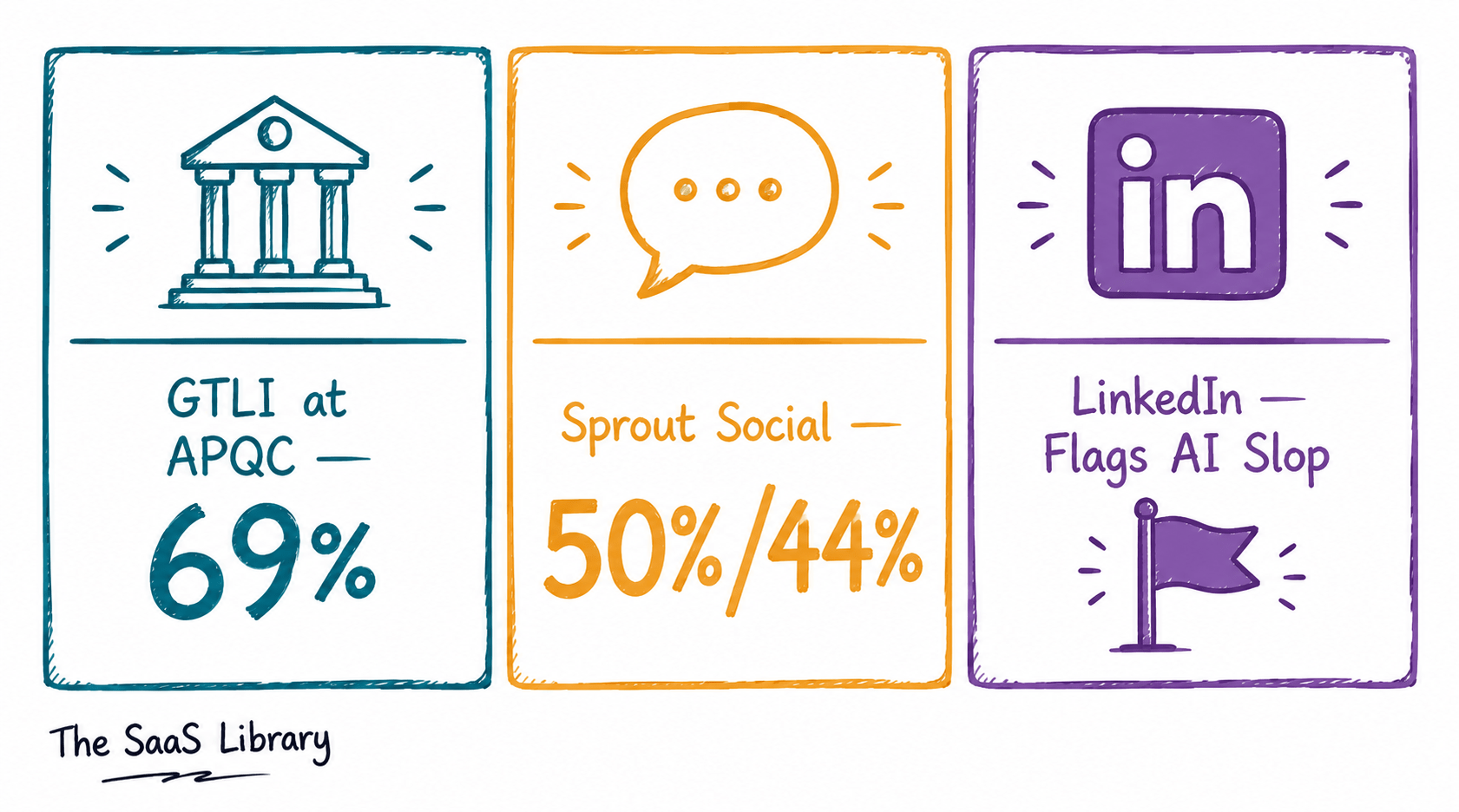
Platforms do not build detection tooling for problems that aren’t already costing them engagement. LinkedIn’s move confirms the backlash is structural, not anecdotal.
6sense’s 2025 B2B Buyer Experience Report surveyed 4,510 recent B2B buyers and found 95% of deals go to a vendor already on the Day One shortlist — up from 85% in 2024. Thought leadership is how a brand gets onto that shortlist before formal evaluation starts.
Trigger AI;DR before anyone reads past the headline, and shortlist inclusion disappears silently, at scale. The buyer never explains why — they simply don’t call.
How does AI content volume collapse brand authority?
AI content volume collapses brand authority by making a company’s output indistinguishable from its competitors’. When audiences can no longer tell one brand’s thinking from another’s, the specific expertise thought leadership is supposed to signal disappears — regardless of how technically correct any single piece is.
This is not hypothetical. In July 2026, PwC was caught publishing AI-generated reports with fabricated footnotes — detected by GPTZero and verified independently by the Financial Times (Forbes, July 31, 2026). A Big Four firm, whose entire business model rests on trusted judgment, got caught outsourcing that judgment to a model that invented its own sources.
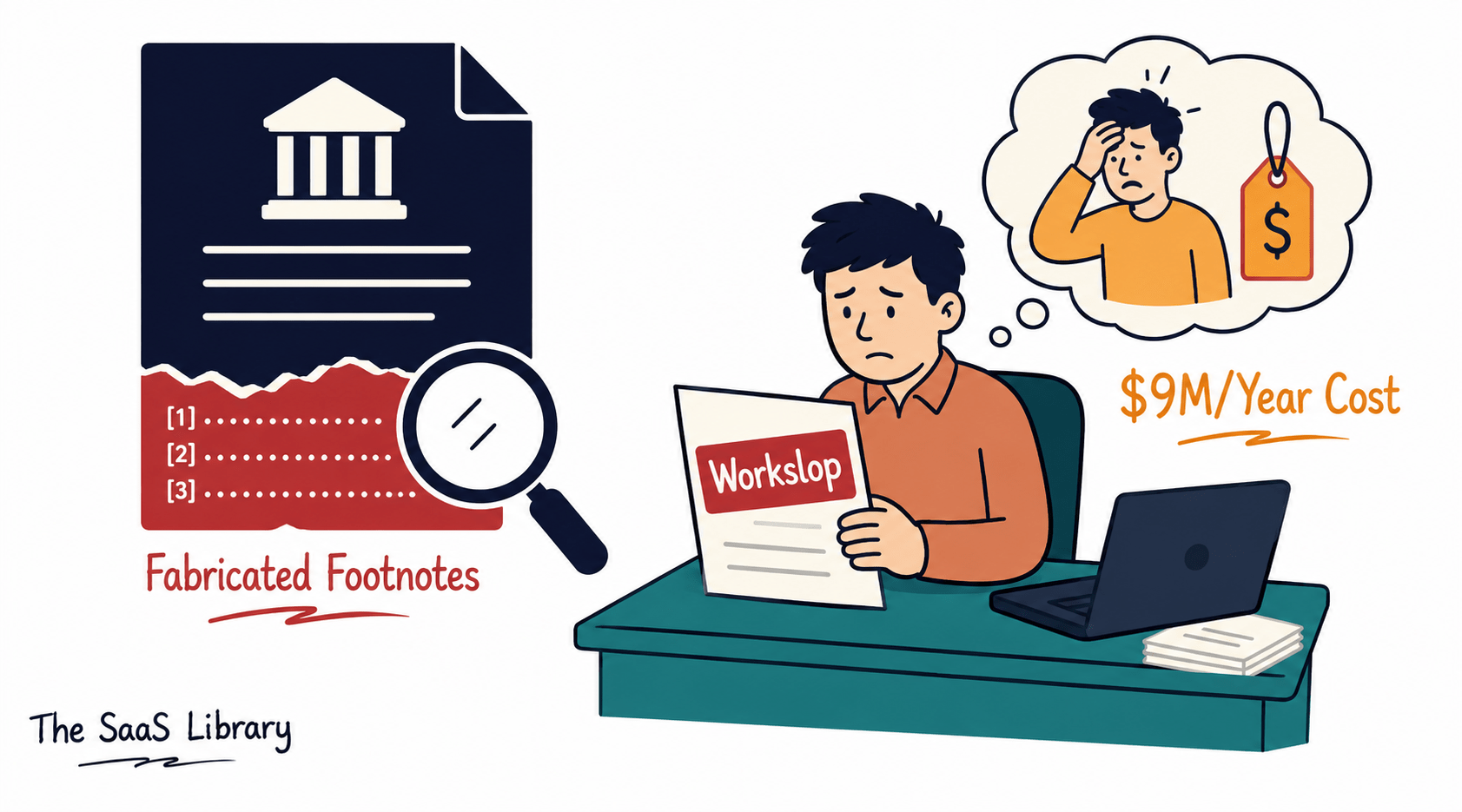
The damage isn’t only external. Inside organizations, the same collapse is happening to individual reputations.
The pattern repeats at the industry level, and practitioners are naming it as a threat, not just a nuisance:
- Momentum ITSMA (2025): 99% of executives say thought leadership is important or critical when assessing providers — but 57% say they can no longer distinguish between providers’ content
- Momentum ITSMA (2024): 72% of senior marketers fear generative AI will make all thought leadership look the same
- Meltwater (2025): “AI slop” mentions rose 9x year-over-year, with negative sentiment peaking near 54%
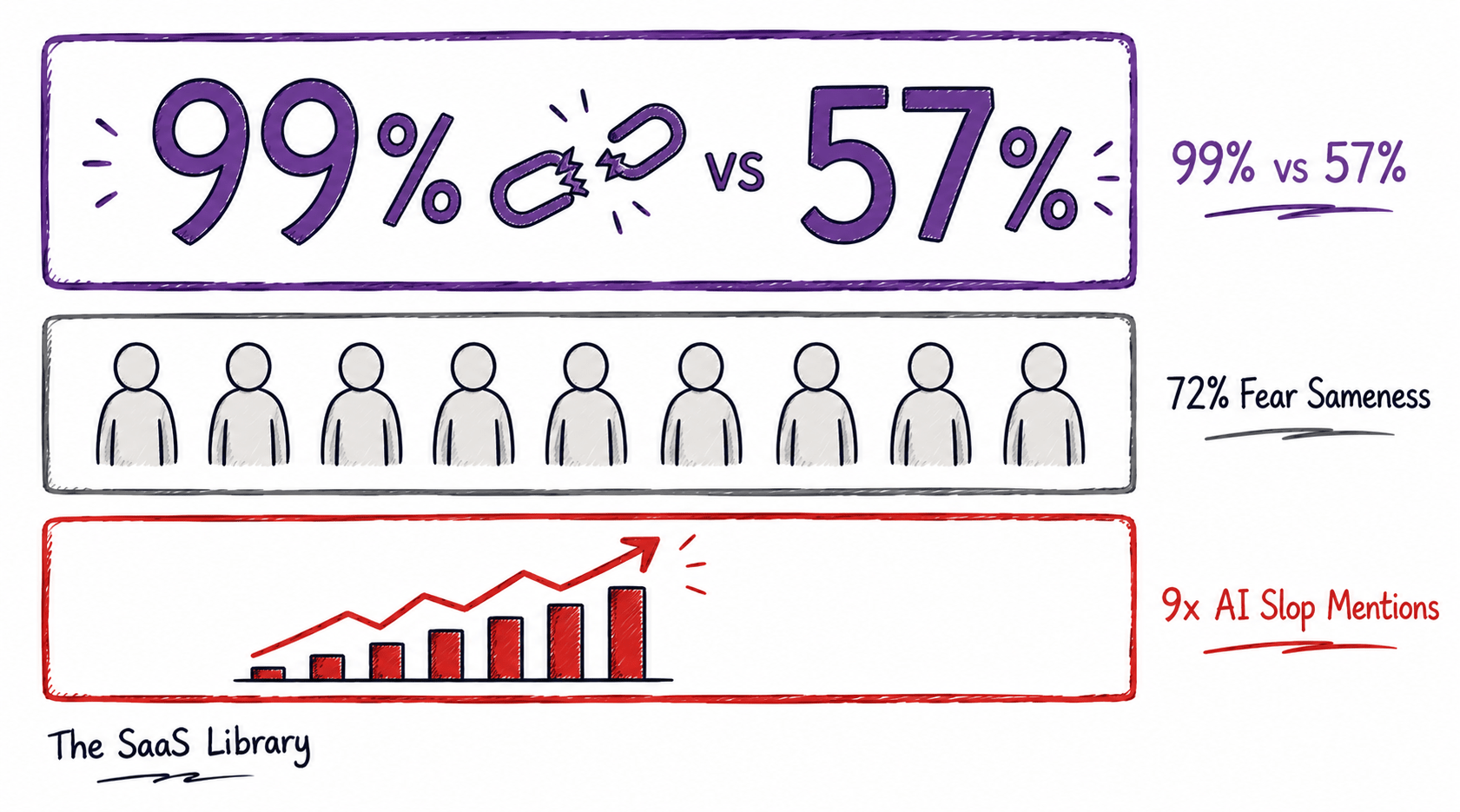
Authority requires differentiation. When 99% of buyers say thought leadership matters but 57% can’t tell providers apart, volume has replaced the one thing that made the content valuable in the first place.
Buyer trust in B2B content is already breaking down for reasons beyond AI — see the full picture.
Read the trust gap breakdown →Does disclosing AI use in content build or break trust?
Disclosing AI use in content builds trust only when it explains how AI was used in the process. A bare label stating content is AI-generated tends to reduce trust instead — the disclosure has to demonstrate accountability, not just admit involvement.
Most advice here defaults to “just be transparent.” The evidence says that’s incomplete, and sometimes wrong.
Oliver Schilke and Martin Reimann ran 13 preregistered experiments across contexts — investment advice, hiring, classrooms, creative work — and found the same result every time: people who disclosed AI use were trusted less than those who said nothing at all (Schilke & Reimann, 2025, Organizational Behavior and Human Decision Processes).
eMarketer’s December 2025 data, sourced from Klaviyo and Datalily, found only 7% of people trust a brand more for visible AI content, while 31% trust it less.
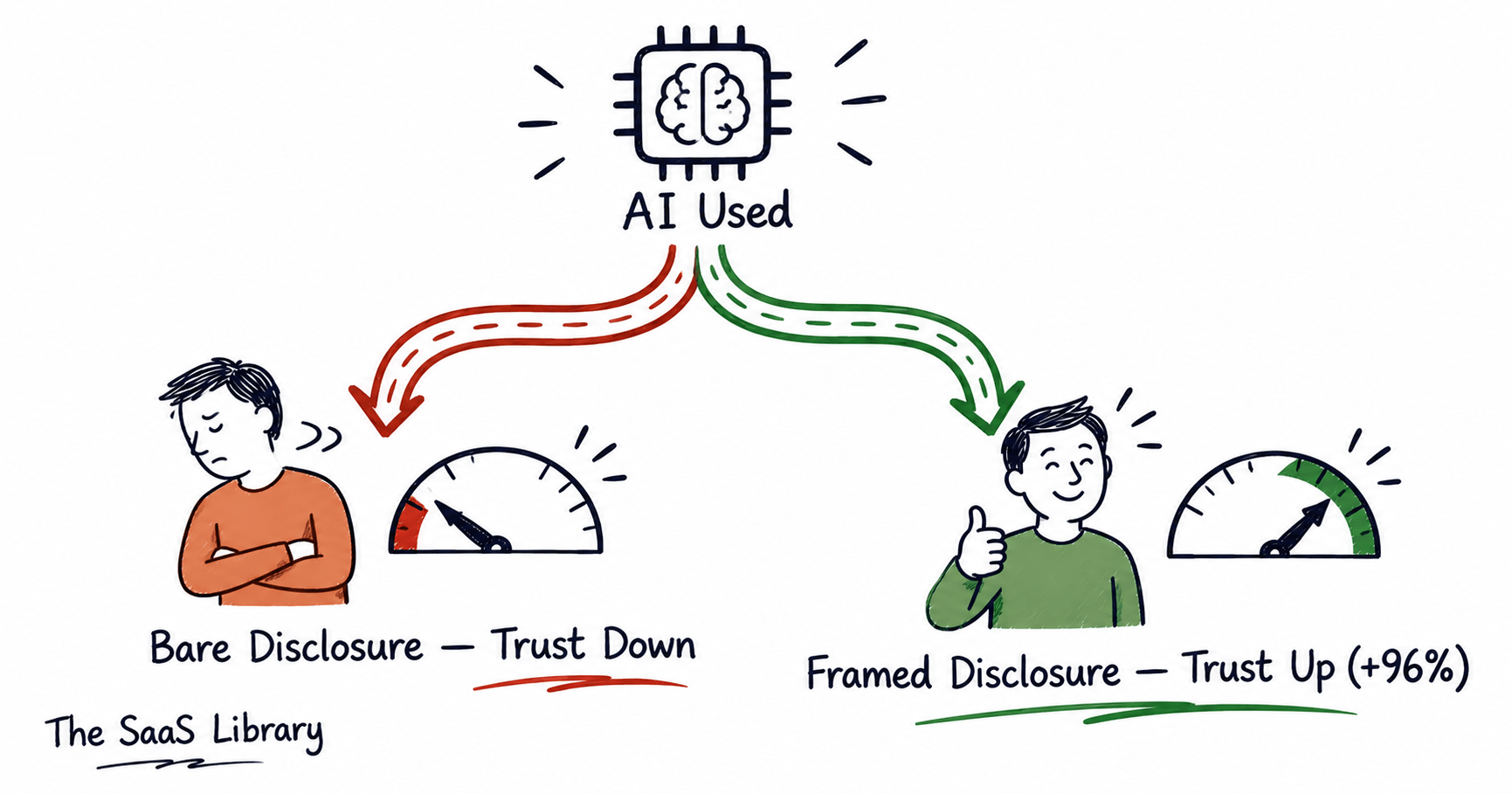
But bare disclosure and framed disclosure are not the same thing, and conflating them is the mistake most brands make:
- Schilke & Reimann (2025): bare AI-authorship disclosure reduces trust on its own, across 13 experiments
- eMarketer (2025): 7% trust a brand more for visible AI use; 31% trust it less
- Yahoo/Publicis Media (2024): AI-disclosed ads that were noticed saw a 73% lift in trustworthiness and a 96% lift in overall company trust — but only 24% of people noticed the disclosure at all
The gap between those findings isn’t a contradiction. A disclosure that says “this was AI-generated” reads as a confession. A disclosure that says where a human verified, edited, or pushed back on the AI’s output reads as accountability.
We tested this against a real example before writing this section. A widely-cited “60% of consumers trust AI content less” statistic — currently surfacing inside Google’s own AI Overview — traces back to nothing original.
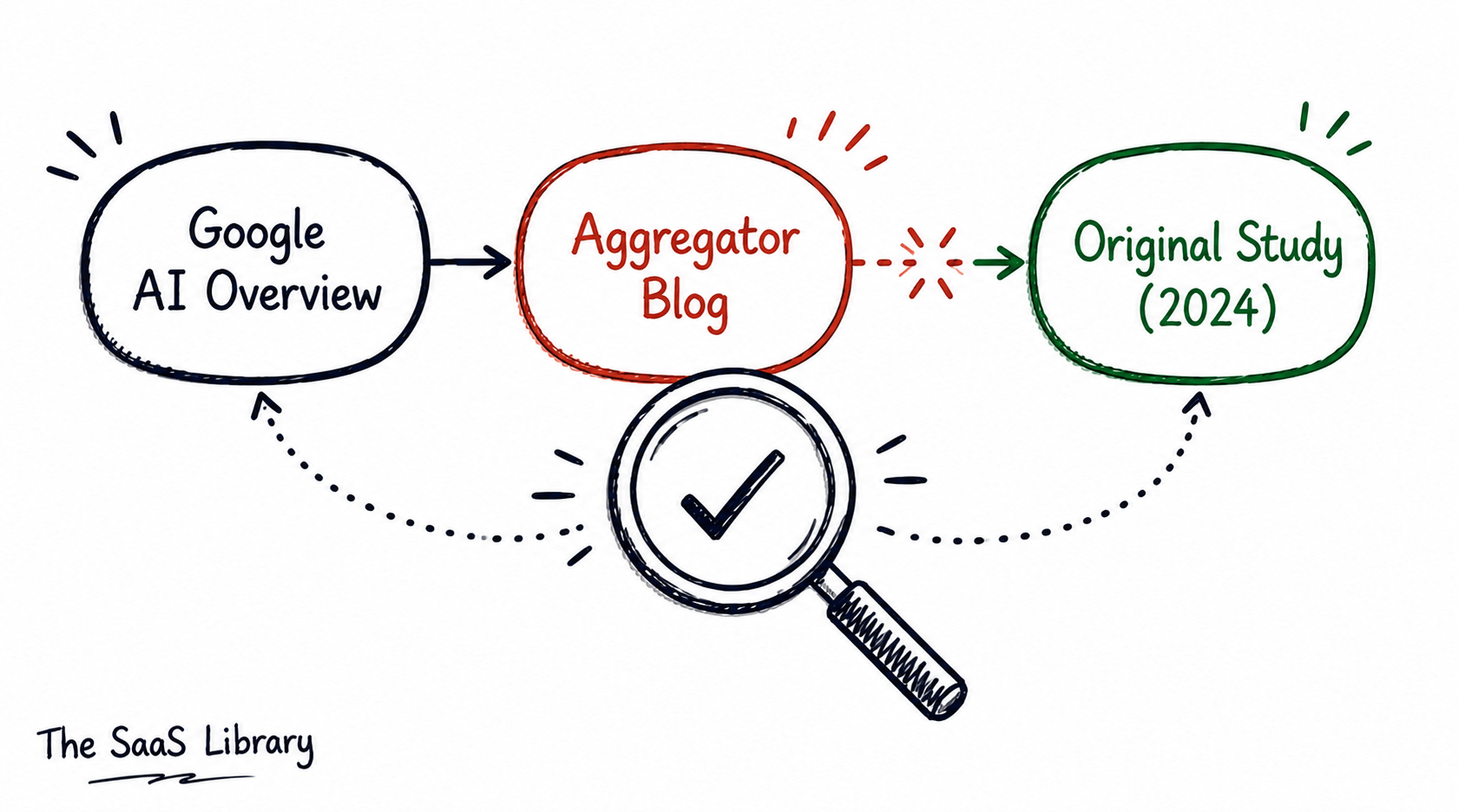
It’s an aggregator restating Bynder’s 2024 survey number as if it were new research. That’s the exact failure mode this section is about: content that sounds authoritative because it’s confidently stated, not because anyone checked it.
How should SaaS brands actually use AI in thought leadership?
So far: AI content is measurably eroding trust, and disclosure only helps when it explains the how, not just the that. What’s left is the actual operating model — how to use AI without triggering either problem.
SaaS brands should use AI as an amplifier — for research, structuring, and stress-testing an argument — while keeping the original thesis, judgment calls, and final voice entirely human. This isn’t a compromise position; it’s the only approach the current evidence actually supports.
The data on this is more settled than most vendors admit. Graphite’s 2025 analysis of 65,000 URLs found that 86% of top-ranking Google pages and 82% of content cited by AI assistants like ChatGPT and Perplexity are still human-written.
Search engines and AI models are both, independently, rewarding human authorship — not penalizing AI assistance, but rewarding the specific signal only a human can add.
This isn’t a new idea dressed up with a new name. A 2026 Business Horizons paper describes AI as amplifying “the strategic logic already embedded within the organization” rather than generating one of its own (ScienceDirect, 2026). The mechanism is the same at the content level — AI doesn’t originate a position, it executes one faster once a human has staked it out.
That’s the operating model this article calls the Intelligence Amplifier: three distinct jobs, only one of which AI is allowed to do alone.
- Research — AI pulls, structures, and synthesizes source material a human hasn’t had time to read in full
- Synthesis — AI drafts a structured first pass grounded in that research
- Stress-test — AI is asked to argue the opposite position, surfacing weaknesses before a human sees the draft
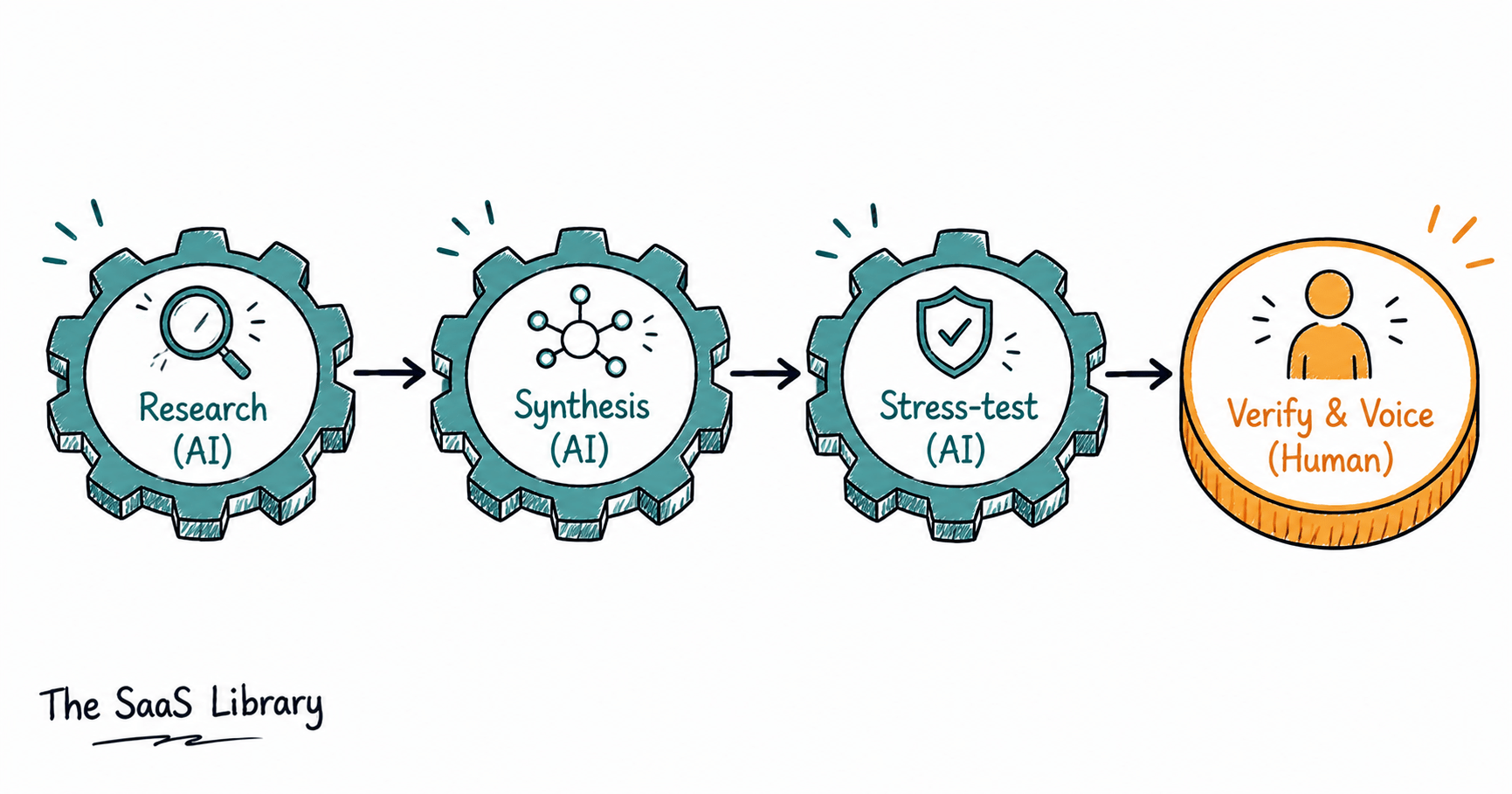
What AI never does: originate the thesis, verify the sources against primary data, or write the final sentence. That’s the same distinction our blog optimization for AI search piece makes about GEO generally.
Tools matter less here than the process does. Whichever AI writing tool a team uses, the failure mode is identical if a human never overrides the AI’s first draft: bland consensus, indistinguishable from every competitor running the same tool the same way. Google’s own guidance is blunt about this — as covered in our breakdown of Google’s AI search guidance, GEO and AEO are still SEO.
The Intelligence Amplifier isn’t a productivity hack. It’s the difference between AI helping a real position travel faster and AI manufacturing the appearance of a position that was never actually held.
How does thought leadership actually move B2B pipeline?
Thought leadership moves B2B pipeline by winning the shortlist before a sales conversation starts, not by generating traffic. 95% of B2B deals go to a vendor already on the buyer’s Day One shortlist — which means thought leadership’s real ROI shows up in pipeline velocity and win rate, not pageviews.
This reframes what “ROI” should even mean. If 95% of deals go to a vendor already on the shortlist before contact (6sense, 2025), traffic and pageviews are measuring the wrong stage of the funnel entirely.
| Source | Finding | Year |
|---|---|---|
| Ascend2/TopRank Marketing | 93% of marketers using research-based content say it’s effective; 47% plan to increase it | 2026 |
| Ascend2/TopRank Marketing | 97% call thought leadership critical to full-funnel success — yet only 43% extend it past acquisition | 2026 |
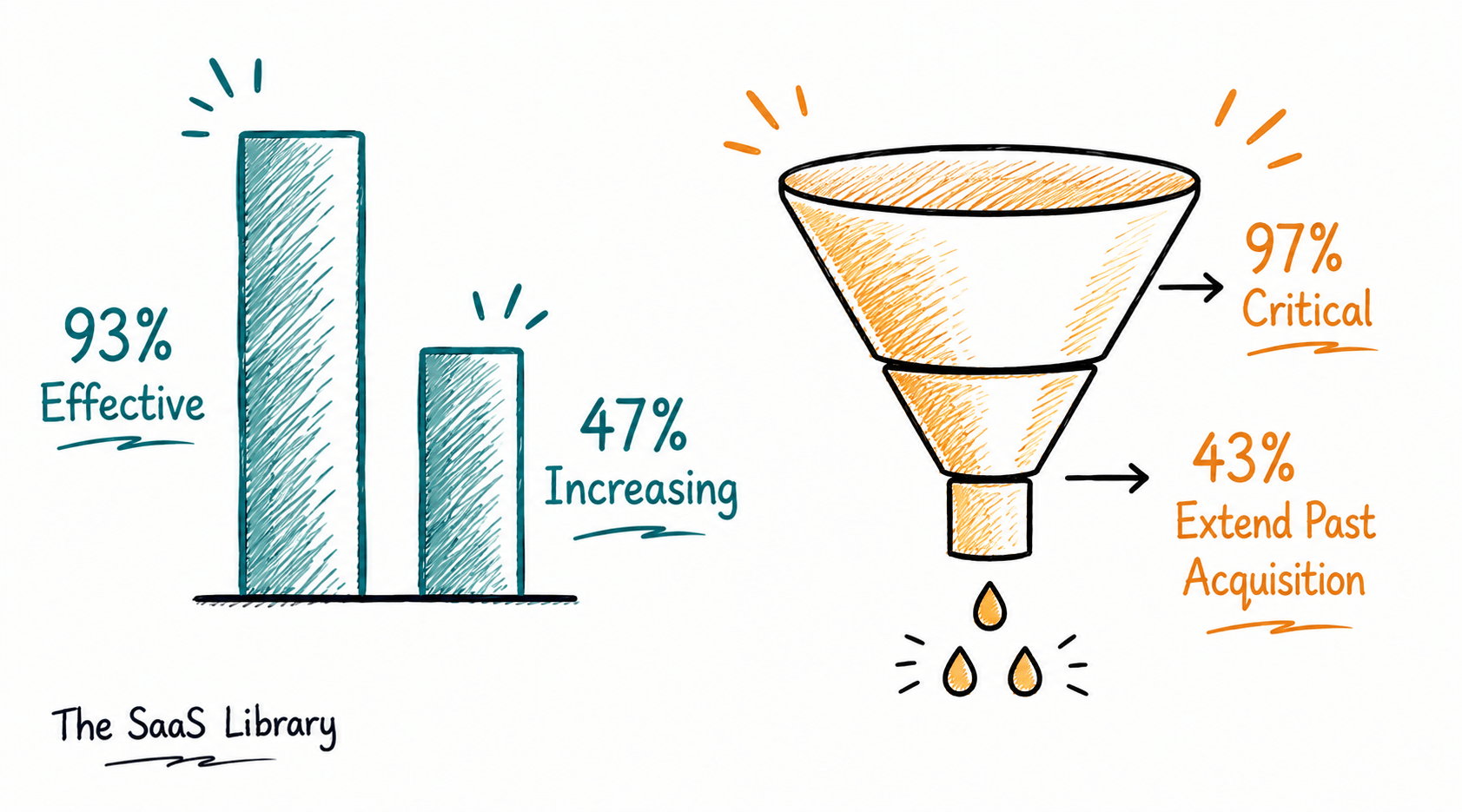
There’s a simpler fix than a full attribution model, and it comes straight from the 95% shortlist finding: ask the prospect directly.
The pipeline familiarity method:
- At the SQL stage, ask one question: “Before we spoke, how familiar were you with our point of view on [core topic]?”
- Tag every closed-won deal by the answer — familiar vs. not familiar before contact
- Compare close rate and sales-cycle length between the two groups
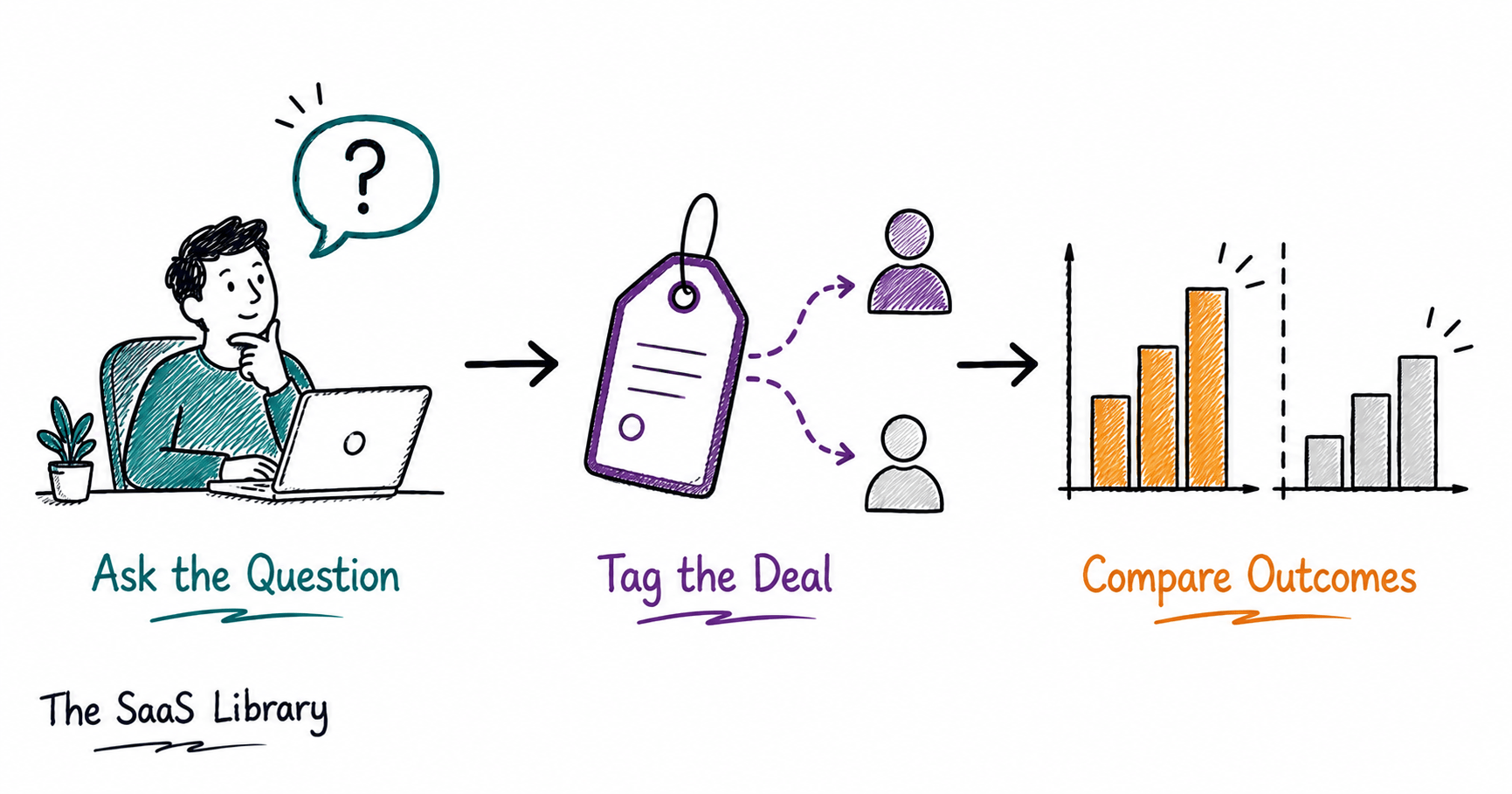
This isn’t attribution software. It’s a proxy tied directly to the one number that’s already been proven to matter. Teams running content distribution seriously, like the approach in our DIRHAM framework piece, are already positioned to run this cheaply.
None of this works, though, if the content driving that familiarity is the kind buyers already distrust. Which is exactly why the operating model matters as much as the measurement.
What is the Intelligence Amplifier system, and how does it work?
Every failure mode covered so far in this article — the trust collapse, the disclosure backfire, the sameness problem — traces back to one root cause: skipping the ordering below, usually by letting AI touch the thesis before a human has staked one out.
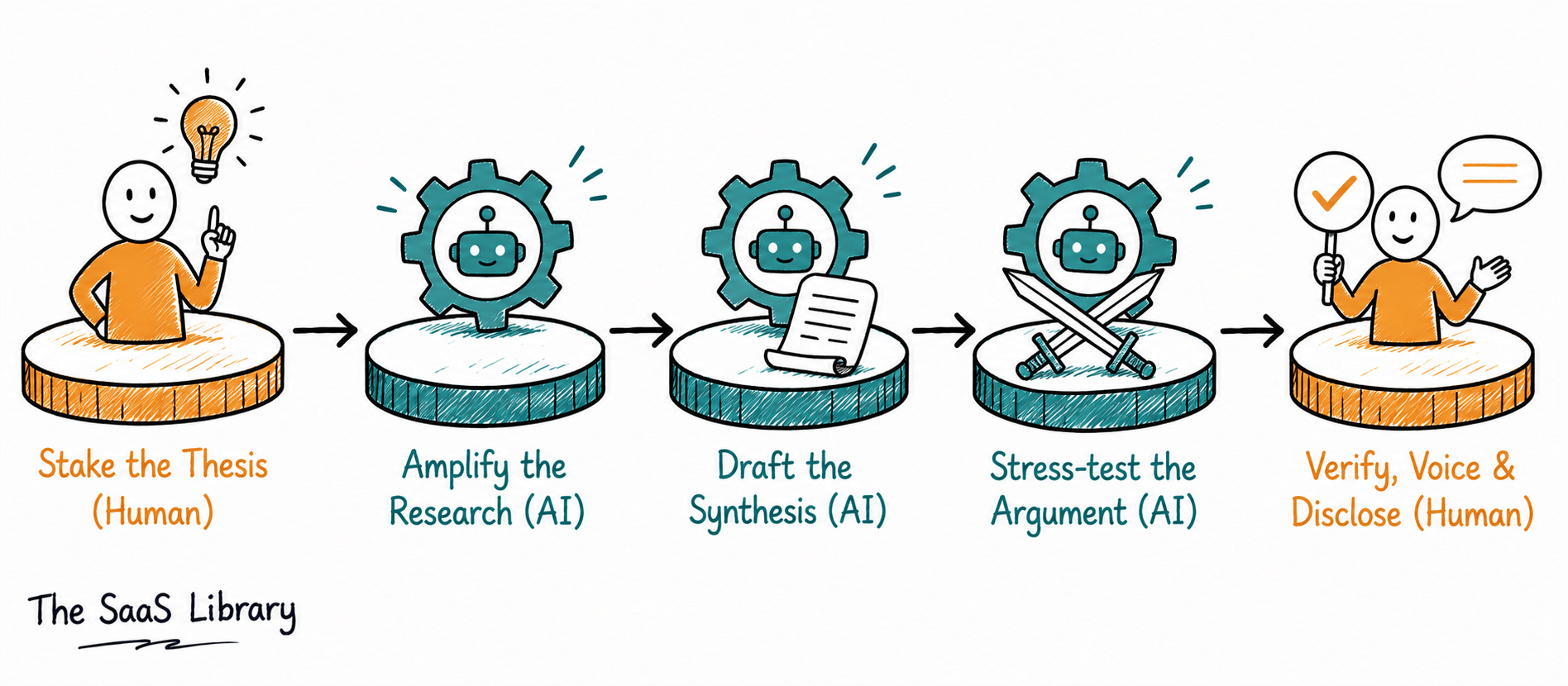
The system only works end to end. Using AI for Steps 2 through 4 while skipping the human bookends is exactly the pattern producing the 69% disengagement number this article opened with.
Skip Step 5’s disclosure half and even excellent output risks the Schilke & Reimann authorship penalty the moment a reader suspects AI involvement (Schilke & Reimann, 2025).
Frequently Asked Questions
What is AI;DR?
AI;DR (“AI, didn’t read”) is the buyer or executive response of disengaging from content — and the brand behind it — once AI authorship is suspected, regardless of the content’s actual quality.
Do people trust AI-generated content?
People trust AI-generated content less once they suspect it’s AI-generated: 69% of executives say AI content reduces their willingness to engage with it, and only 7% say visible AI use makes them trust a brand more, versus 31% who trust it less (GTLI at APQC, 2026; eMarketer, 2025).
How do you create thought leadership content with AI?
You create thought leadership content with AI by using it only for research, drafting structure, and stress-testing an argument, while a human originates the thesis and writes the final voice — the five-step Intelligence Amplifier system in this article outlines the exact sequence.
Should companies disclose when content is AI-assisted?
Companies should disclose when content is AI-assisted, but only with substance: naming how AI was used and what a human verified, not a bare “AI-generated” label. Bare labels reduce trust (Schilke & Reimann, 2025), while substantial, noticed disclosures increased trust by up to 96% (Yahoo/Publicis Media, 2024).
What is the Intelligence Amplifier framework?
The Intelligence Amplifier framework is a five-step system — stake the thesis, amplify the research, draft the synthesis, stress-test the argument, then verify and voice the output — that assigns each thought-leadership production step to whichever party, human or AI, is structurally better suited to it.
What are examples of thought leadership content?
Examples of thought leadership content include original-research reports, contrarian analysis pieces, named frameworks, executive point-of-view essays, and data-backed predictions — formats that require a specific, defensible position rather than a synthesis of existing consensus.
How do you measure the ROI of thought leadership?
You measure the ROI of thought leadership by tracking pipeline familiarity rather than traffic: ask closed-won deals whether the buyer knew the brand’s point of view before first contact, then compare close rate and sales-cycle length between familiar and unfamiliar groups — a direct proxy tied to 6sense’s finding that 95% of deals go to a vendor already on the buyer’s Day One shortlist.
Why does AI-generated content hurt B2B brand trust?
AI-generated content hurts B2B brand trust because it produces indistinguishable output at scale: Momentum ITSMA found 57% of buyers can no longer tell providers’ content apart, which erases the differentiation thought leadership is supposed to create in the first place.
Can AI write original thought leadership?
AI cannot write original thought leadership on its own, because it predicts probable, consensus-aligned text rather than departing from it — a 2026 Business Horizons paper frames this as AI amplifying an organization’s existing strategic logic rather than generating a new one (ScienceDirect, 2026).
What is “AI slop”?
“AI slop” is the colloquial term for low-effort, mass-produced AI-generated content, and mentions of the term rose ninefold between 2024 and 2025 with negative sentiment peaking near 54% — significant enough that Merriam-Webster named “slop” its 2025 Word of the Year (Meltwater, 2025).
Conclusion
The Intelligence Amplifier system is the difference between AI helping a real position travel faster and AI manufacturing the appearance of one that was never held.
PwC’s fabricated-footnote scandal shows exactly what happens when a trusted brand skips that distinction — the 69% disengagement number this article opened with isn’t a writing problem, it’s a process problem, and it’s fixable.
Apply the Intelligence Amplifier system to your next piece before you let AI anywhere near the thesis.
- GTLI at APQC — Landmark Research on Thought Leadership in the AI Era, 2026
- Sprout Social — Q1 2026 Pulse Survey
- Forbes / Cody Luongo — LinkedIn Adds New Feature To Flag AI Slop, July 2026
- 6sense — B2B Buyer Experience Report, 2025
- Forbes / Rachel Wells — PwC Reports Caught With AI Slop, July 2026
- BetterUp / Stanford Social Media Lab — Hidden Costs of Workslop, Sept 2025
- Momentum ITSMA — Thought Leadership in the Buying Process, 2025
- Momentum ITSMA — Thought Leadership Benchmark Report, 2024
- Meltwater — What the Rise of AI Slop Means for Marketers, 2025
- Schilke, O. & Reimann, M. — The Transparency Dilemma: How AI Disclosure Erodes Trust, Organizational Behavior and Human Decision Processes, 2025
- eMarketer — Shoppers Aren’t Impressed by AI-Generated Marketing, 2025
- Yahoo Inc. & Publicis Media — Trust Through Transparency, 2024
- Bynder — AI vs. Human-Made Content Study, 2024
- Graphite — AI Content in Search & LLMs, 2025
- Business Horizons / ScienceDirect — AI as a Strategic Amplifier, 2026
- Ascend2 & TopRank Marketing — Answer Engine: The State of B2B Thought Leadership in 2026