Enterprise SaaS deals used to die on price. Now they die on a question your product team never prepared for: what does your AI do with our data? The answer — or the absence of one — is now the single biggest variable in whether an enterprise contract moves forward or stalls indefinitely.
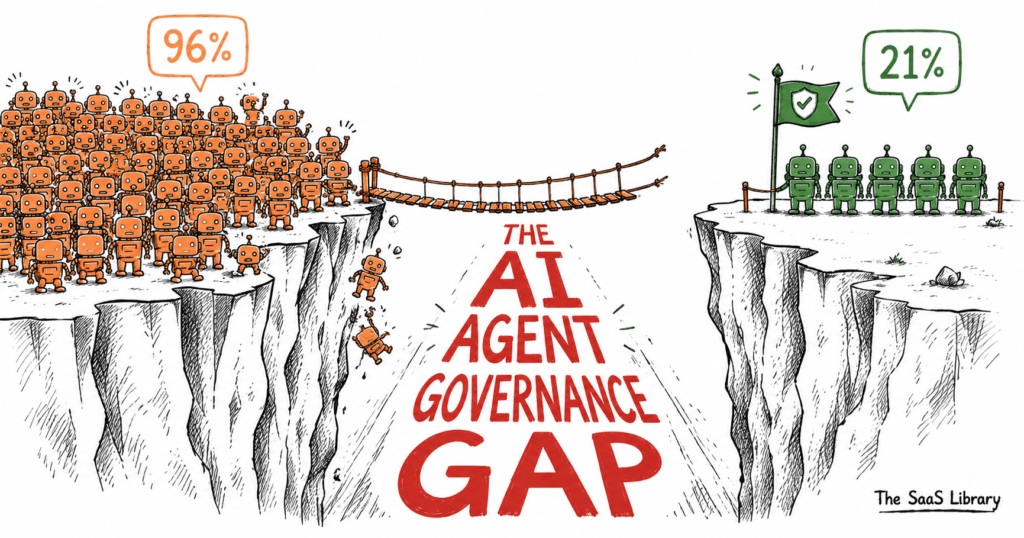
AI compliance for enterprise SaaS is no longer a legal team concern — it is a revenue concern. As AI features become embedded in SaaS products at speed, enterprise buyers have responded by making data governance and AI transparency core filters in their procurement process. The result is a widening gap between vendors shipping AI and vendors who can account for what that AI does with customer data. We explored this pattern in depth in our analysis of the AI agent governance gap — and the enterprise procurement data confirms it is accelerating.
This article maps the shift from both sides of the table. The buyer perspective covers what enterprise procurement teams now check, where AI-specific questions are appearing in RFPs and security reviews, and what triggers disqualification. The vendor perspective covers what most SaaS companies are missing, what deal-ready looks like operationally, and what the global regulatory landscape now requires. The framework connecting both sides is the Governance Readiness Gap.
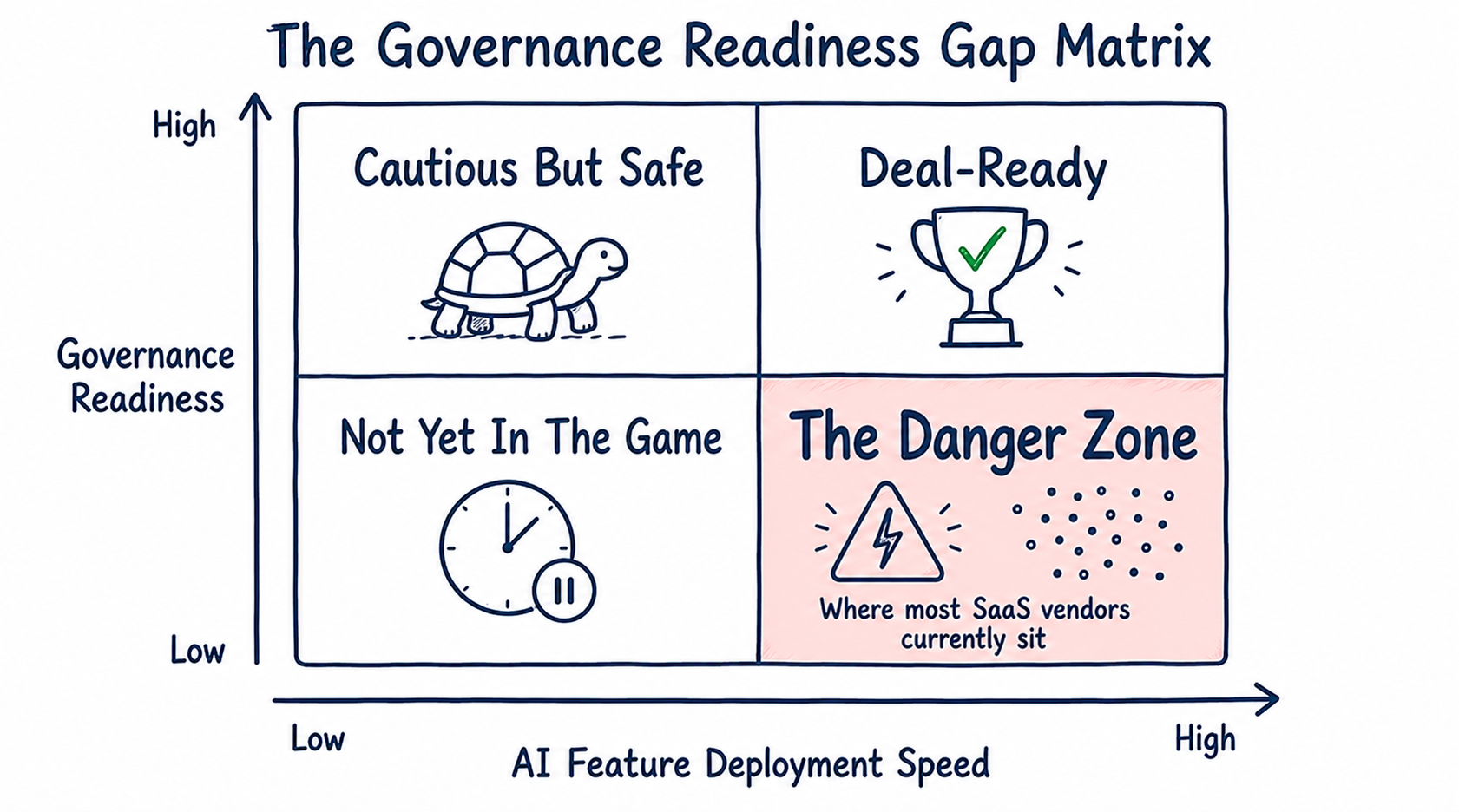
The Governance Readiness Gap is the measurable distance between the speed at which AI features are being deployed inside SaaS products and the pace at which governance frameworks, compliance documentation, and data transparency practices are following — a gap that is now directly costing vendors enterprise deals and exposing buyers to unquantified risk.
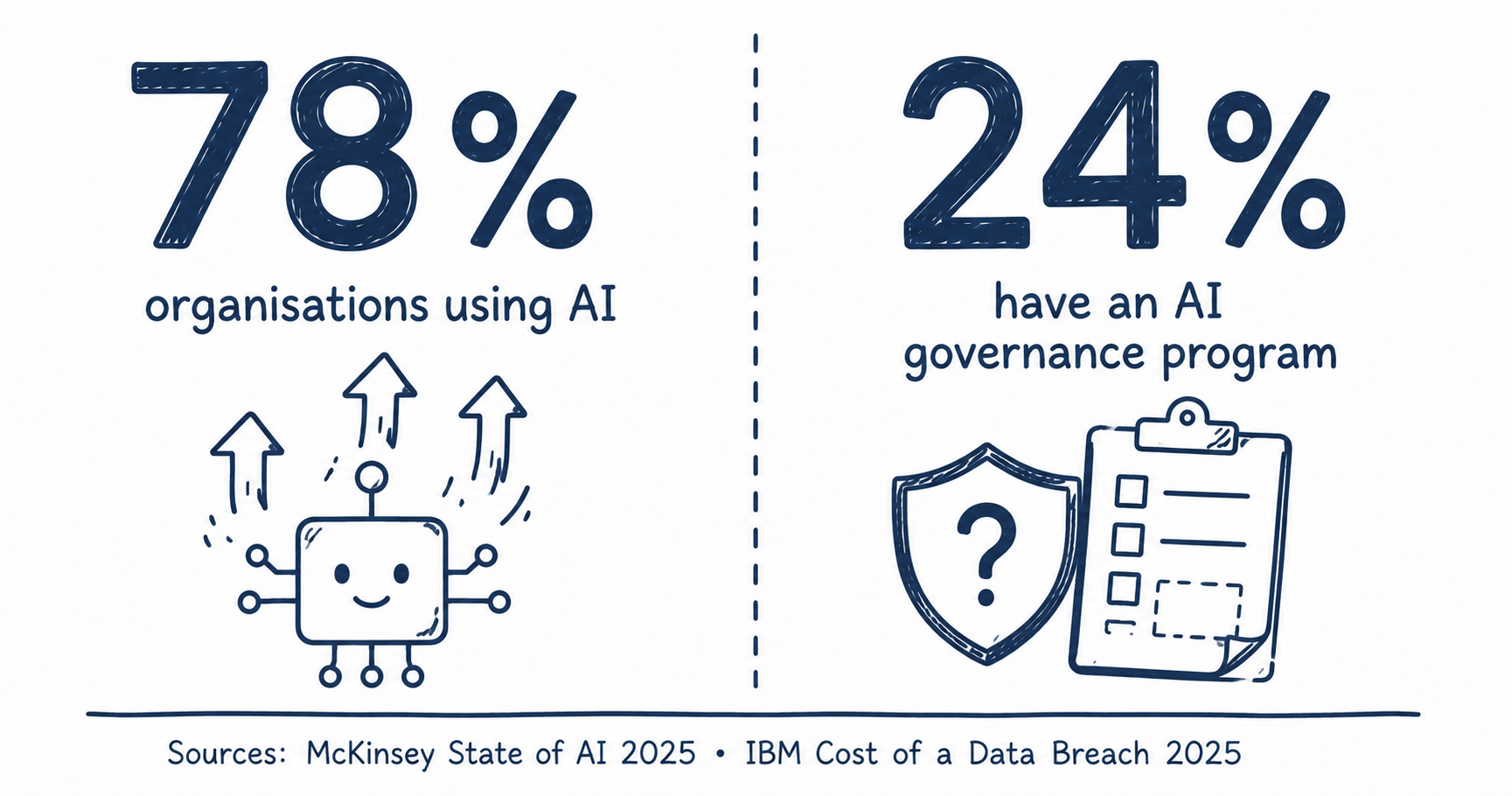
Enterprise buyers have raised the security bar significantly — AI data governance is now a procurement filter, not an afterthought. Most SaaS vendors are shipping AI features without the governance documentation buyers now require. Over 100 countries have active data sovereignty laws. The vendors closing enterprise deals in 2026 can answer AI data questions before they are asked.
The Market Has Moved — and Most Vendors Haven’t
For most of SaaS’s growth era, the defining challenge was acquisition — getting more customers, growing faster, expanding ARR. The metrics that mattered were at the top of the funnel. Security and compliance were table stakes for regulated industries, not mainstream B2B software. That era has ended. As the 2026 B2B SaaS landscape shows, the defining challenge is now cost control, retention, and governance — not growth.
Three forces converged to make this shift structural rather than cyclical. First, a surge in data breaches between 2023 and 2025 forced enterprise security teams to tighten vendor evaluation. Second, AI features became embedded in mainstream SaaS products at speed — often faster than the governance frameworks governing them. Third, global regulation accelerated simultaneously across the EU, India, China, and over 100 other jurisdictions, putting legal obligation behind what had previously been voluntary best practice.
The result is a procurement environment that has changed structurally. Buyers are asking different questions. Security reviews are longer, more specific, and more technical. And vendors who built for the old evaluation criteria are finding themselves disqualified at stages they never expected to fail.
What Enterprise Buyers Are Actually Checking Now
The buyer’s journey has a new first question. It is no longer “what does this product do?” — it is “can we trust this vendor with our data?” According to Software Finder’s 2025 SaaS Security Report, which analysed thousands of real buyer-vendor interactions rather than survey responses, more than half of B2B buyers now raise security in the very first conversation — up from 28% in 2023. That is not incremental change. That is a structural shift in how procurement starts.
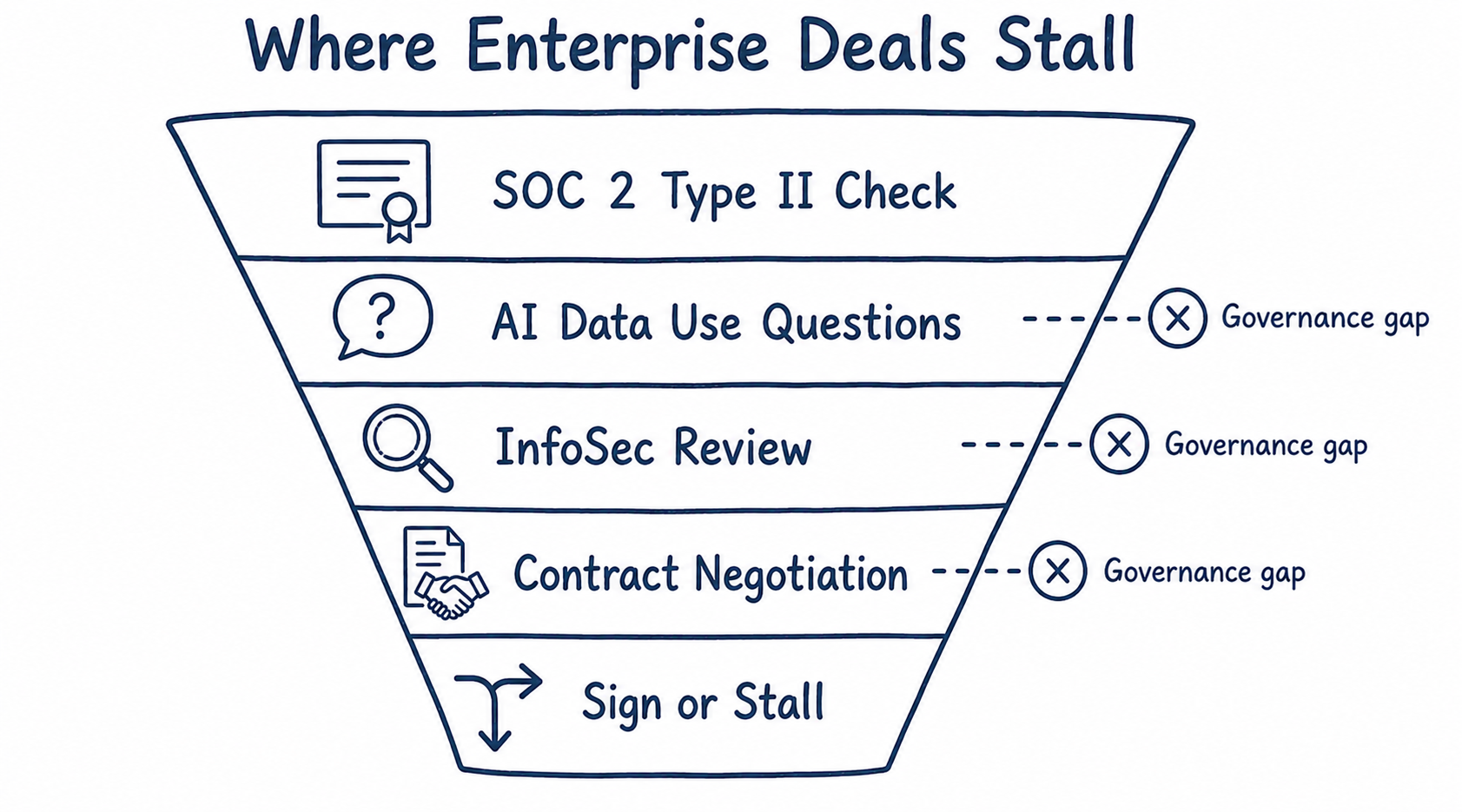
SOC 2 Type II has moved from differentiator to baseline minimum. In nearly half of competitive evaluations, missing or unverifiable security credentials led to vendor disqualification outright. MFA and SSO are now explicitly required in 68% of enterprise RFPs — vendors who frame these as premium add-ons face immediate resistance. Formal InfoSec sign-off before purchase is now required by 61% of enterprises.
The newest and fastest-growing area of scrutiny is AI-specific. Procurement teams now ask which external AI providers are embedded in the product, how customer data interacts with those models, whether training on customer data can be opted out of, and whether audit logs of AI interactions exist. When the answers are vague or inconsistent between the sales team and the security documentation, deals slow or stop. The buyer trust gap that was emerging in 2025 is now showing up directly in security questionnaires.
The Vendor Blind Spot: Losing Deals You Don’t Know You’re Losing
Most SaaS vendors know when they lose a deal on price. They rarely know when they lose it in an InfoSec review. The feedback loop is broken — procurement teams do not typically explain why a vendor was deprioritised at the security stage. The deal simply goes quiet. This is where the Governance Readiness Gap does its most expensive work.
The pattern is consistent. A vendor ships AI features — often embedding third-party model APIs to move fast. The features work. Customers like them. But the governance documentation never follows. There is no model card. There is no documented sub-processor list covering the AI providers. The training data clause in the standard subscription agreement is ambiguous or absent. When an enterprise buyer’s InfoSec team starts asking specific questions, the sales team cannot answer them and the security team was never involved. That gap costs deals. The risks of ungoverned AI deployment are not hypothetical — they surface in procurement, in contracts, and increasingly in regulatory exposure.
The data confirms the scale of the problem. According to IBM’s Cost of a Data Breach Report 2025, 63% of organisations lack governance policies to manage AI or prevent shadow AI proliferation. The Cyberhaven Labs 2026 AI Adoption and Risk Report found that 39.7% of all data movements into AI tools involve sensitive data. Acuvity AI’s 2025 State of AI Security survey found that 50% of enterprises expect data leakage through generative AI tools within 12 months. These are not edge cases — they are the conditions under which most SaaS vendors are operating.
Agentic AI is opening up exciting new possibilities for how organisations serve their customers, but earning consumer trust has to grow alongside that progress. As these systems take on more responsibility, it is essential that businesses stay transparent and accountable in how they are used.
The Regulatory Convergence: One Hundred Countries, One Direction
The regulatory pressure on AI compliance is not coming from one jurisdiction — it is converging globally and simultaneously. Omdia’s April 2026 Digital Sovereignty Report confirms that over 100 countries have now adopted some form of data sovereignty or localization law. The requirements vary significantly, but the direction is uniform: governments are asserting legal control over data generated within their borders, and the era of a single global cloud instance serving all markets is structurally over.
For SaaS vendors, this convergence creates three simultaneous obligations. First, the EU AI Act reaches full enforcement for high-risk AI systems on 2 August 2026 — with penalties up to €35 million or 7% of global annual turnover. Any SaaS company with EU customers is in scope regardless of where they are headquartered, exactly as GDPR established. GDPR itself has now issued cumulative fines exceeding €7.1 billion, with €1.2 billion in 2025 alone. Second, India’s Digital Personal Data Protection Rules came into force in November 2025, with extraterritorial reach covering any entity processing Indian user data and penalties up to ₹250 crore per violation. Third, China’s Cybersecurity Law amendments effective January 2026 raised maximum penalties to RMB 10 million and integrated AI governance requirements directly into cross-border data transfer obligations. The commercial model shifts reshaping SaaS contracts are now intersecting directly with these legal obligations — data residency clauses and AI training restrictions are appearing in the same negotiation as pricing and renewal terms.
The practical implication for any SaaS vendor selling globally is that compliance is no longer a regional project. It is an architectural decision. Where data is processed, which providers handle it, and how AI features interact with it are infrastructure questions that now carry legal and commercial consequences in every major market simultaneously.
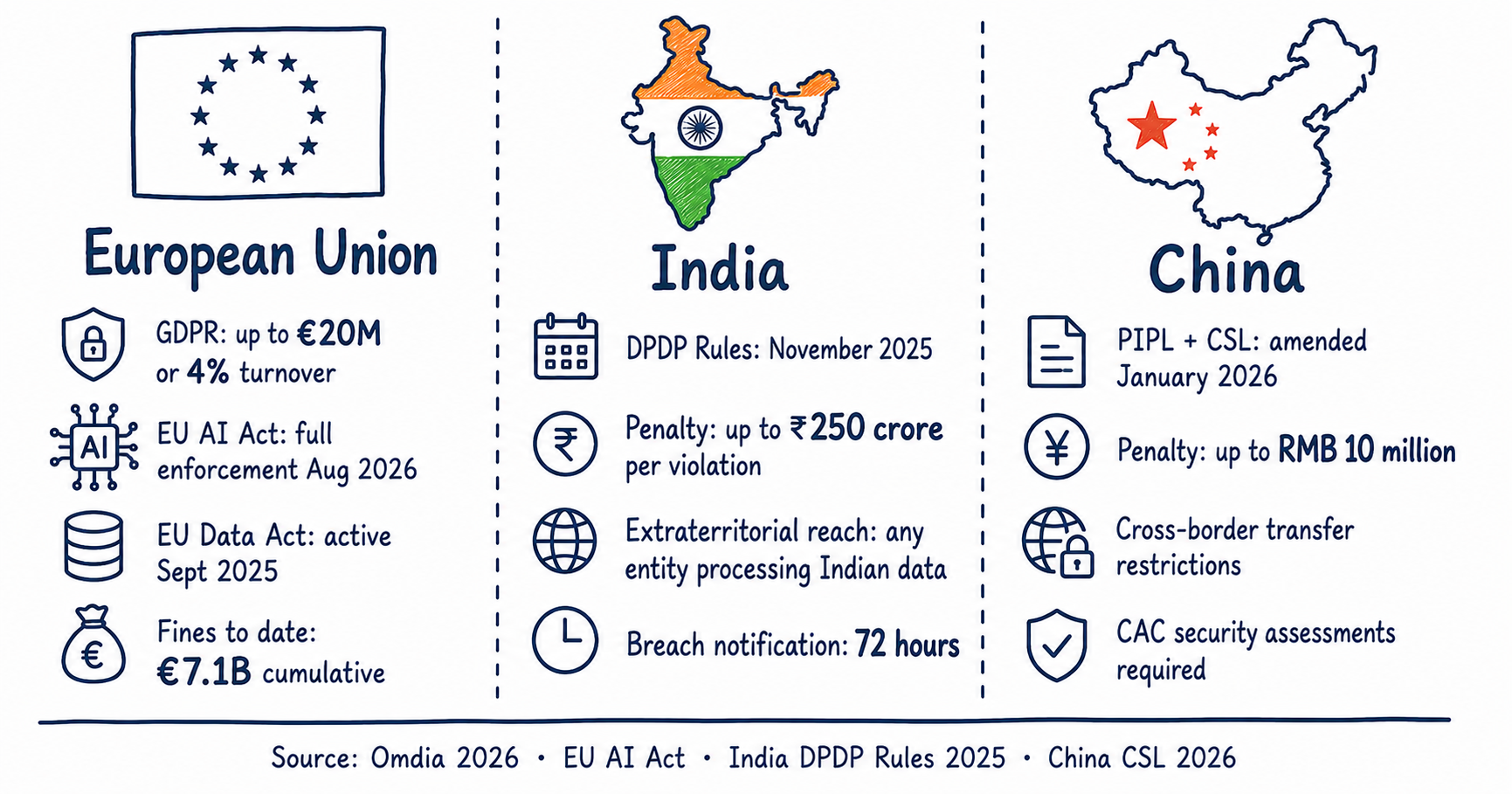
Sources: Omdia 2026 · EU AI Act · India DPDP Rules 2025 · China CSL 2026
The vendors winning enterprise deals in 2026 are not the ones with the most AI features. They are the ones who can explain what their AI does with data in a single paragraph.
The Buyer’s AI Due Diligence: Eight Questions That Cannot Be Skipped
Standard security questionnaires were built for deterministic software. The same input produces the same output. Behaviour changes only through versioned releases. Security boundaries are well-defined. AI systems work differently — models update, outputs are probabilistic, third-party providers are involved at the inference layer, and data flows through dimensions that traditional questionnaires do not cover: training datasets, prompt logs, embedding vectors, and inference outputs. A buyer who applies the old questionnaire to an AI-embedded SaaS product is leaving the most consequential risks unexamined.
The eight questions below represent the minimum AI-specific due diligence for any enterprise buyer evaluating a SaaS vendor with embedded AI features. They are not a substitute for a full security review — they are the layer that most existing reviews are missing. For buyers preparing for formal contract negotiations, the Morgan Lewis analysis of AI contract provisions provides the legal framework for how these questions translate into contractual protections.
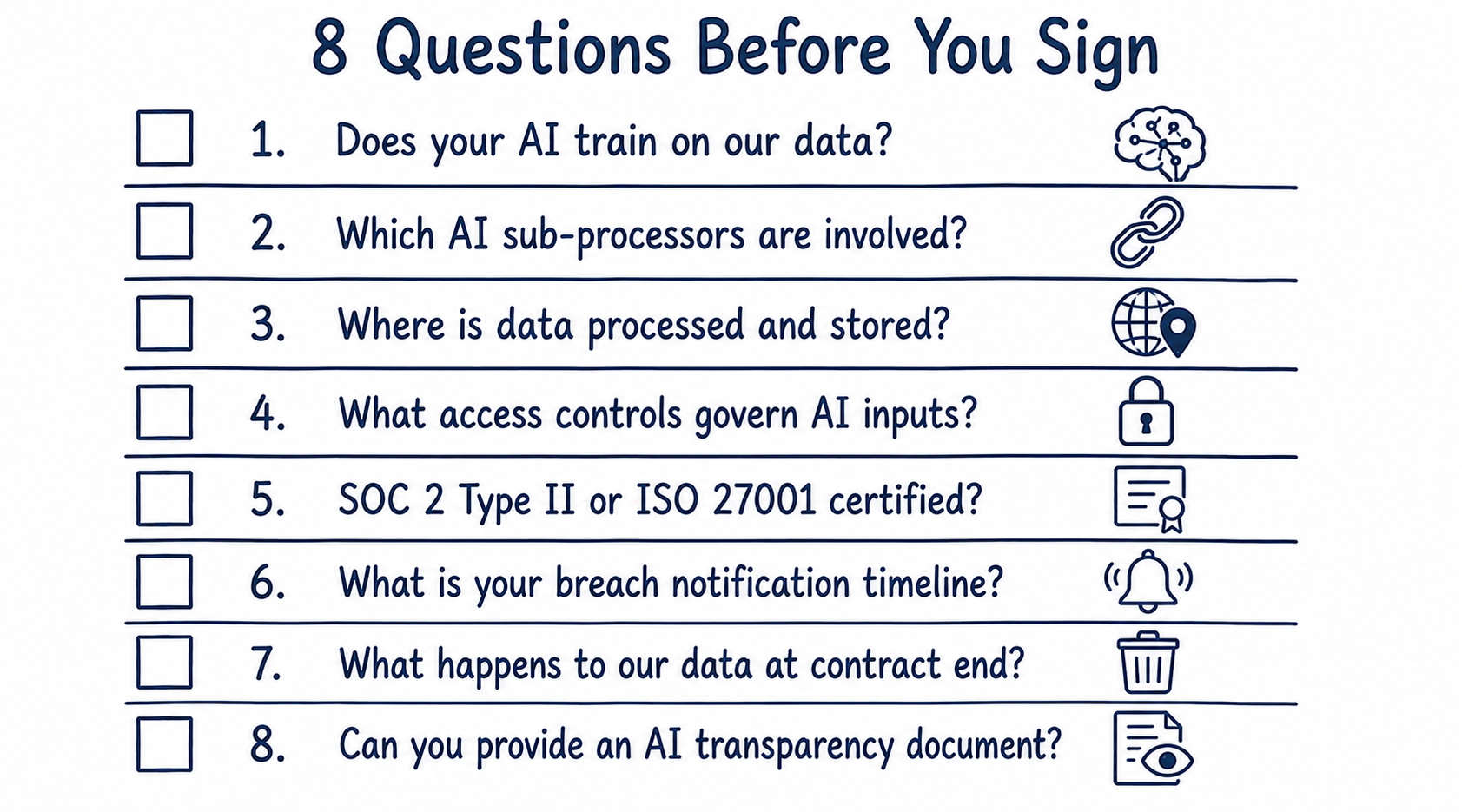
What Deal-Ready Looks Like: The Vendor Response
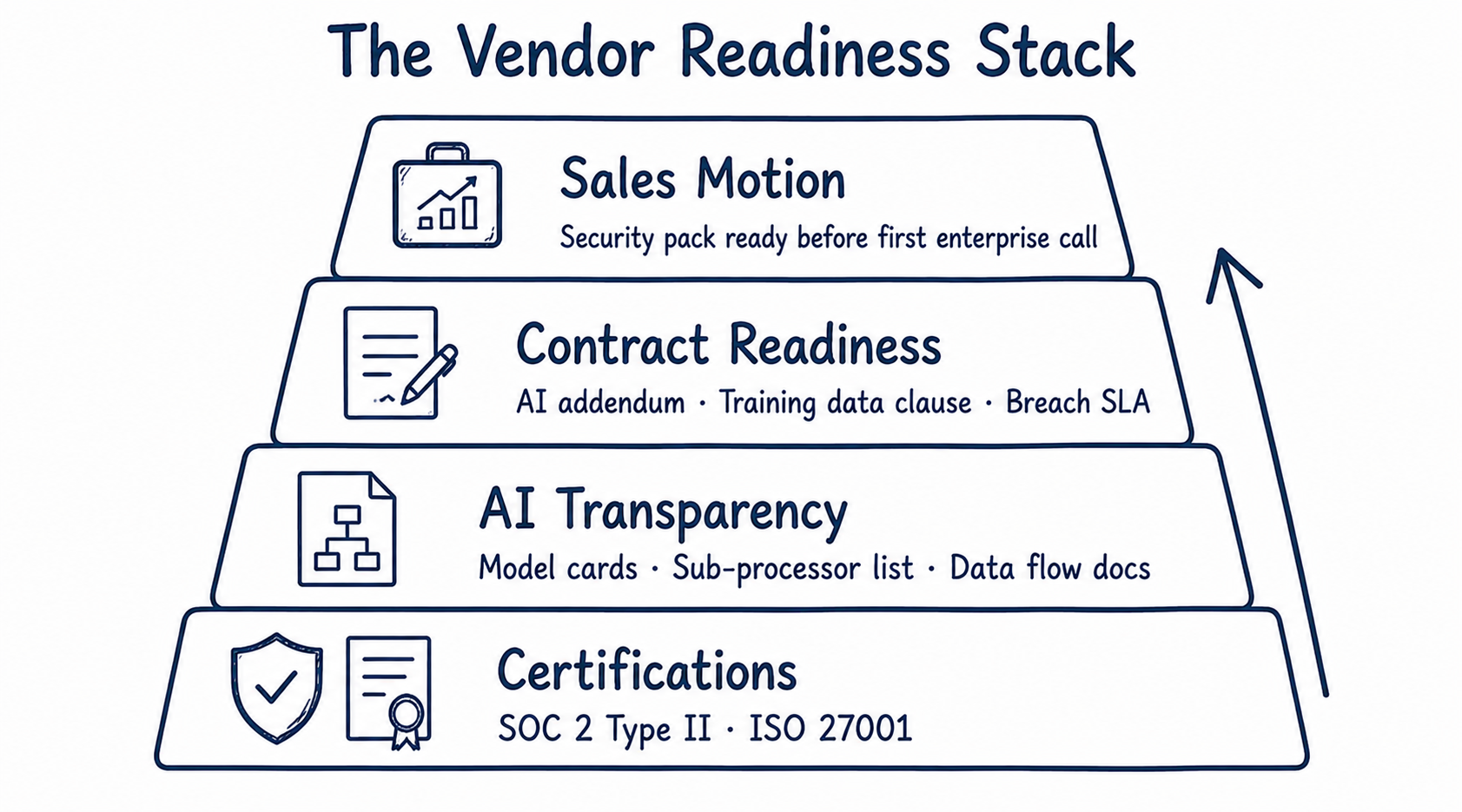
Deal-ready vendors have understood something that most of their competitors have not: governance documentation is now a sales asset. The security pack — SOC 2 Type II report, sub-processor list, AI transparency summary, data flow documentation — should be ready before the first enterprise call, not assembled reactively when a prospect’s InfoSec team requests it. Reactive assembly adds weeks to a deal cycle and signals to a sophisticated buyer that governance is an afterthought rather than a practice. The commercial cost of a six-week deal delay on a $250K ACV enterprise contract is not abstract — it is measurable and recurring.
The vendor response operates in four layers. The foundation is certifications — SOC 2 Type II as the minimum for North American enterprise buyers, ISO 27001 for international markets. Without these, the conversation does not begin. The second layer is AI transparency: a documented inventory of AI features, the third-party providers behind them, how customer data interacts with each model, and what opt-outs exist. The third layer is contract readiness — an AI addendum prepared in advance covering training data restrictions, data residency requirements, breach notification SLAs, and what happens to customer data at contract termination. These are the clauses sophisticated buyers are now demanding as standard, not as exceptions. The fourth layer is the sales motion itself — InfoSec specialists involved early, security materials delivered proactively, and a one-paragraph plain-language summary of what the product’s AI does with data that any non-technical stakeholder can read and understand. For vendors building this stack from scratch, the IBM Cost of a Data Breach Report 2025 provides the internal business case: organisations with extensive AI security and automation save an average of $1.9 million per breach compared to those without.
The Governance Readiness Gap is not a compliance problem. It is a revenue problem. Every week a vendor cannot answer a buyer’s AI data question is a week that deal sits in someone else’s pipeline. The vendors closing enterprise deals in 2026 built their governance documentation before they needed it — not after they lost a deal because of its absence.
The Governance Readiness Gap is the measurable distance between the speed at which AI features are being deployed inside SaaS products and the pace at which governance frameworks, compliance documentation, and data transparency practices are following. Closing this gap is the defining commercial and legal challenge for B2B SaaS vendors in 2026. See also: 96% of Companies Are Running AI Agents — Only 21% Can Control Them.
Where Do You Go From Here?
The vendors who close enterprise deals in 2027 are building their governance documentation in 2026. The window is open. Every quarter without a governance programme is a quarter of deals lost to a competitor who built one first.
Enterprise buyers now check which third-party AI providers are embedded in the product, whether customer data is used to train models, what access controls govern AI inputs, whether SOC 2 Type II or ISO 27001 certification exists, what the breach notification timeline is, and whether an AI transparency document or model card is available. Missing answers at any stage can stall or kill a deal.
The EU AI Act follows the same extraterritorial model as GDPR. Any SaaS vendor whose product is used by EU customers, or whose AI outputs are consumed within the EU, is in scope — regardless of where the company is headquartered. Full enforcement for high-risk AI systems begins 2 August 2026, with penalties up to €35 million or 7% of global annual turnover.
The global average cost of a data breach in 2025 is $4.44 million, according to IBM’s Cost of a Data Breach Report 2025. In the United States, the average rises to $10.22 million. Critically, 97% of organisations that experienced an AI-related security breach had no proper AI access controls in place, and organisations with extensive AI security automation save an average of $1.9 million per breach.
Enterprise buyers should require an AI addendum covering: explicit prohibition on training models with customer data without opt-in consent, a full list of AI sub-processors with the right to object, data residency specifications, breach notification SLAs, post-termination data deletion obligations, and the right to audit AI-related controls. Standard SaaS agreements rarely include these clauses without negotiation.
The Governance Readiness Gap is the measurable distance between the speed at which AI features are being deployed inside SaaS products and the pace at which governance frameworks, compliance documentation, and data transparency practices are following. This gap costs vendors enterprise deals and exposes buyers to unquantified risk. It is the defining commercial and legal challenge for B2B SaaS in 2026.