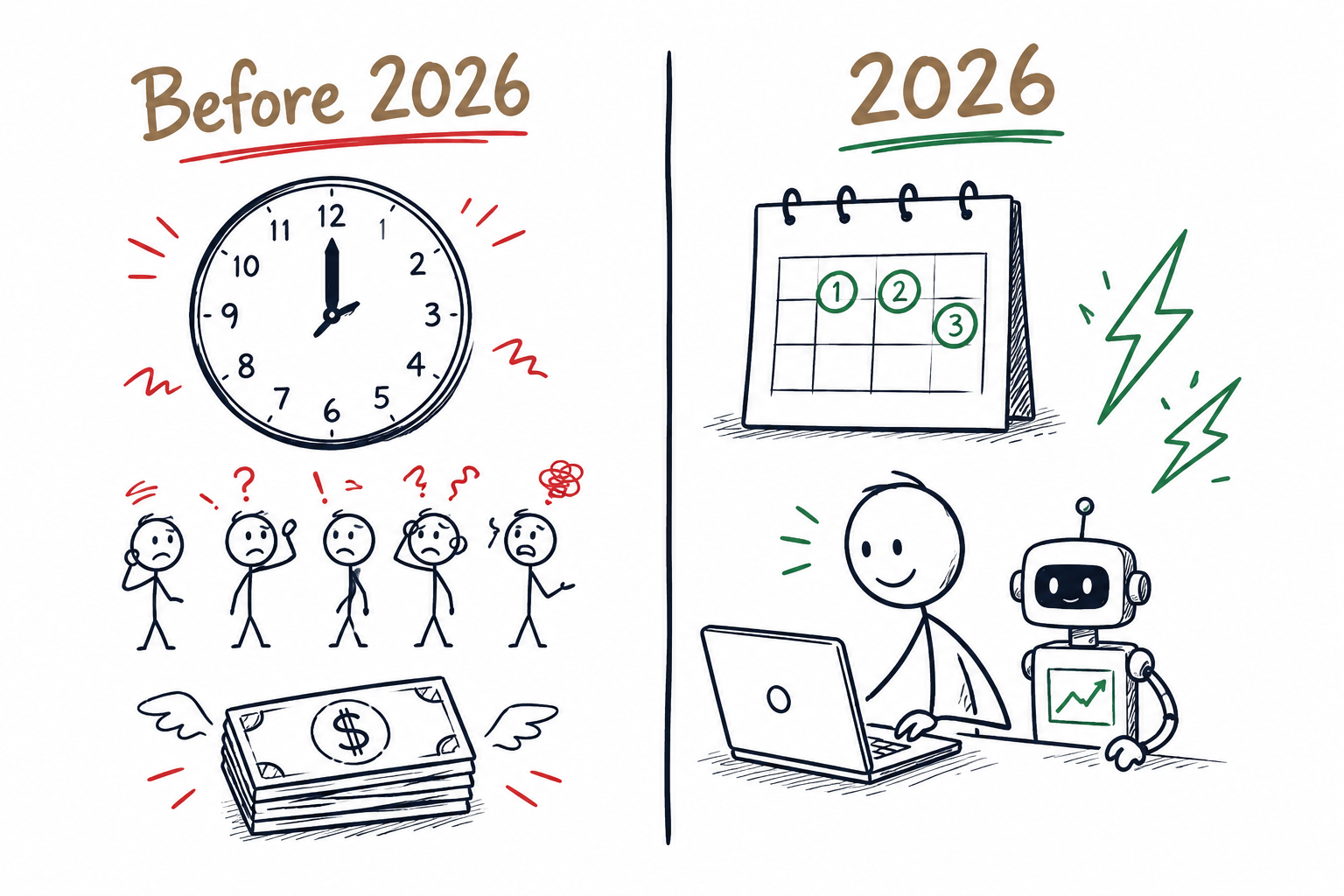
The build vs. buy question has never been more legitimate — or more confusing. Building used to mean six to twelve months. Now it can mean days. And buying used to mean plug-and-play. Now it means vendor lock-in and pricing models nobody fully understands yet.
For most organisations in 2026, buying is the correct first move. Packaged platforms have matured, in-house builds rank last on satisfaction and time-to-value, and the engineering overhead of building rarely pays back within 12 months. The exception is when you have proprietary data, a 90-day-plus timeline, and a team that can own the infrastructure long-term.
What’s Actually Changed About This Decision in 2026
The build vs. buy question isn’t new. What’s new is that both sides of the equation shifted at the same time — and the old assumptions that made the answer obvious no longer hold.
Building a custom AI agent used to mean a dedicated engineering team, six to twelve months of runway, and a six-figure budget before you had anything in production. That’s no longer the baseline. LLM SDKs from Anthropic, OpenAI, and Google have compressed the build timeline significantly. Vibe coding tools have pushed it further — non-technical operators are now assembling functional agent workflows in days, not quarters. According to Retool’s 2026 Build vs. Buy Report, based on a survey of 817 professionals, 35% of enterprises have already replaced at least one SaaS tool with a custom build, and 78% expect to build more custom internal tools this year.
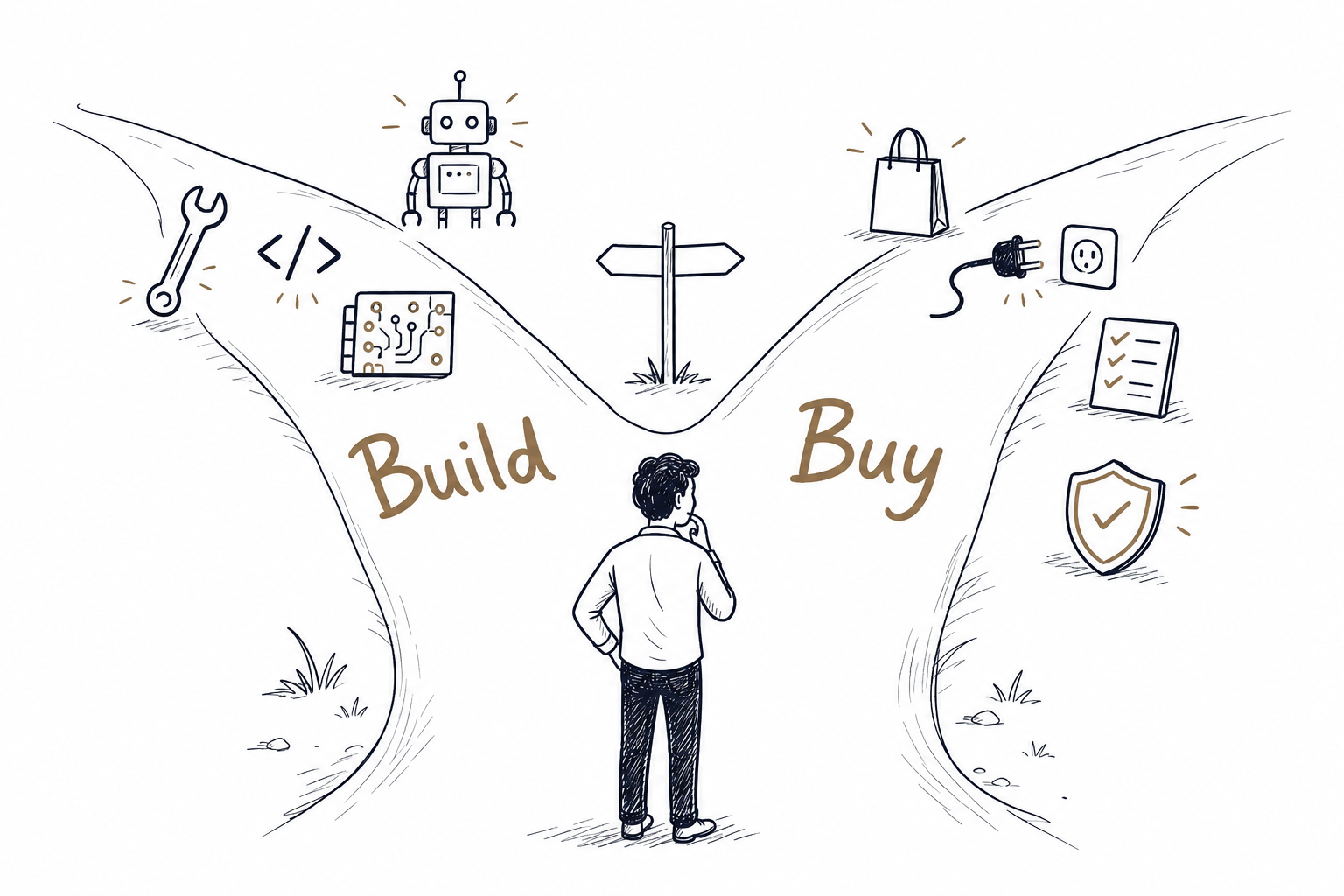
At the same time, the buy side has matured rapidly. Packaged agentic platforms — Salesforce Agentforce, Microsoft Copilot Studio, ServiceNow Now Assist — are no longer early-stage bets. They ship with pre-built orchestration, compliance guardrails, and enterprise integrations that would take months to replicate from scratch. For a broader picture of how agentic AI is actually performing in B2B SaaS production environments, the gap between vendor claims and real deployment is still significant.
The build vs. buy decision in 2026 is not primarily a technical question. It is a strategic one — about competitive differentiation, time-to-value, and operational ownership.
That shift changes how you approach the decision entirely. The old framework — build if you have engineers, buy if you don’t — is too blunt for 2026. What actually matters is what you’re building for, how fast you need it, and what you’re willing to own long-term.
What the Data Says (and Where It Conflicts)
The data on build vs. buy points in two directions simultaneously — and both sets of numbers are real.
On the build side, the momentum is clear. Retool’s 2026 report found that 35% of enterprises have already replaced at least one SaaS tool with a custom build, driven largely by how fast AI-assisted development has made it possible to ship working software. The same report found that 60% of respondents had built software outside IT oversight in the past year — meaning the build impulse is already outpacing formal procurement processes in many organisations. As David Hsu, CEO and founder of Retool, puts it: “SaaS products force you to work their way. Now that vibe coding’s gone mainstream, businesses that can custom-build their value drivers will have a competitive edge.”
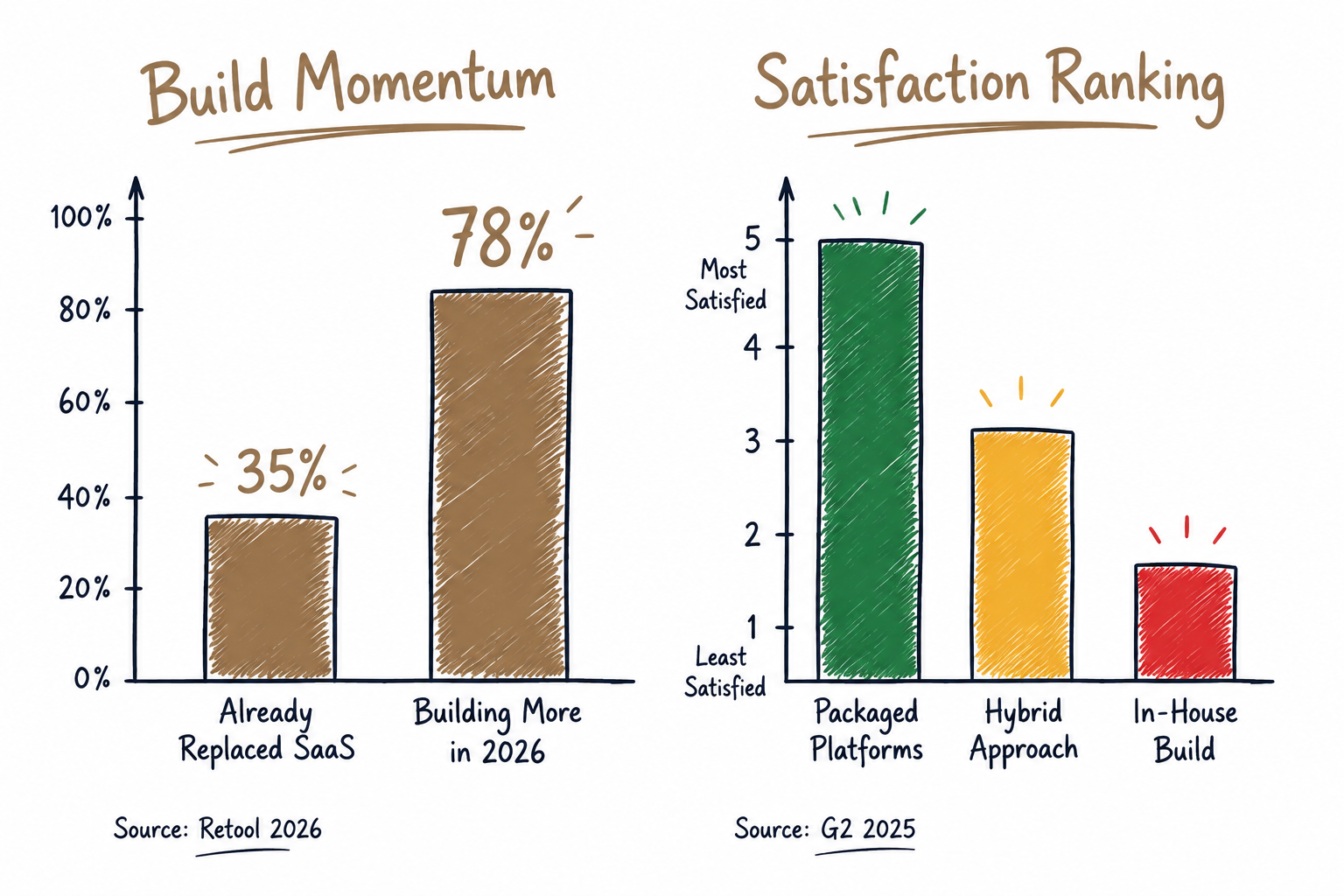
On the buy side, G2’s 2026 Tech Signals report on AI agents tells a different story. Based on the G2 2025 AI Agents Insights Report — a survey of over 1,000 B2B decision-makers — in-house builds ranked last in satisfaction, time-to-value, and ease of use across every category measured. As Bijou Barry, Research Principal at G2, notes: “The vendors who survive the next phase won’t just be the ones who built the most capable agents — they’ll be the ones who made agents fast, trustworthy, and composable enough to work together.”
The conflict isn’t a contradiction — it’s a timing problem. Buying wins on speed and initial satisfaction. Building wins on long-term unit economics, once you’re past the 12–24 month ROI curve. Research consistently places custom-build payback at 12–24 months, after which organisations own the infrastructure and scale without paying per-seat or per-action fees to a vendor. There’s also a volume threshold that changes the math entirely. Analysis from Digital Applied puts the total cost of ownership crossover at approximately one million agent conversations per year. Below that number, buying is almost always cheaper. Above it, a custom build starts to win on unit economics — sometimes significantly.
The data conflict also reflects who’s being surveyed. G2 measures satisfaction among buyers of packaged software — a population predisposed toward buy-side solutions. Retool surveys builders — a population with stronger technical confidence and higher risk tolerance. Neither dataset is wrong. They’re measuring different organisations at different stages with different capabilities. What this means for your decision is covered in the next section, which lays out the four conditions that make buying the right call — and the framework to score your specific situation.
Already know you want to build? See our step-by-step breakdown of how to get an agent into production.
Build Your First Agent →When Buying an AI Agent Makes Sense
Buying a pre-built agentic platform is the right call for most organisations in 2026. That’s not a hedge — it’s what the deployment data supports. The majority of companies that have moved AI agents into production did it with packaged software, not custom builds.
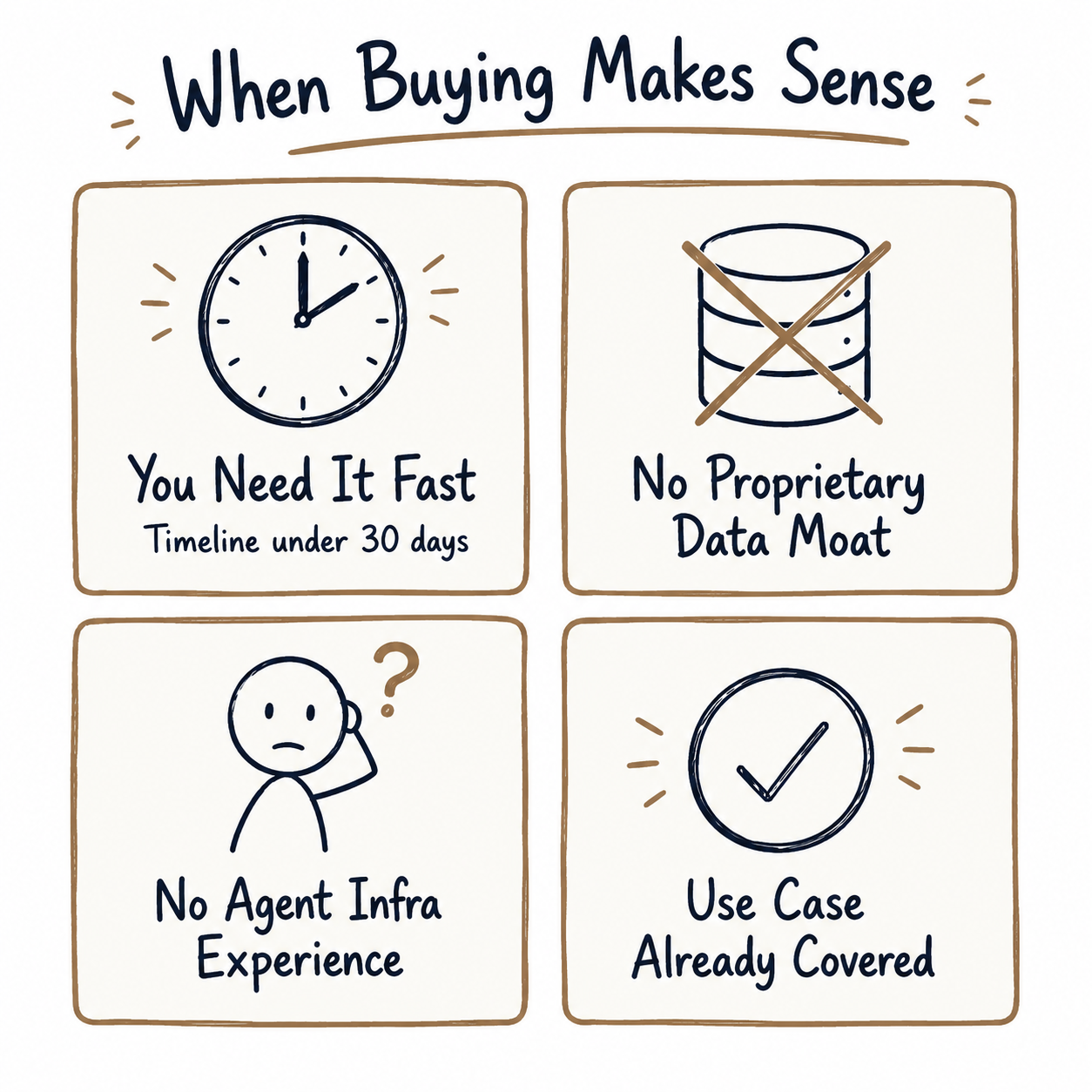
The case for buying comes down to four conditions. If any one of them applies to your situation, buying is likely the faster and lower-risk path.
You Need This in Production Fast
Packaged platforms ship with pre-built connectors, compliance documentation, and support infrastructure. Salesforce Agentforce, Microsoft Copilot Studio, and ServiceNow Now Assist can be connected to existing CRM, support, and workflow systems without touching a single line of custom code. If your timeline is measured in weeks — a product launch, a support capacity crunch, a board-level AI mandate — buying is the only realistic option.
You Don’t Have a Proprietary Data Advantage
The strongest argument for building is owning a dataset that no vendor can replicate — a decade of customer behaviour signals, a unique pricing model, a curated knowledge graph. If that doesn’t describe your situation, you’re not leaving a competitive moat on the table by buying. You’re deploying faster with a proven stack. The shift away from per-seat pricing also means the cost model for packaged platforms is becoming more flexible, not less.
Your Team Doesn’t Have Agent Infrastructure Experience
Building a production-grade AI agent isn’t the same as building a chatbot or an automation script. It requires experience in orchestration, evaluation design, prompt engineering, and failure-mode handling. If your engineering team hasn’t done this before, the learning curve is a real cost — one that doesn’t appear on a build-vs-buy spreadsheet until it’s already been paid.
Your Use Case Is Already Well-Covered
Customer support automation, sales lead qualification, internal helpdesk, meeting summarisation, and document processing are all categories where packaged solutions have reached genuine maturity. G2’s 2026 Best Agentic AI Software list — a category that didn’t exist on G2 a year ago — reflects real deployment and real user reviews. If your use case appears on that list with high-satisfaction solutions, you’re not building a competitive advantage by reinventing it. For a deeper look at where governance and control gaps still create risk in packaged platforms, that’s worth reading before you sign a contract.
G2’s 2026 Best Agentic AI Software list is the first of its kind — a category that went from zero to a Best Software Awards ranking in under 12 months. That pace of buyer validation signals real production adoption, not vendor hype. (G2, March 2026)
One risk worth naming explicitly: vendor lock-in. When your agent workflows run entirely on a single platform’s infrastructure, switching costs compound over time. Before signing any enterprise AI agent contract, confirm you can export your workflow definitions, prompts, and configuration. If the vendor can’t answer that clearly, treat it as a red flag.
| Buy | Hybrid | Build | |
|---|---|---|---|
| Speed to production | Days to weeks | 4–8 weeks | 12–24 weeks |
| Year 1 cost | Lower | Medium | Higher |
| 3-year ROI | Moderate | Strong | Strongest (at scale) |
| Proprietary data advantage | No | Partial | Full |
| Team requirement | Minimal | Moderate | Dedicated |
| Best for | Fast deployment, proven use cases | Existing CRM/ERP shops wanting control | High-volume, unique data, scale |
The buy path isn’t a fallback for organisations without engineering resources. For most use cases, in most organisations, in 2026, it’s the correct first move. The Agent Decision Stack in the next section will confirm whether that applies to you — or whether your situation is one of the cases where building delivers something buying can’t.
The Agent Decision Stack
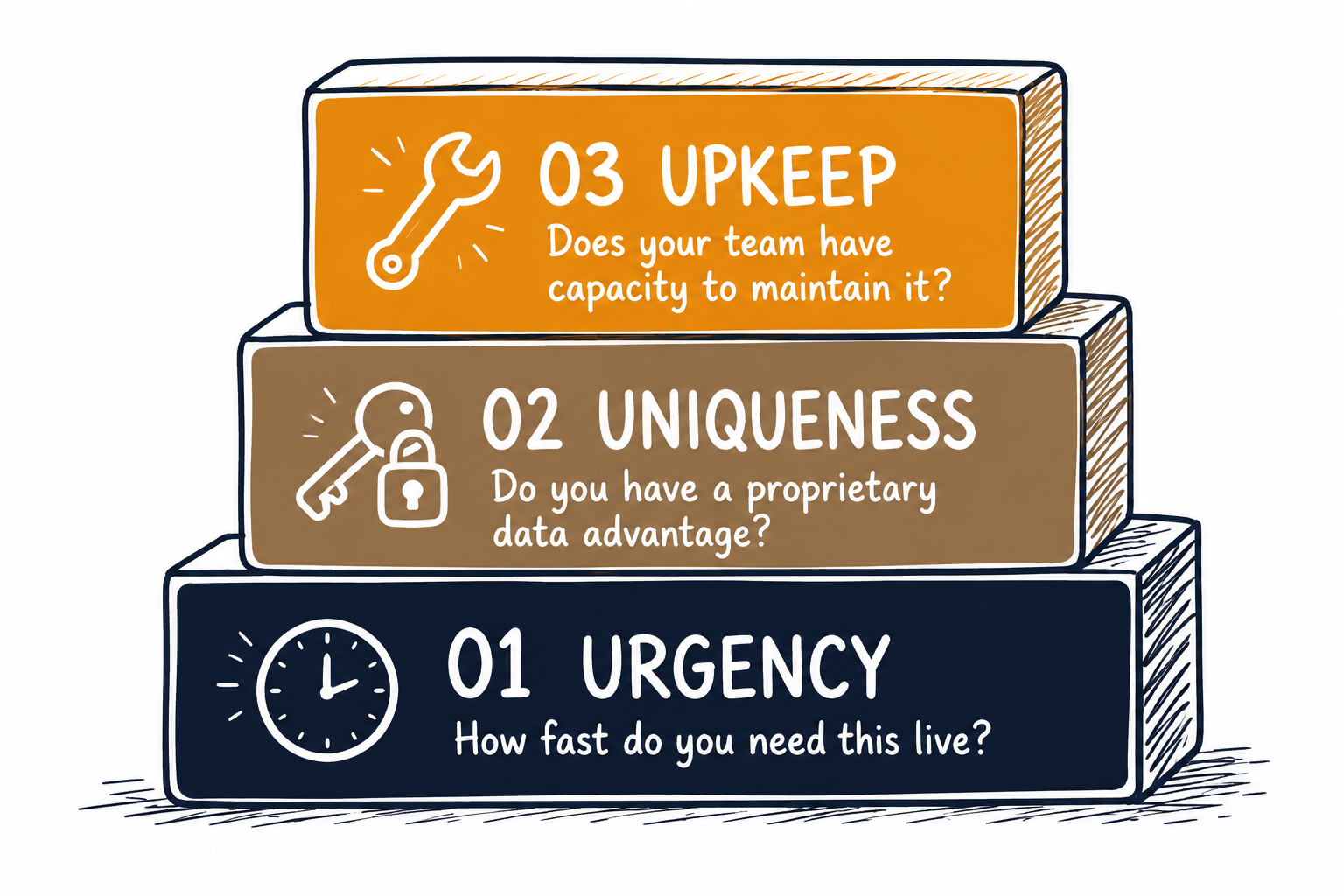
Most build vs. buy frameworks give you a list of pros and cons and leave the decision to you. This one doesn’t. The Agent Decision Stack is a three-question scoring tool. Answer each question honestly, tally your score, and your path is clear.
The framework works because it focuses on the three variables that actually determine long-term outcome — not feature lists, not vendor demos, not what your competitors are doing. Each layer of the stack is a yes/no question worth one point. Score 3/3 and building is likely the right call. Score 0–1 and buying is. Score 2/3 and a hybrid approach — buy the platform layer, build the agent logic on top — is almost always the answer.
Score 3/3 — Build
You have the time, the differentiation rationale, and the operational capacity. A custom agent is a genuine competitive asset in your situation, and the 12–24 month ROI curve is worth absorbing. Custom builds carry slower initial ROI but deliver better long-term returns once you own the infrastructure and can scale without increasing vendor costs.
Score 2/3 — Hybrid
Buy a platform that exposes its logic layer — Agentforce, Copilot Studio, or a similar enterprise option — and build your differentiated agent behaviour on top of it. You get deployment speed without sacrificing the workflow control that matters to you. This is where most serious enterprise deployments land in 2026.
Score 0–1/3 — Buy
You’re not leaving a competitive advantage on the table. You’re avoiding a maintenance liability while getting to production faster with higher initial satisfaction scores. Pick a platform with strong G2 validation in your use case category and focus your team’s energy on adoption, not infrastructure.
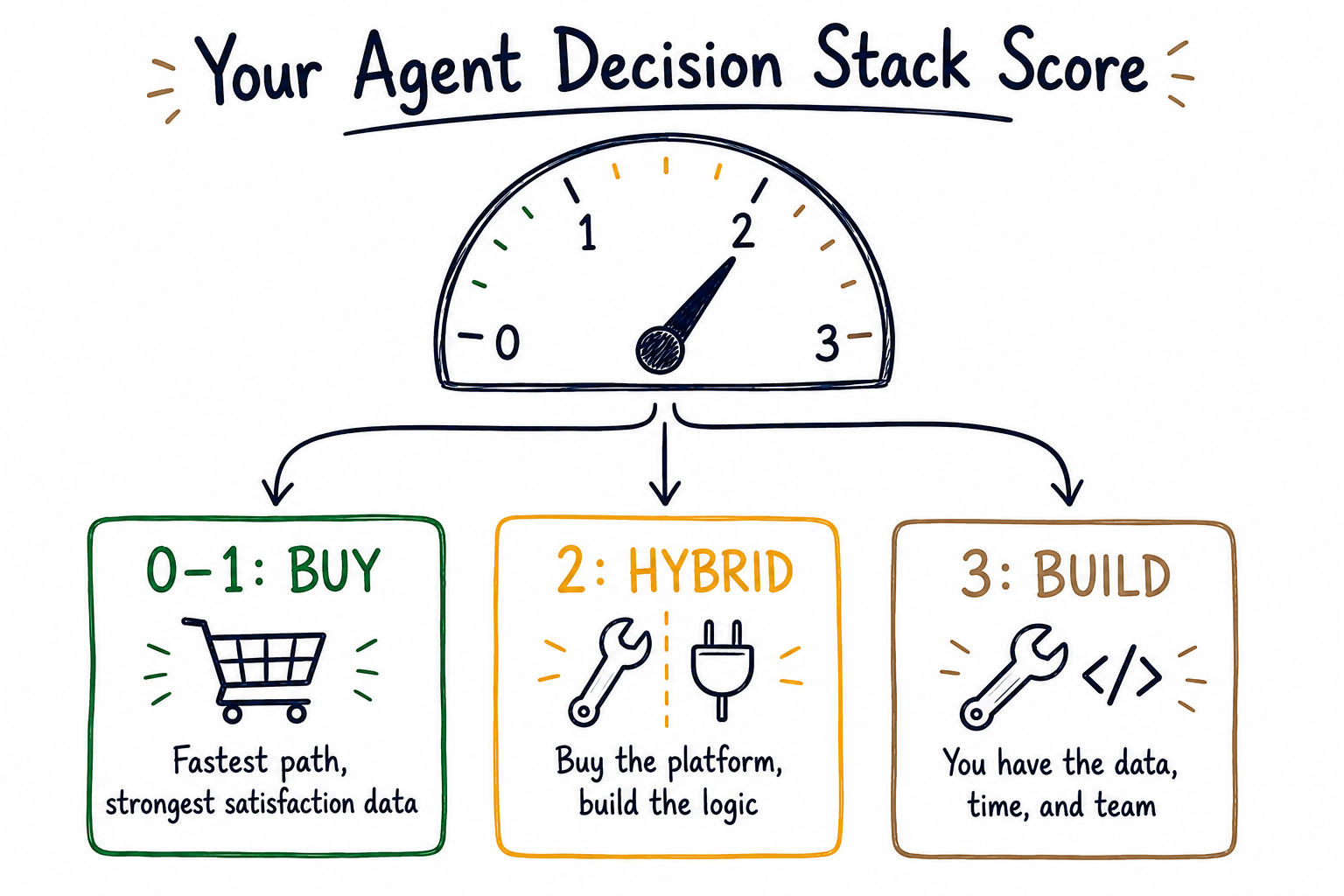
The hybrid path — buying a platform and building agent logic on top — is where most serious enterprise deployments land in 2026. It is not a compromise. It is the architecture that separates companies moving fast from companies starting over. The Agent Decision Stack exists to get you to that clarity quickly.
The Agent Decision Stack doesn’t replace due diligence on individual vendors or a proper TCO analysis for your specific volume. What it does is cut through the noise quickly — so you’re spending your time evaluating the right path, not debating which path to evaluate.
Frequently Asked Questions
Should I build or buy an AI agent in 2026?
Most organisations should buy in 2026. Packaged agentic platforms have reached genuine maturity, and in-house builds consistently rank lower on time-to-value and satisfaction in independent research. The exception is when you have a proprietary data asset, a 90-day-plus timeline, and a team capable of owning the infrastructure long-term. Use the Agent Decision Stack to score your situation before committing to either path.
How long does it take to build a custom AI agent?
With modern LLM SDKs and AI-assisted development tools, a basic custom agent can be assembled in days. A production-grade agent — one with proper orchestration, failure handling, evaluation loops, and integration into existing systems — typically takes four to twelve weeks for an experienced team. Organisations without prior agent infrastructure experience should add significant buffer for the learning curve.
Is it cheaper to build or buy an AI agent?
Buying is almost always cheaper in year one. Custom builds carry a 12–24 month ROI timeline before the infrastructure investment pays back. The crossover point on total cost of ownership sits at approximately one million agent conversations per year — below that volume, packaged platforms win on unit economics. Above it, custom builds can scale without increasing vendor costs.
What is vendor lock-in risk with AI agent platforms?
Vendor lock-in becomes a real risk when your agent workflows, prompts, and configuration are stored entirely within a single platform’s proprietary infrastructure. Before signing an enterprise AI agent contract, confirm you can export your workflow definitions and prompts if needed. Platforms that expose their logic layer and support open standards carry lower lock-in risk than closed, proprietary stacks.
What is the hybrid approach to AI agent deployment?
The hybrid approach means buying a platform for the infrastructure layer — orchestration, compliance, integrations, security — and building custom agent logic on top of it. This gives you deployment speed and enterprise-grade reliability without sacrificing differentiated behaviour. Salesforce Agentforce and Microsoft Copilot Studio both support this model. It is the architecture most serious enterprise deployments land on in 2026.
What use cases are best suited to buying an AI agent platform?
Customer support automation, sales lead qualification, internal helpdesk, meeting summarisation, and document processing are all well-served by packaged platforms in 2026. These categories have strong G2 validation, real production deployments, and mature vendor options. If your use case fits one of these categories, you are unlikely to gain a competitive advantage by building from scratch.
When does building a custom AI agent actually make sense?
Building makes sense when three conditions align: you have a proprietary data asset competitors cannot replicate, you have 90 days or more before you need it in production, and you have a team capable of maintaining agent infrastructure long-term. If all three apply, a custom agent is a genuine competitive moat. If one or more is missing, the risk-adjusted case for building weakens significantly.
How do I evaluate an AI agent platform before buying?
Look for four things: demonstrated production deployments with verifiable outcomes, clear data governance and compliance documentation, an exposed logic layer that lets you port workflows if needed, and strong independent reviews in your specific use case category. Vendor demos are not a reliable signal — prioritise G2 reviews, analyst reports, and reference calls with current customers at similar scale.
What is the Agent Decision Stack?
The Agent Decision Stack is a three-question scoring framework for the build vs. buy decision. It scores Urgency (how fast do you need this live?), Uniqueness (do you have a proprietary data or workflow advantage?), and Upkeep (does your team have the capacity to own this in production?). Score 3/3 and building is the right call. Score 0–1 and buying is. Score 2/3 points to a hybrid approach.
Will buying an AI agent platform slow down my competitive position?
Not if you choose the right platform and focus on adoption rather than infrastructure. The companies gaining the most ground in 2026 are not necessarily the ones who built custom agents — they are the ones who deployed fastest and iterated on workflows while others were still debating architecture. Speed to production and quality of agent design matter more than whether the underlying infrastructure is custom or packaged.
Conclusion
The build vs. buy decision comes down to three things: how fast you need it, whether you have something proprietary to protect, and whether your team can own what you ship. The Agent Decision Stack makes that assessment quick and honest — score 3/3 and build, score 2/3 and go hybrid, score 0–1 and buy.
For most organisations in 2026, buying is the correct first move. The platforms are mature, the satisfaction data is real, and the cost of a slow or failed custom build is higher than most teams account for upfront.
Start with the three questions. The rest of the decision follows from there. If you’re still mapping where AI agents fit before committing to either path, the AI agent use cases breakdown is the right place to start.