Five months before anyone thought to ask the obvious question, OpenAI had already answered it — it just never said so out loud.
The Platform: What Frontier Actually Is
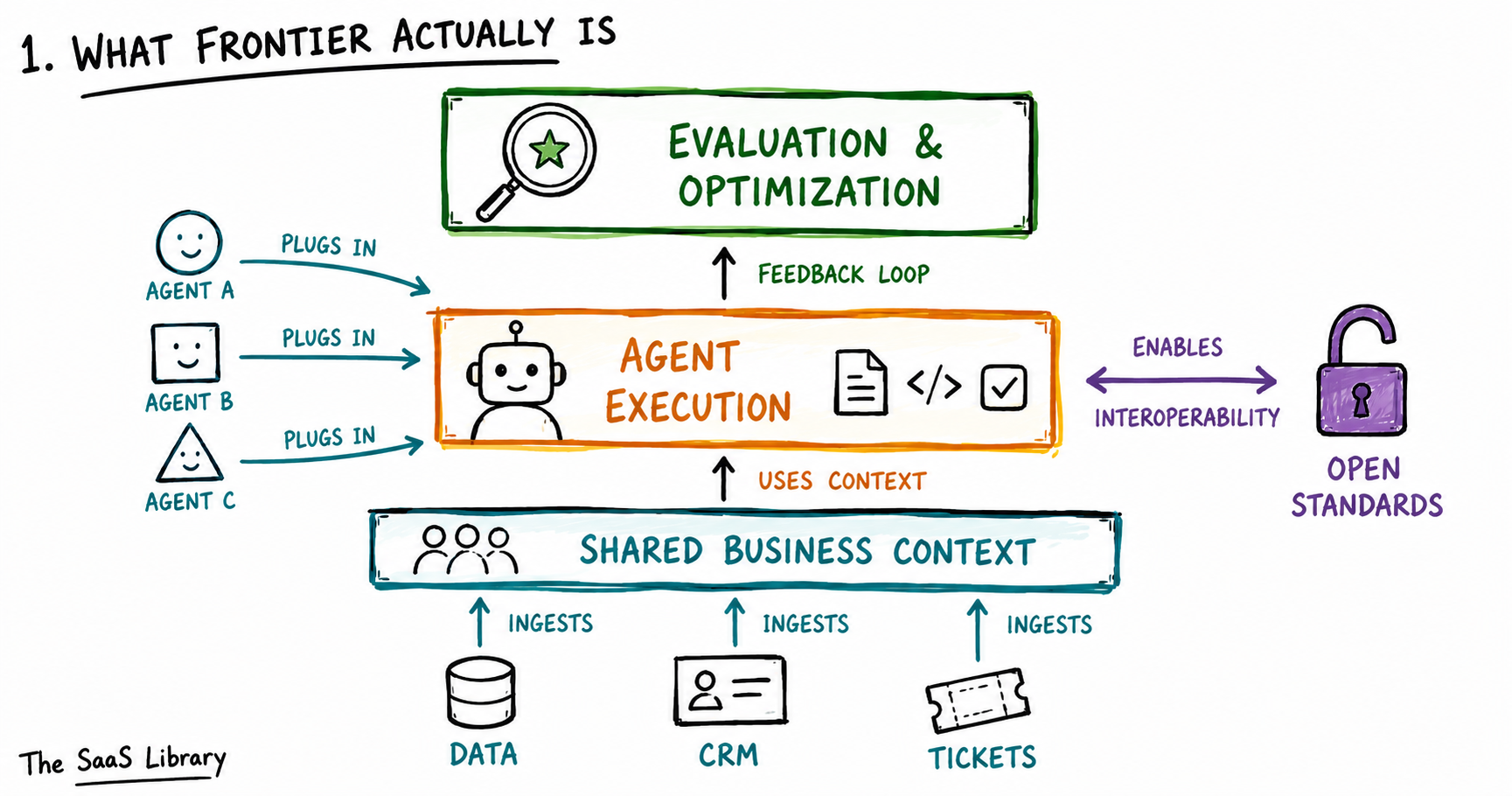
Frontier is an enterprise platform, launched February 5, 2026, built to give AI agents the same things a new hire gets on day one: context about how the business works, permission to touch the right systems, and a manager watching to see if they’re actually any good at the job. Picture it less like software and more like a workplace full of employees who happen to be made of code — that’s genuinely the pitch.
The architecture reflects that ambition. Frontier links a company’s data warehouses, CRM systems, and ticketing tools into what OpenAI calls a shared business context — essentially a memory every agent can draw from. On top of that sits the part where agents actually do things: running code, opening files, taking real action instead of just suggesting it. And above that, an evaluation layer grades the agents the way a manager would grade an employee, quietly getting stricter as the stakes go up.
Why It’s Open, Not Just Big
What makes Frontier interesting rather than just another walled garden is that it’s explicitly not one. Agents built by OpenAI, by the customer, or by a third-party vendor can all plug into the same shared context using open standards — which raises a question worth sitting with: what actually separates an agent from a chatbot in the first place, once it can move freely between platforms like this. Frontier doesn’t answer that outright, but it does make the question harder to avoid.
The company didn’t launch this quietly, either. Its first cohort of adopters reads like a small piece of corporate America:
- HP
- Intuit
- Oracle
- State Farm
- Thermo Fisher
- Uber
with BBVA, Cisco, and T-Mobile already quietly piloting the approach before the official unveiling. OpenAI also named six “Frontier Partners” — Abridge, Clay, Ambience, Decagon, Harvey, and Sierra — AI-native vendors building directly against the platform rather than around it.
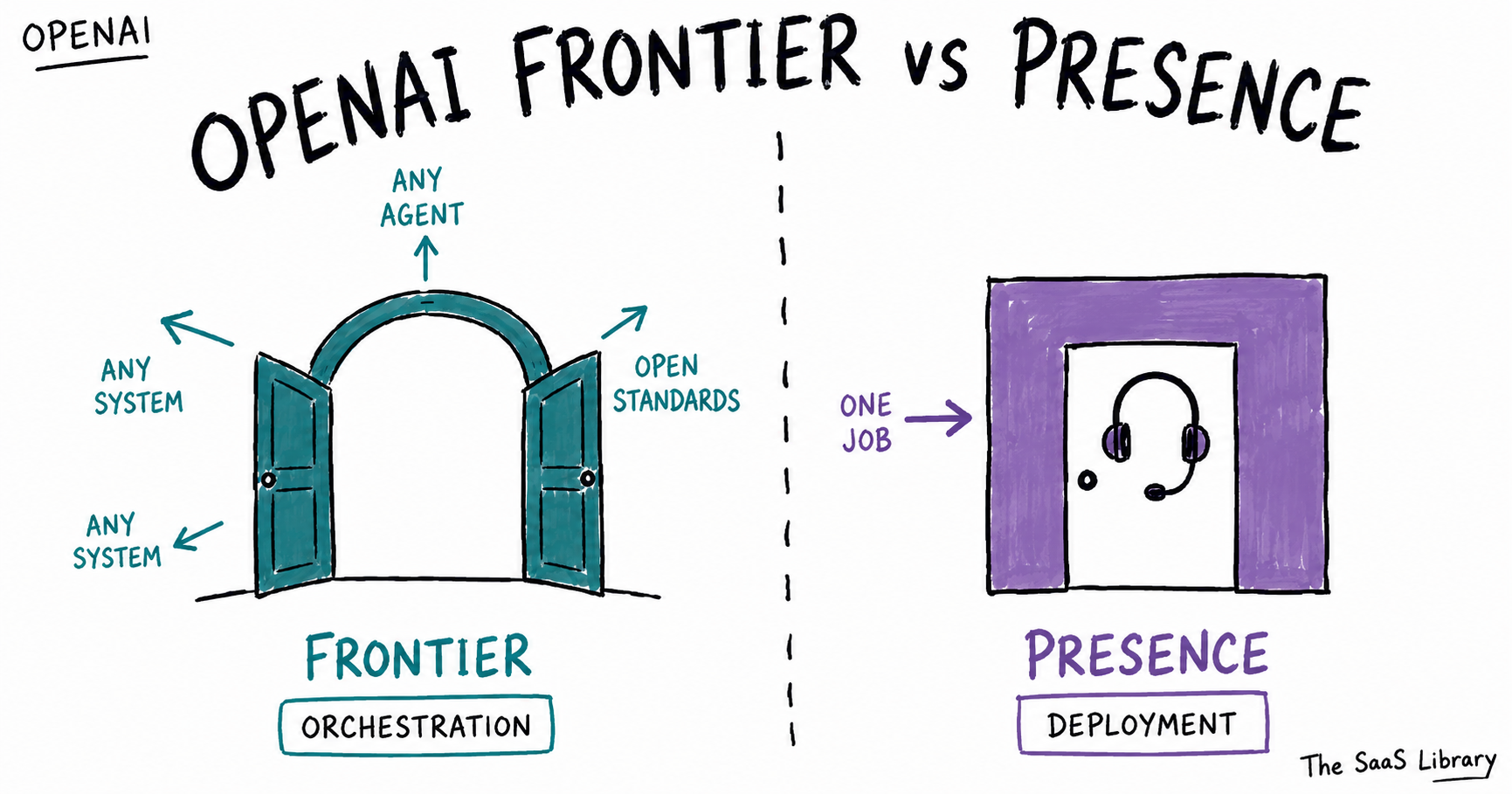
Frontier is infrastructure, not a finished product — it connects any agent, from any vendor, to shared business context. It doesn’t do a specific job on its own.
None of this, though, is something you can simply try. Access is sales-led only. There’s no self-serve signup, and OpenAI has said broader availability is coming “over the next few months” — a phrase that, in February, meant sometime this year, and in July, still does.
The Product: What Presence Actually Is
Presence is a managed product, launched July 22, 2026, that deploys voice and chat agents into tightly scoped tasks — resolving a billing dispute, processing an insurance claim, clearing an IT service ticket. If Frontier is an open floor plan, Presence is a locked room with one very specific job to do: nothing broad, nothing improvised, one job done well, over and over. It’s the same instinct behind these 8 AI agent use cases — narrow beats general, at least for now.
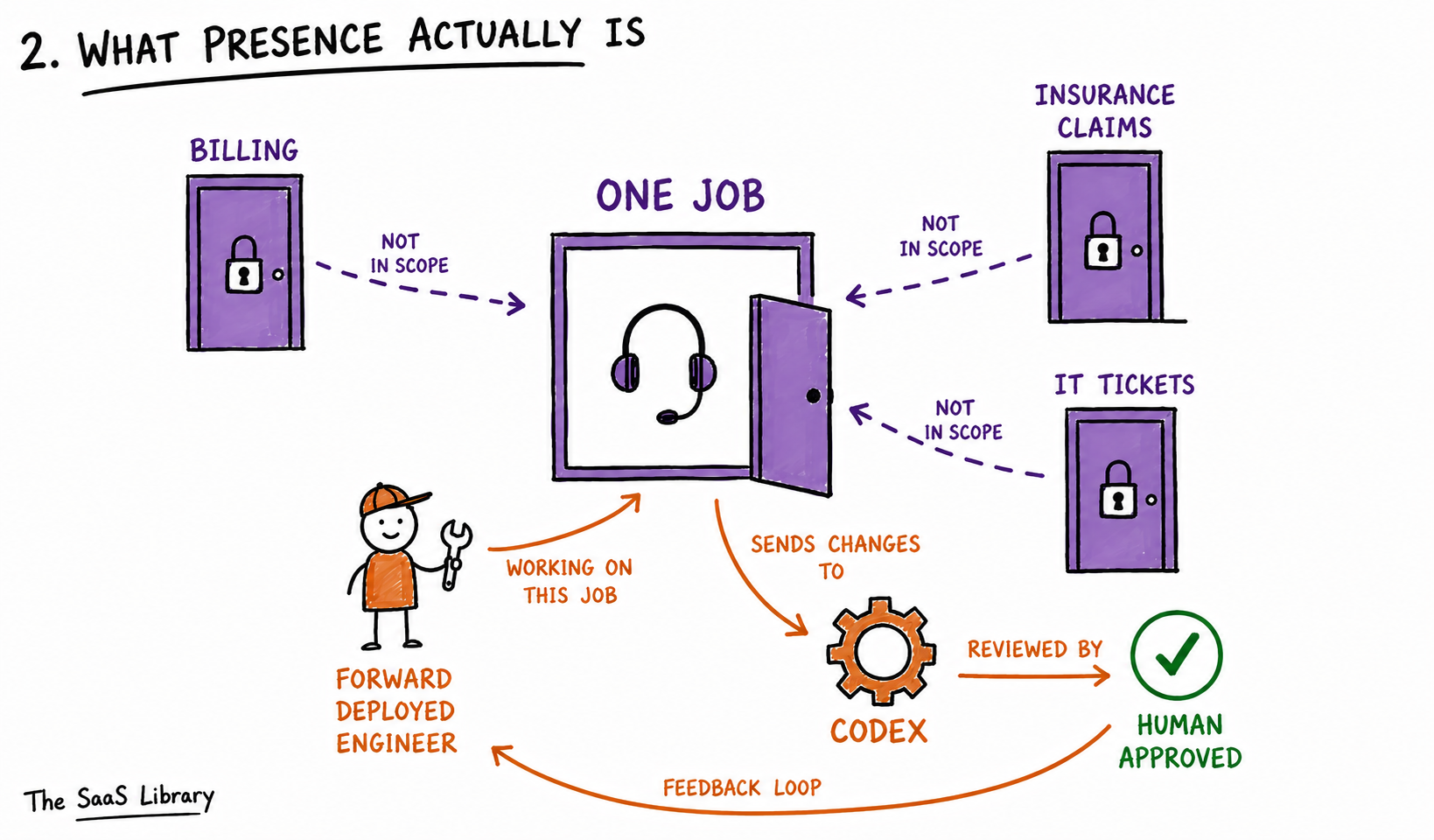
That narrowness isn’t an accident; it’s the entire design philosophy. Each Presence deployment starts with exactly one job, and the agent gets only the system access and knowledge that job needs — nothing more. This is the same instinct behind why so many companies running AI agents can’t actually control them — Presence is built specifically to not repeat that mistake. The company writes the rules: what the agent can do alone, when it needs a human’s sign-off, and when it should just hand the whole thing over.
After launch, the agent keeps learning — sort of. OpenAI’s Codex reads through production sessions and escalations, then proposes changes. A human team tests those changes and approves them before anything actually ships. Nothing updates itself in the wild.
The Delivery Model Is the Real Story
Here’s what separates Presence most sharply from ordinary SaaS: you don’t buy it so much as you’re handed it. It isn’t self-serve. Deployments are led by OpenAI’s own Forward Deployed Engineers — a role modeled on the embedded-engineer function Palantir made famous — alongside a small set of named systems integrators.
You don’t get an API key. You get a project team.
BBVA, SoftBank, and IAG are the named early partners — though all three are still exploring or testing, not running Presence at full scale.
See how narrow, task-scoped agents are already being deployed across SaaS today.
8 AI Agent Use Cases →So What’s the Actual Difference?
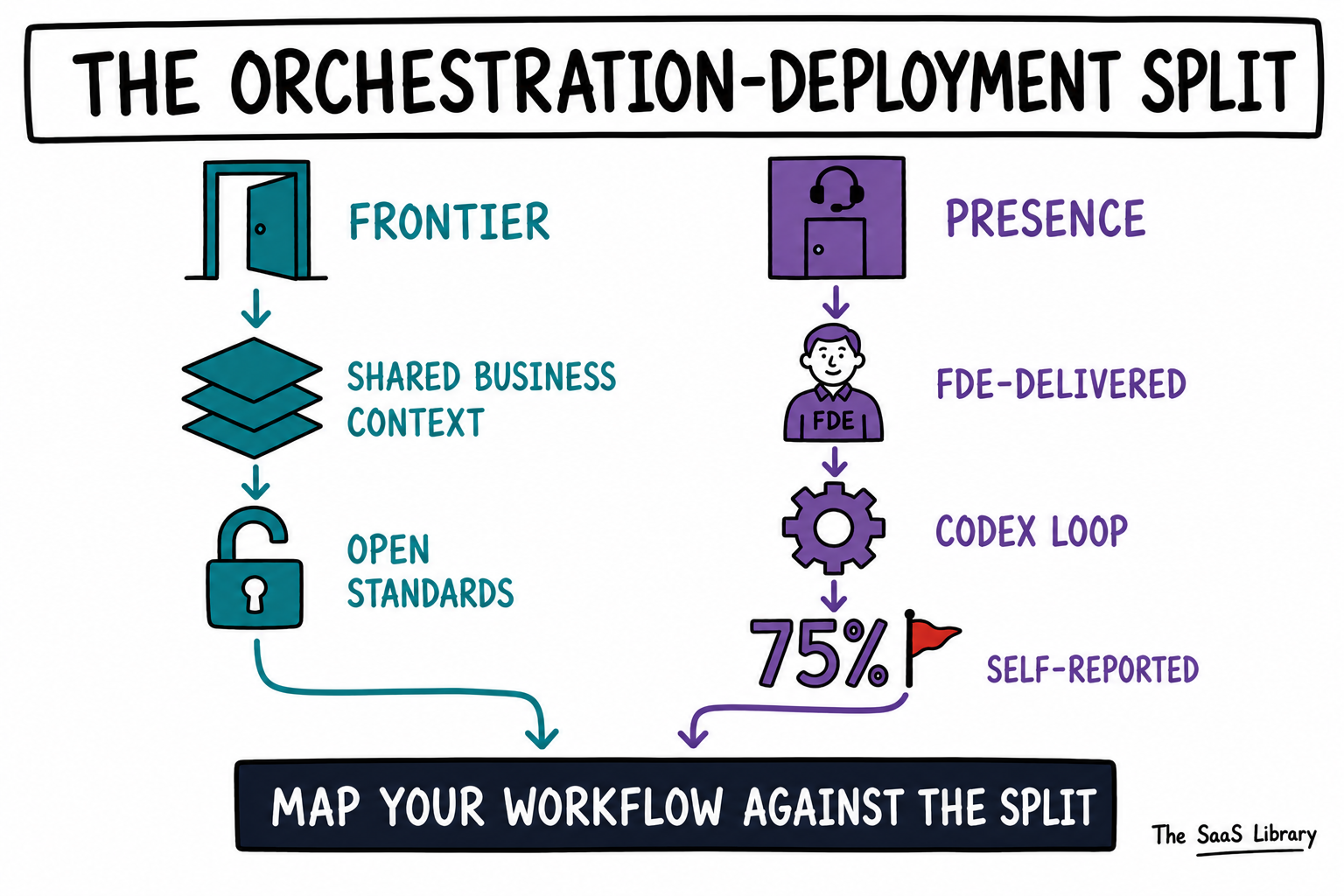
Strip away the branding and it comes down to this: Frontier is the layer you build on. Presence is the thing you buy pre-built. One is infrastructure for context, permissions, and oversight across any agent doing any job. The other is opinionated — voice and chat, one task at a time — and shows up with OpenAI’s own people already inside it, doing the integration work for you.
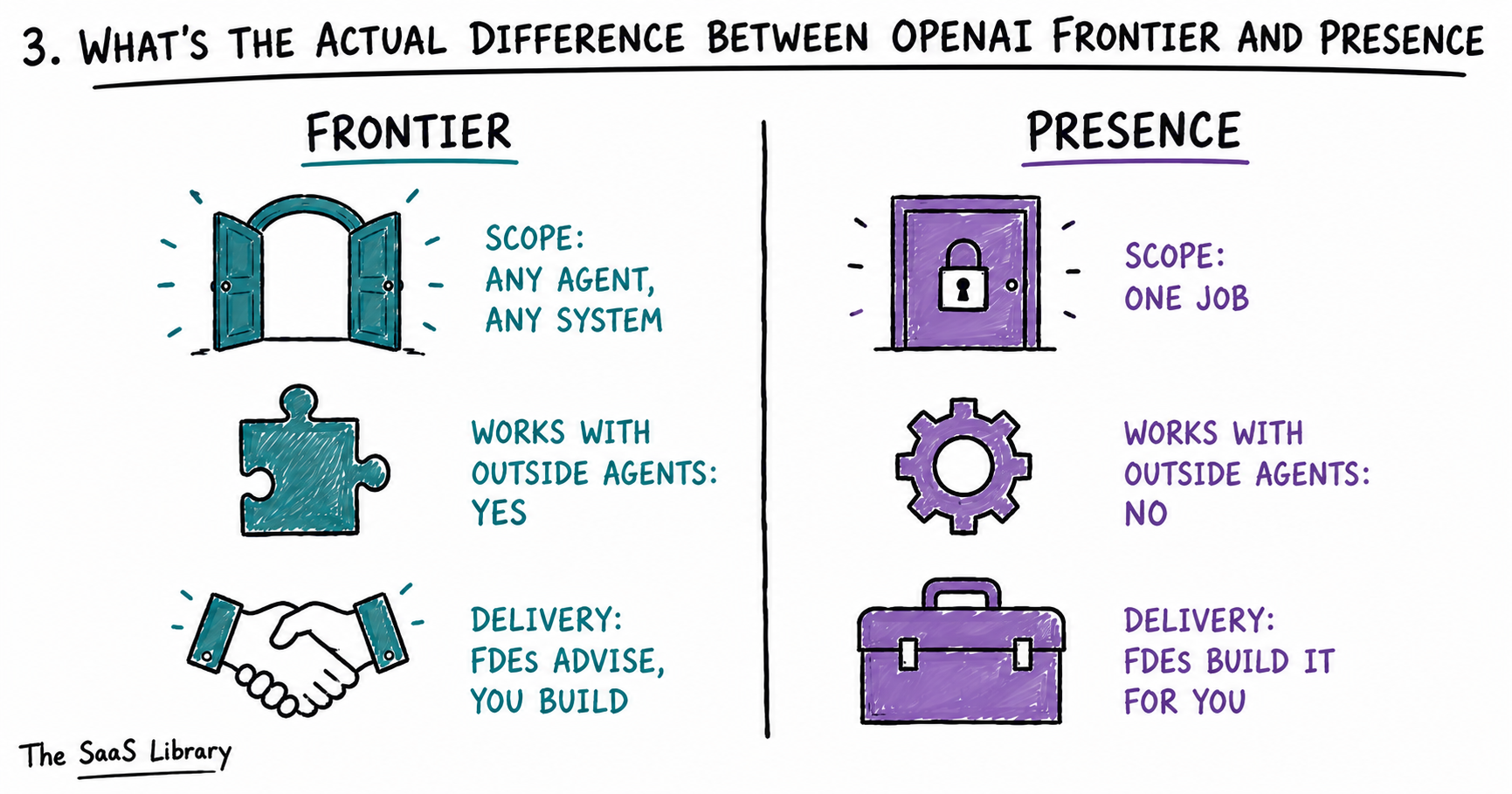
| Attribute | OpenAI Frontier | OpenAI Presence |
|---|---|---|
| Launched | February 5, 2026 | July 22, 2026 |
| What it is | General orchestration layer for any AI agent | Packaged product for voice/chat task agents |
| Scope | Business-wide — connects data, systems, any agent | Single scoped job per deployment |
| Works with non-OpenAI agents | Yes — open platform, open standards | No — Presence is the agent |
| Delivery model | FDEs advise on best practices; teams build with the platform | FDEs and select SIs build and run the deployment for you |
| Self-serve available | No | No |
| Primary use case | Cross-system agent infrastructure, “AI coworkers” | Customer/employee support automation |
| Improvement mechanism | Built-in evaluation and optimization layer | Codex-driven proposal loop, human-approved rollout |
| Named launch partners | HP, Intuit, Oracle, State Farm, Thermo Fisher, Uber | BBVA, SoftBank, IAG (all early-stage/exploring) |
Here’s the practical way to think about it. Trying to give a dozen internal teams shared access to company context? That’s Frontier’s problem. Need one voice agent to handle billing disputes starting next quarter, and would rather pay for a finished product than build one from scratch? That’s Presence. Some enterprises may eventually run both at once — Frontier as the foundation, Presence as one specific room built on top of it — though OpenAI hasn’t said the two are formally designed to work together.
Should You Actually Believe the 75% Number?
Here’s the honest answer: believe it as a proof of concept, not as a promise. That 75% figure comes entirely from OpenAI’s own phone support line, graded against OpenAI’s own internal quality standards, on a single English-language channel that OpenAI owns from top to bottom. Nobody outside the company has audited it.
That doesn’t make the number worthless — it’s a legitimate case study, and OpenAI has been unusually candid about the mechanics behind it. But if you’re an enterprise buyer picturing this exact result in your own contact center, adjust your expectations. OpenAI’s deployment has the advantage of clean internal systems and a narrow product surface that most large organizations simply don’t have.
None of Presence’s three named external partners — BBVA, SoftBank, IAG — are described as running the product at scale. All three are explicitly still exploring or testing. The 75% figure is a dogfooding result. It is not a customer-validated average.
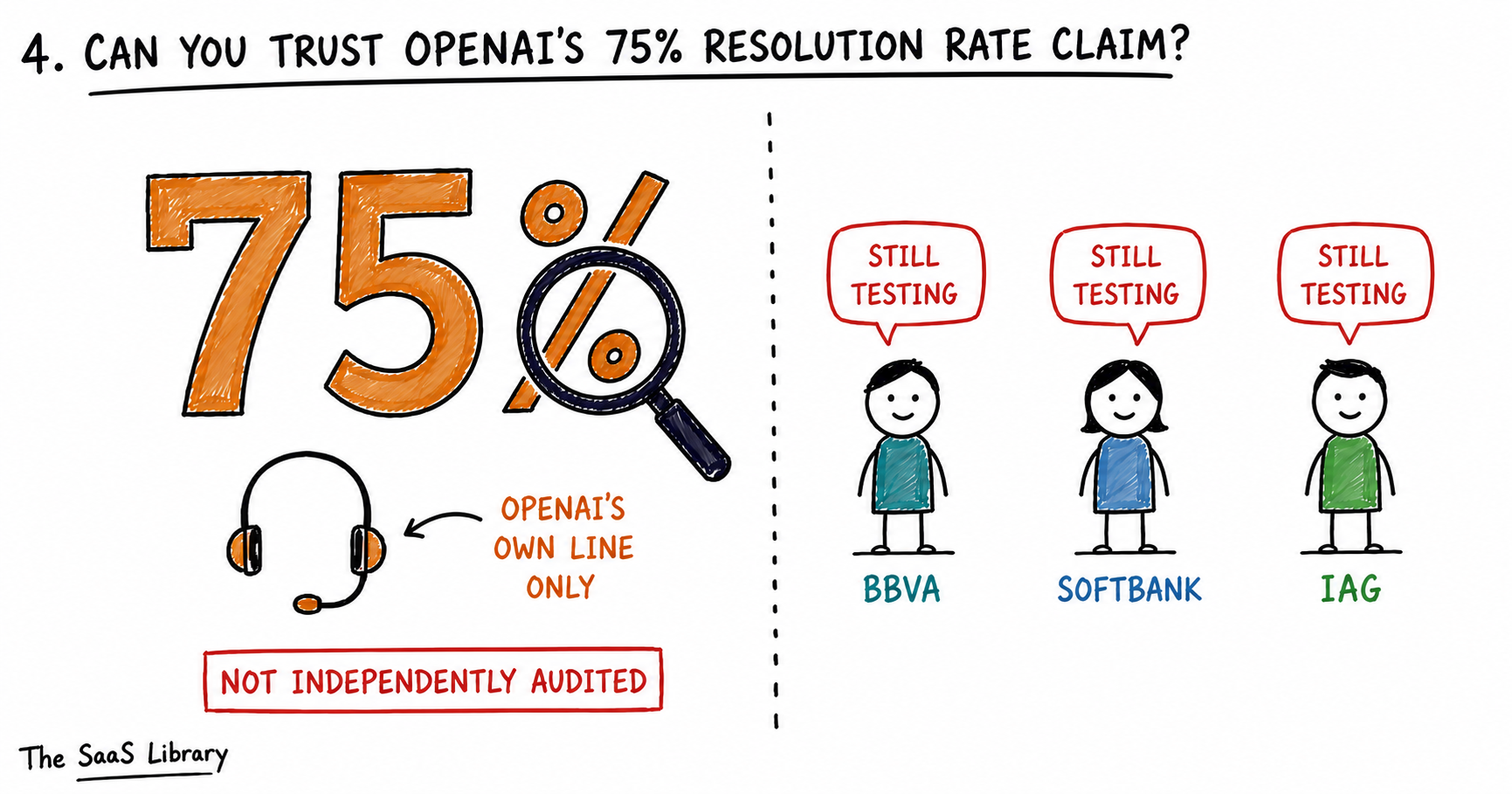
If your systems are fragmented, your documentation is uneven, and your compliance requirements are heavier than a phone support line’s, expect a lower number at launch — one that climbs over time as the agent gets tuned, not a guaranteed 75% out of the box.
The Uncomfortable Question Nobody’s Asking
Here’s the part that doesn’t get said out loud enough: OpenAI is, in both of these deployments, both the vendor and the builder. The same company selling you the model is also the company configuring exactly how it behaves once it’s live in your business.
That’s a genuinely different arrangement than the one enterprises are used to — buying software from one company, then hiring an independent integrator to actually install it, where responsibility for something going wrong is usually traceable to one clear party. When OpenAI plays both roles at once, and a policy misfires in production — an action approved that shouldn’t have been, an escalation that should have triggered and didn’t — the question of whose fault that actually is gets a lot murkier, a tension flagged directly when Presence first launched.
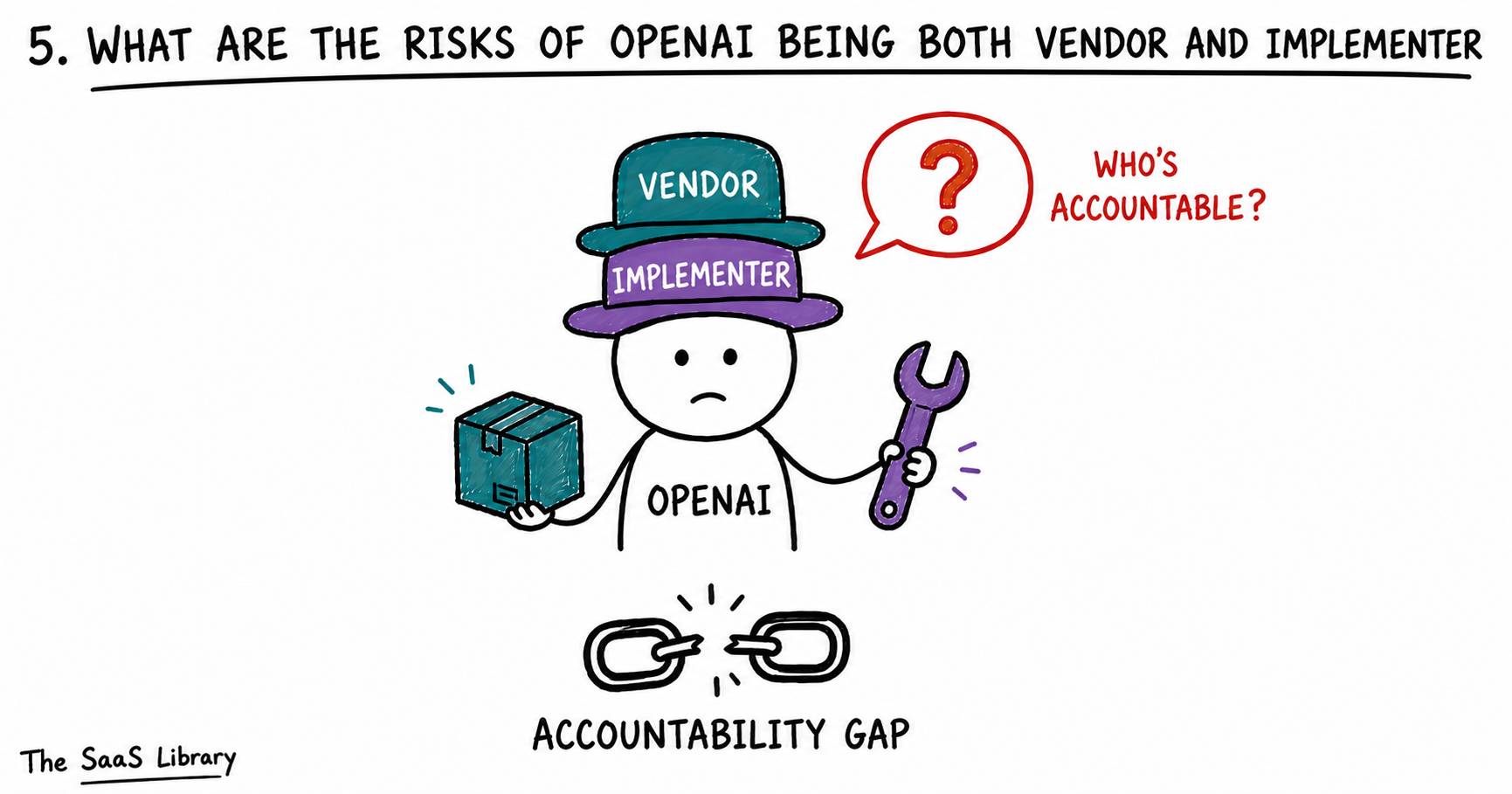
None of this is new, exactly. Cloud consulting arms and systems integrators have blurred the line between vendor and implementer for decades. What’s different this time is the compressed timeline — enterprises are being asked to sign off on live AI agent behavior before the governance norms for this exact arrangement have had time to catch up.
What Happens to the People Whose Jobs This Touches?
Slower hiring, most likely — not a wave of layoffs, at least not yet. That’s the read from the analysts who actually examined Presence’s workforce implications, rather than taking OpenAI’s own framing at face value.
- Tulika Sheel, Senior Vice President at Kadence International, expects the first ripple to hit hiring and team growth rather than existing headcount — roles shifting gradually toward the complex cases and escalations that still need a human touch.
- Pareekh Jain, CEO of Pareekh Consulting, points to Tier-1 support agents handling predictable, repetitive queries as the most exposed group — though broader cuts would only follow once companies actually reorganize around the technology, not before.
- Lian Jye Su, chief analyst at Omdia, offers the calmest take of the three: this kind of automation isn’t new. Companies have leaned on similar tools from Genesys, NiCE, Five9, and AWS for years. The likely near-term reality is AI handling the routine, humans keeping the work that needs judgment and empathy.
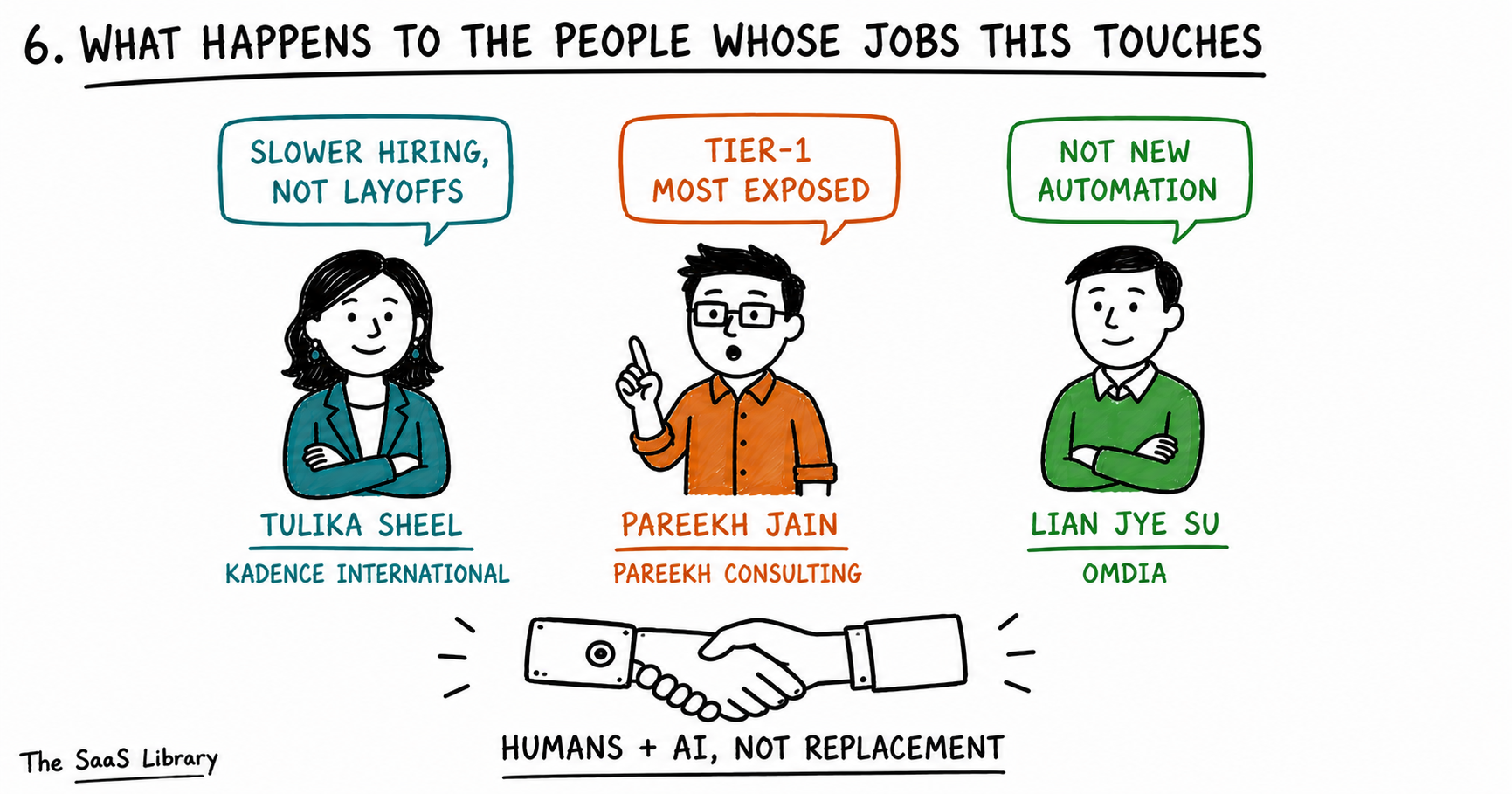
Read across all three, the pattern is consistent even where the tone differs: nobody credible is predicting a cliff, and everybody credible is predicting a shift.
Can You Even Get In?
Not easily, no. Access to both Frontier and Presence currently runs through direct enterprise sales — there’s no self-serve path for either one, and both are built strictly for large organizations.
Frontier is available to a limited set of customers as of its February launch, with broader access promised “over the next few months.” Presence runs through what OpenAI calls a “limited general availability program” — a narrower framing than Frontier’s, and one that fits its more consulting-style delivery. Eligibility for Presence depends on workflow fit, implementation readiness, and OpenAI’s available delivery capacity — a constraint that scales with engineering headcount, not licensing tiers.
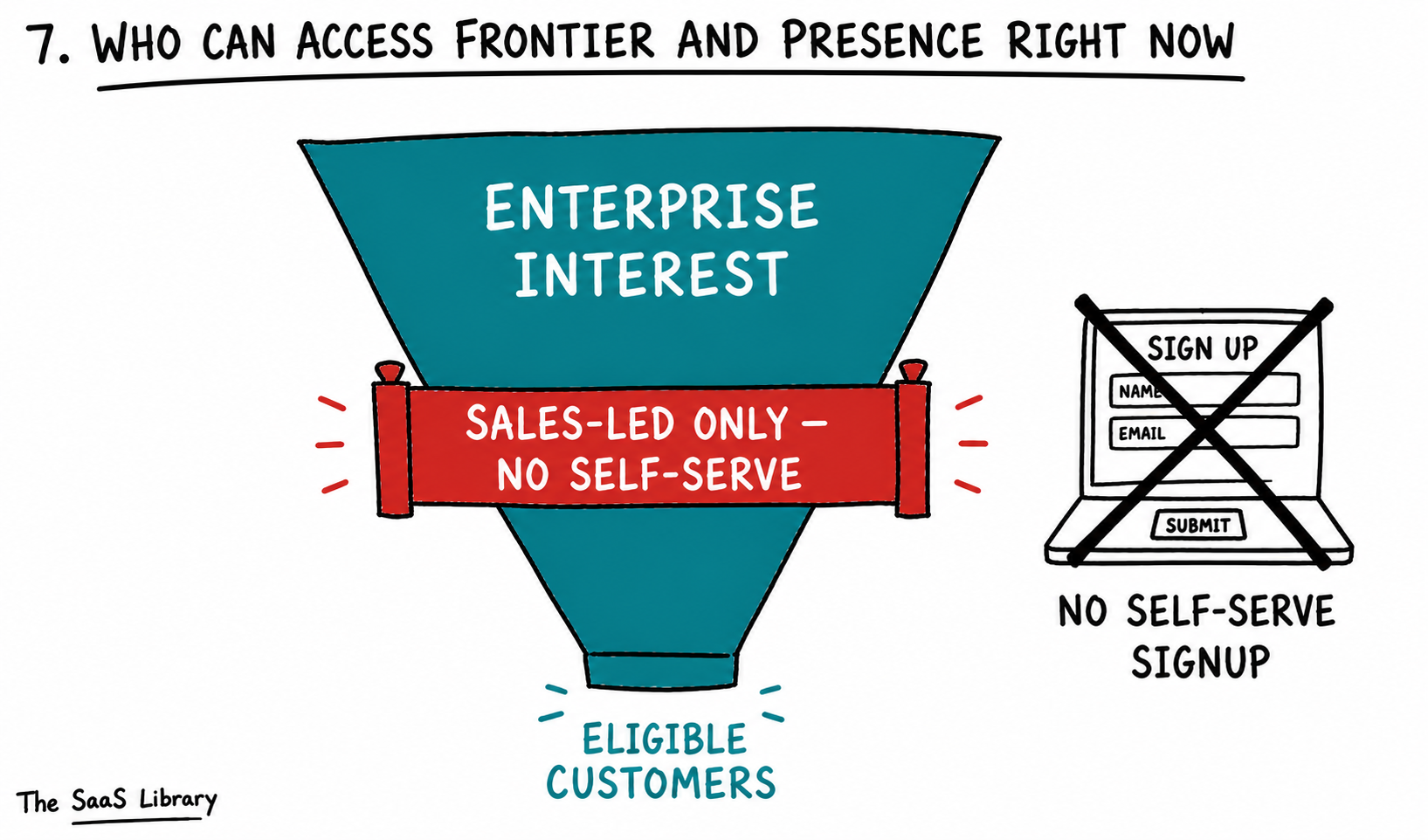
If you’re a mid-market company without an existing OpenAI enterprise relationship, neither door is currently open to you. The realistic way in is an existing ChatGPT Enterprise or API relationship, followed by a direct conversation with an OpenAI account team — one worth having only after you’ve weighed what agentic AI actually costs against what you’re hoping to get back.
And How Does This Stack Up Against Anthropic?
OpenAI’s strategy compares to Anthropic’s on one key axis: packaging versus platform. Presence brands agent-governance as a standalone product with implementation services baked in, while Anthropic’s parallel enterprise push centers on helping companies deploy Claude directly, with no separate branded deployment layer sitting on top. The two companies are, in other words, telling slightly different stories right now.
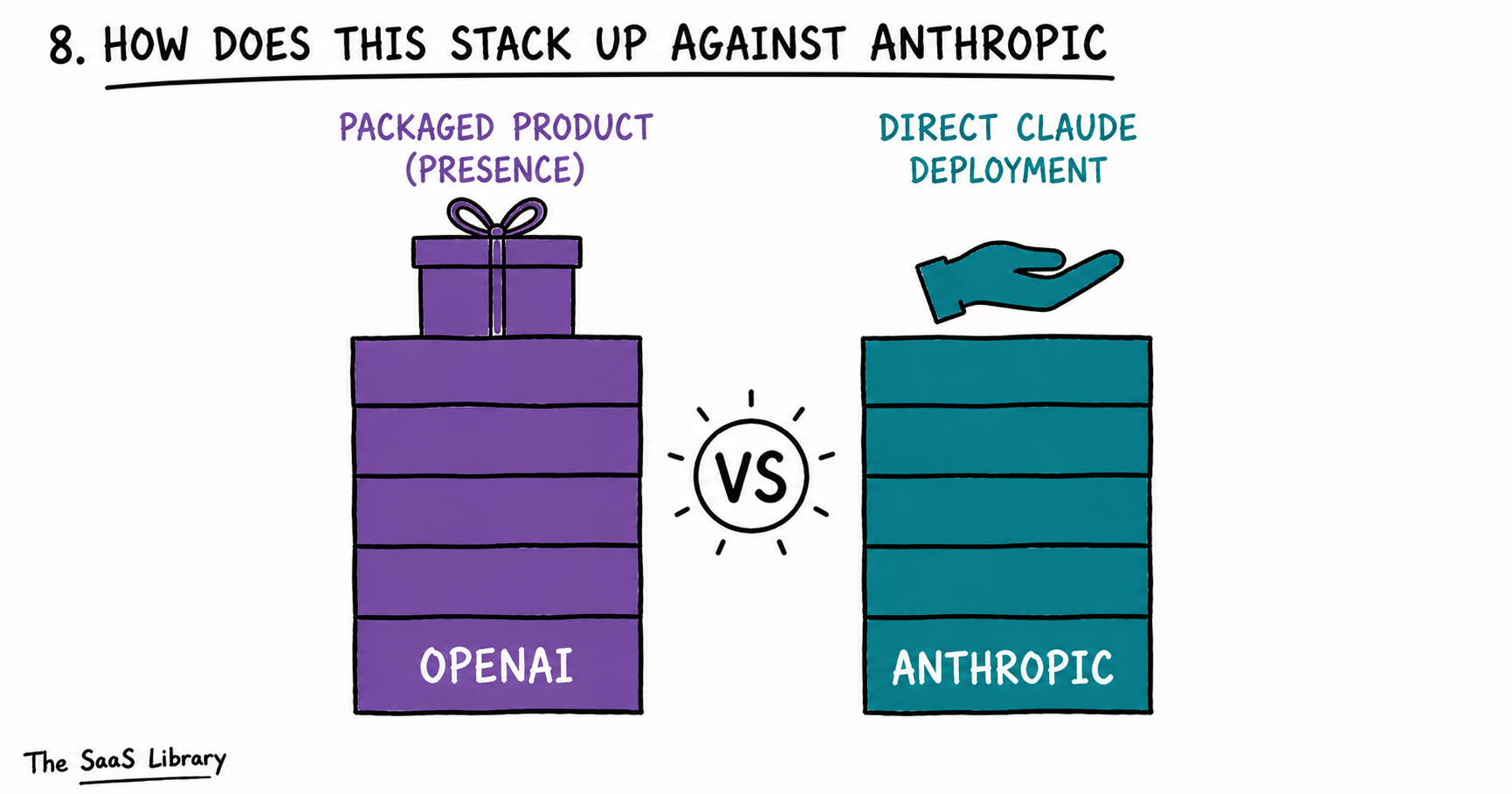
For an enterprise weighing the two ecosystems, the real difference has less to do with model quality and more to do with who ends up accountable for what. How ChatGPT and Claude actually compare for work and every Claude model, compared are worth reading before evaluating either vendor’s enterprise offering specifically.
Neither company has published a true head-to-head on enterprise agent deployment costs or outcomes. For now, anyone comparing the two is working from vendor-supplied claims on both sides — the same grain of salt that applies to OpenAI’s own 75% figure applies here too.
Naming the Pattern: The Orchestration-Deployment Split
Once you see it, you can’t unsee it: OpenAI has actually built a two-tier strategy for enterprise AI agents, and naming it makes the buying decision simpler.
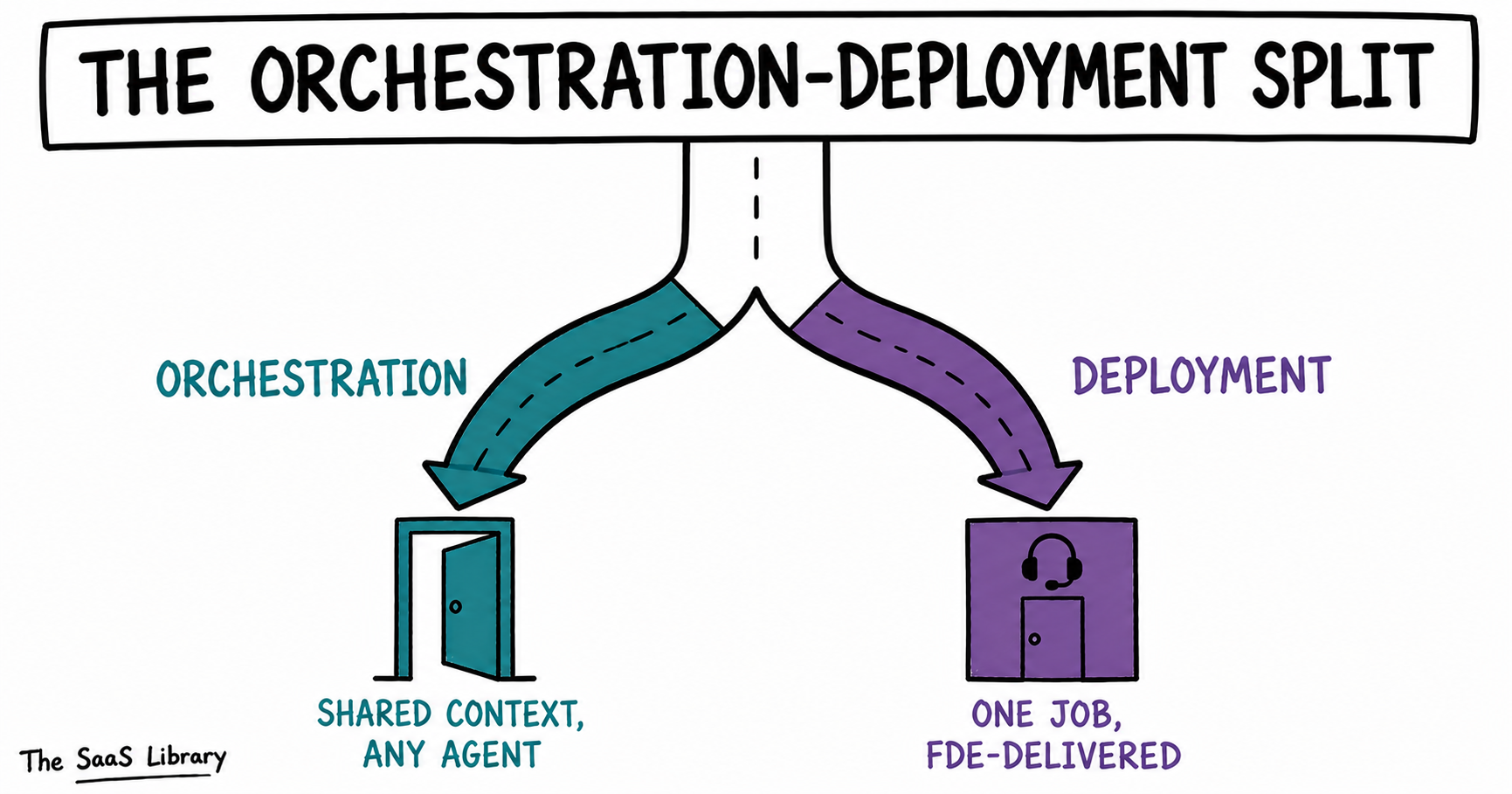
Every enterprise buyer evaluating either product should ask, plainly, which side of the split their actual problem sits on. “We need our agents to see the same data and follow the same rules across the business” is a Frontier problem — one worth scoping against the governance readiness gap in enterprise AI compliance. “We need this one support queue handled reliably by next quarter” is a Presence problem, closer to how to pick your first AI agent workflow.
Buyers who can’t answer that question yet are still in the pilot phase Gartner has warned more than 40% of agentic AI projects will fail to survive past — Gartner, 2025 — not because the models are weak, but because the deployment problem was never scoped clearly enough to begin with.
Frequently Asked Questions
Is OpenAI Presence part of OpenAI Frontier?
No — they’re separate products, and OpenAI hasn’t described them as formally integrated, though a company could in theory use Frontier as the context layer and Presence as one application running on top of it.
Can I sign up for OpenAI Frontier or Presence today?
Not through self-serve signup. Both require going through an OpenAI enterprise sales team, and Presence specifically requires eligibility review based on workflow fit and available delivery capacity.
What companies are using OpenAI Frontier?
HP, Intuit, Oracle, State Farm, Thermo Fisher, and Uber were named as first adopters at launch, with BBVA, Cisco, and T-Mobile named as earlier pilot partners.
Does OpenAI Presence replace ChatGPT Enterprise?
No. OpenAI has said Presence is complementary, and voice customers retain access to OpenAI’s frontier models through the standard API alongside Presence.
What is Codex’s role in OpenAI Presence?
Codex monitors production sessions and escalations after a Presence agent goes live, then proposes behavioral updates — though a human team always tests and approves each change before it rolls out.
How is OpenAI Presence different from a standard chatbot?
Presence agents operate under explicit company-defined policies, escalation rules, and scoped system access, and are tested through simulations before launch — closer to a governed operational system than a conversational widget.
What industries is OpenAI Presence being tested in?
Banking, telecommunications, and insurance, so far — named early partners span BBVA (banking), SoftBank (telecommunications), and IAG (insurance), alongside OpenAI’s own customer support line as the primary internal proof point.
Does OpenAI Frontier support non-OpenAI models or agents?
Yes — Frontier is built on open standards specifically so third-party or customer-built agents can plug into the same shared business context as OpenAI’s own agents.
Is OpenAI Presence available outside English?
Not broadly, not yet. OpenAI’s own dogfooded deployment is English-language, though SoftBank’s pilot is testing Japanese-language conversations — suggesting multilingual support is developing through early partner deployments rather than offered at launch.
How much does OpenAI Frontier or Presence cost?
Neither has published pricing. Both are scoped and priced per customer through direct enterprise sales conversations.
Conclusion
Frontier and Presence are OpenAI’s two-tier answer to enterprise AI agents — the Orchestration-Deployment Split, orchestration versus deployment — and a quiet signal of the broader dashboard-to-agent shift already reshaping B2B software.
The number worth watching isn’t the 75% resolution rate — it’s whether OpenAI can scale Forward Deployed Engineers as fast as it’s signing enterprise logos, because that’s the actual bottleneck on both products right now.
Map your own workflow against the Split before you evaluate either one.