Anthropic Signs SpaceX Compute Deal — Claude Limits Doubled Overnight
More news posts coming soon.
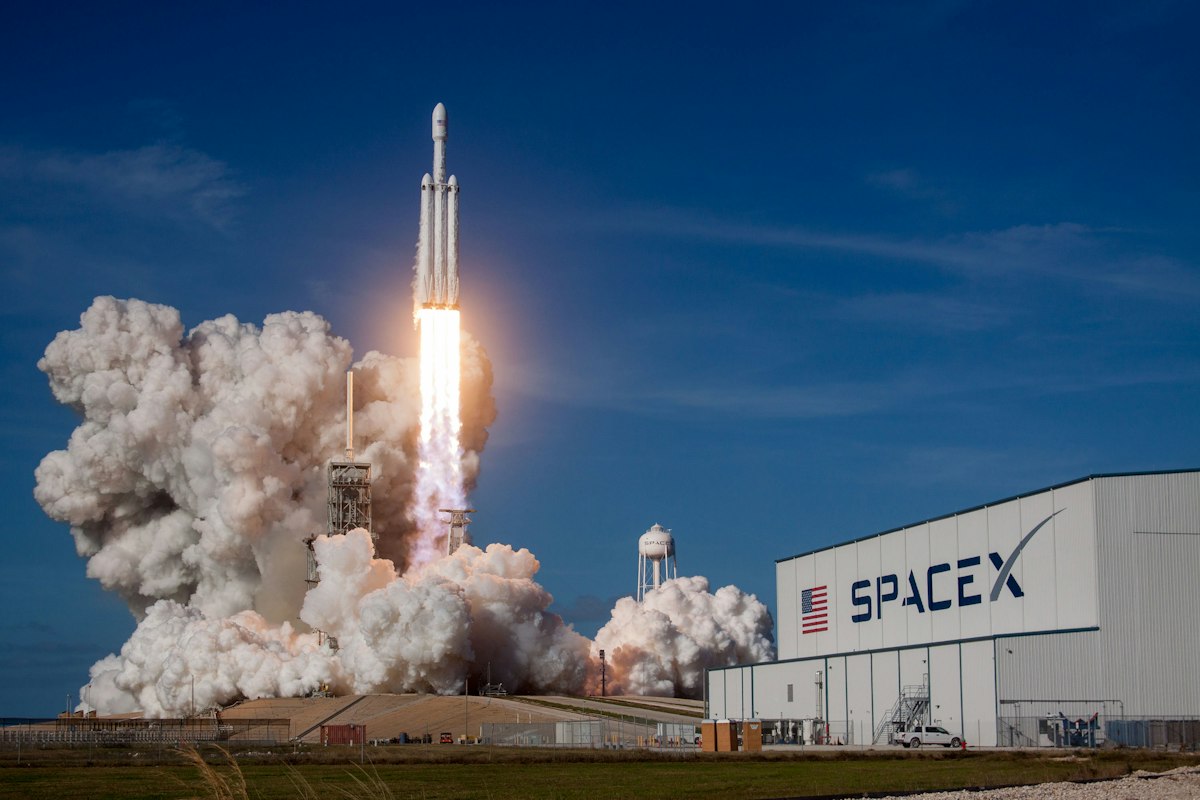
- Anthropic signed a deal to use all compute at SpaceX’s Colossus 1 data centre in Memphis, Tennessee
- Over 220,000 NVIDIA GPUs and 300MW of new capacity coming online within the month
- Claude Code rate limits doubled for all paid plans immediately
- Peak-hour usage caps removed for Claude Pro and Max subscribers
- Elon Musk reversed his public criticism of Anthropic after meeting company leadership
- Anthropic expressed interest in developing orbital AI data centres with SpaceX
In the AI infrastructure arms race, compute is everything. The company that can train faster, serve more users, and scale without hitting ceilings wins — not just on product quality, but on momentum, trust, and market share. On May 6, 2026, Anthropic made one of its boldest infrastructure moves to date: a deal with SpaceX to take over the entire Colossus 1 data centre in Memphis, Tennessee.
The announcement came at a developer event in San Francisco, and the effects were immediate. Claude Code rate limits doubled overnight for all paid subscribers. Peak-hour usage caps — a persistent source of frustration for Pro and Max users — were removed entirely. And for the first time, Anthropic signalled a serious interest in taking AI compute to orbit.
The deal at a glance
Under the agreement, Anthropic gains access to the full computing capacity of Colossus 1 — more than 300 megawatts of power and over 220,000 NVIDIA GPUs including H100, H200, and next-generation GB200 accelerators. SpaceX confirmed the capacity will come online within the month, making this one of the most rapidly deployed infrastructure expansions in the company’s history.
The financial terms of the deal have not been disclosed. What is clear is the scale: 300 megawatts is enough electricity to power more than 300,000 homes. Channelling that into AI compute represents a step-change in what Anthropic can do for its users — and for the broader development of Claude’s capabilities.
What is Colossus 1?
Colossus 1 is widely regarded as one of the largest AI supercomputers ever built. Located on the site of a former Electrolux factory in South Memphis, Tennessee, it was constructed by xAI — Elon Musk’s AI startup — in a record 122 days. The facility originally launched in September 2024 with 100,000 NVIDIA GPUs, and was subsequently expanded to over 200,000 within three months. On the same day as the Anthropic deal, Musk announced that xAI would be dissolved as a standalone company and absorbed into SpaceXAI, a new AI division of SpaceX.
SpaceXAI has moved its own training workloads to a newer Colossus 2 facility — effectively freeing up the entire original cluster, which Anthropic has now taken over.
When Elon Musk first approached data centre builders about Colossus, he was told the project would take 18 to 24 months. He rejected that timeline and looked for an existing vacant facility. The former Electrolux appliance factory in South Memphis fit the bill. Construction began and the system became operational in July 2024 — just 122 days after the project’s conception. Both Dell Technologies and Supermicro partnered with xAI to build the supercomputer. Power was initially sourced from more than a dozen gas turbines while a proper grid connection was established.
What changes for Claude users
Immediate changes to plans
The most tangible effects of the deal are already in place. Claude Code — Anthropic’s agentic coding tool — now has doubled rate limits for all paid subscribers. This matters enormously for developers who have been hitting ceilings on long-running coding sessions. Pro and Max subscribers also no longer face the throttling that previously kicked in during peak usage hours, typically between 9am and 6pm in major time zones.
For API users, rate limits on Claude Opus models have been raised significantly, making it easier to build production applications on Anthropic’s most capable model. Separately, Anthropic’s existing agreement with Amazon includes additional inference capacity in Asia and Europe, supporting enterprise customers in regulated industries such as healthcare and financial services.
Which Claude plan are you currently on?
Based on 1,400 reader votes
“Everyone I met was highly competent and cared a great deal about doing the right thing. No one set off my evil detector. So long as they engage in critical self-examination, Claude will probably be good.
— Elon Musk, on X, May 6, 2026
The Musk factor
Perhaps the most surprising element of the deal is who it involves. As recently as February 2026, Elon Musk had written on X that Anthropic was “misanthropic and evil” and that the company “hates Western civilization” — part of a long-running public criticism of the company and its safety-focused approach to AI development. Yet after spending several days with senior Anthropic leaders, his position changed dramatically.
In a post on X, Musk said he came away impressed: “Everyone I met was highly competent and cared a great deal about doing the right thing. No one set off my evil detector.” He added that Claude would “probably be good” so long as Anthropic continues to engage in critical self-examination — a condition of opinion rather than a contractual one.
Elon Musk was one of the co-founders of OpenAI in 2015 alongside Sam Altman. He departed in 2018 citing conflicts with Tesla’s AI work. Anthropic was founded in 2021 by Dario Amodei, Daniela Amodei, and other OpenAI alumni pursuing a more safety-focused approach. Musk launched xAI in 2023 with Grok as its flagship product. The Department of Defense’s decision in March 2026 to designate Anthropic a supply chain risk — effectively blacklisting it from military contracts — added another layer of tension. Anthropic filed suit, with litigation still ongoing at the time of the SpaceX deal.
Orbital compute — the longer play
Beyond the immediate Colossus 1 arrangement, Anthropic and SpaceX disclosed that they are exploring a far more ambitious collaboration: the development of multiple gigawatts of orbital AI compute capacity. The concept involves building data centres in space — satellites equipped with NVIDIA processors, powered by solar energy, and cooled by the natural environment of orbit.
In January 2026, SpaceX filed plans with the FCC to launch up to one million satellites as part of an orbital data centre constellation. The technical challenges are formidable but near-limitless solar power, no land costs, and no grid pressure make the case increasingly compelling.
No spam. Unsubscribe anytime.
The AI infrastructure arms race
The SpaceX deal does not exist in isolation. Anthropic has been on an aggressive infrastructure expansion push, driven by what the company described last month as “inevitable strain” on its systems — impacting reliability and performance for users during peak hours.
The full picture of Anthropic’s compute expansion: a 5GW agreement with Amazon Web Services including nearly 1GW of new capacity by end of 2026; a 5GW agreement with Google and Broadcom from 2027; a strategic partnership with Microsoft and NVIDIA covering $30 billion of Azure capacity; and a $50 billion investment with Fluidstack. The SpaceX deal adds 300MW on top of all of this.
What this means for AI competition
The Anthropic–SpaceX deal is a signal that the AI race is now being fought at industrial scale. Model quality still matters — but so does the ability to serve millions of users reliably and scale before demand outstrips supply.
For SpaceX, the deal provides commercial proof ahead of a widely anticipated IPO — potentially the largest in corporate history. For Claude users, the immediate message is simple: more headroom, fewer limits, and a company investing heavily in making sure the product can keep up with demand.